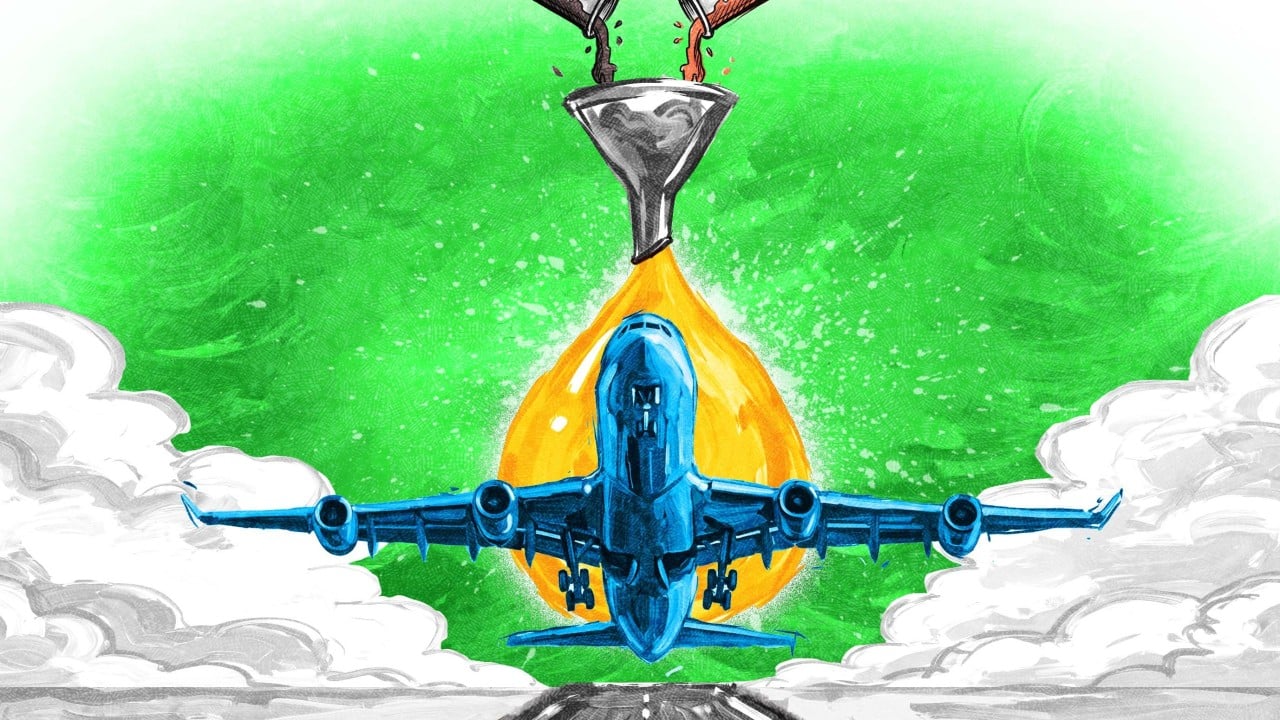
Planes burn millions of gallons of fossil fuel every single day. Fixing that isn't just about painting aircraft with green logos or promising net-zero goals by 2050. It requires raw material, and surprisingly, that material often starts in restaurant grease traps and local food waste bins. Hong Kong wants to position itself as a heavy hitter in sustainable aviation fuel, or SAF. But moving from kitchen scrap to actual jet propulsion comes with a massive price tag and a logistical nightmare that airline executives rarely talk about in public.
If you look closely at how the global aviation industry plans to cut emissions, sustainable aviation fuel is basically the only immediate answer. Planes cannot run on heavy battery packs across the Pacific Ocean anytime soon. Cathay Pacific and other carriers flying out of Hong Kong International Airport face intense pressure to adopt cleaner alternatives. Cathay Group CEO Ronald Lam has pointed out that sustainable fuel still accounts for well under one per cent of global jet fuel use. Scaling up supply chains while keeping ticket prices affordable is a brutal balancing act.
The Feedstock Bottleneck
Everyone wants to fly green until they see the bill. Sustainable jet fuel currently costs two to three times more than conventional petroleum. Why? Because the supply of usable organic waste is severely constrained. Refineries rely heavily on used cooking oil—often referred to in recycling circles as brown grease or waste oils—alongside agricultural residues and municipal solid waste.
Collecting this oil efficiently is harder than it sounds. In a dense metropolis like Hong Kong, thousands of restaurants generate massive amounts of kitchen waste daily. But capturing, filtering, and certifying that oil before it reaches a processing plant requires tight administrative tracking. Mainland China has proposed strict national standards to digitally track discarded cooking oil from local kitchens straight to the refinery. Hong Kong has to plug directly into these cross-border supply chains within the Greater Bay Area to secure enough volume. Without a steady, reliable stream of feedstock, local blending facilities will sit half-empty.
Who Pays for the Green Flight Premium?
Airlines operate on razor-thin profit margins. Doubling or tripling their fuel expenses creates an impossible financial squeeze. If carriers absorb the cost, they bleed cash. If they pass it on to passengers, they risk alienating price-sensitive travelers who will simply book with competing airlines that rely on cheaper, dirty fossil fuels.
Governments are stepping in with policy blueprints, but mandates alone won't magically lower production expenses. Hong Kong's leadership has looked at setting specific consumption targets for departing flights and constructing dedicated blending infrastructure. Yet, building a refinery ecosystem takes years and billions in capital investment. Early-stage companies need deep-pocketed investors, and green tech funds are looking closely at how the city executes its 2030 targets.
Moving Past Greenwashing
The real test for Hong Kong isn't making grand policy announcements. It is proving that local infrastructure can actually deliver certified, scalable green fuel without relying on complex carbon offset accounting tricks. Airlines need drop-in fuels that work seamlessly in existing engines without requiring costly aircraft retrofits.
If you're tracking where the aviation industry is heading, keep an eye on how aggressively regional refiners can scale production over the next few years. Supply security and cost parity will dictate whether green aviation becomes a permanent industry standard or remains an expensive niche experiment for elite carriers. Stop expecting quick fixes. The transition from restaurant grease to high-altitude propulsion is going to be expensive, messy, and painfully slow.