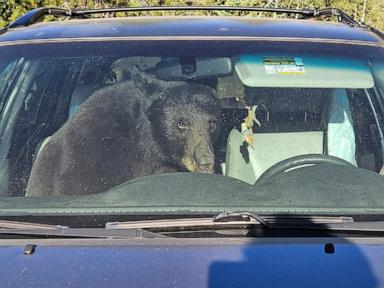
You wake up at 3 a.m. to the sound of a car horn blaring outside your window. You assume it is a mindless neighbor leaning on the steering wheel, but when you look out, you find a black bear trapped inside a completely totaled Toyota SUV, frantically stepping on the horn as it tries to tear its way out.
That is exactly what happened to Patrick Sullivan in Gold Hill, Colorado, this summer. And honestly? It is just one small glimpse into a much larger crisis unfolding across the Rocky Mountains.
Widespread drought and shrunken snowpacks have left the Rockies parched. Naturally occurring wild foods like chokecherries, acorns, and berries have withered away. Because millions of people now live directly in or right next to historical bear habitat, hungry black bears aren't staying in the mountains anymore. They are crashing into backyards, breaking into vehicles, wandering onto the eastern plains far outside their usual range, and sparking dangerous human-wildlife confrontations.
If you live anywhere near the Rockies, or if you are planning a trip to the region, you need to understand why this spike in bear activity is happening and what you can do to protect your property and your life.
The Science Behind the Urgency
Why are bears suddenly everywhere? It comes down to basic survival math. When natural food sources fail due to climate shifts and record-low snowpacks in basins across Colorado, Wyoming, Utah, and New Mexico, bears enter a state of severe nutritional deficit.
A black bear needs to pack on serious calories before winter dormancy. If the high country doesn't provide, they will look elsewhere. State wildlife officers like Travis Sauder point out that bears aren't necessarily changing their core behavior; they are just massively expanding the footprint of where they search for calories.
Bears have an incredible sense of smell—often described as being thousands of times sharper than a bloodhound's. They can smell a leftover grease trap, a pet food bowl left in an open garage, or an unsecured trash bin from miles away. When those easy scents drift into residential neighborhoods, towns effectively become massive, open-air cafeterias.
The Real Cost of Human-Bear Conflict
The consequences of this suburban migration are grim for both sides. Wildlife managers in states like New Mexico reported killing up to 187 bears in a single season, marking numbers not seen in over a decade. In Colorado Springs, a bear that managed to get trapped inside a vehicle tragically died from the extreme heat before help could arrive.
And then there are the human confrontations. While black bears are generally far more timid and less aggressive than their grizzly cousins in the Northern Rockies, a hungry, cornered, or habituated black bear is dangerous.
Recent months have brought alarming attacks across the mountain states:
- A hiker in Golden, Colorado, was tracked down, followed, and scratched by a black bear.
- A man leaving a laundry room near Vail, Colorado, was attacked outside an apartment building.
- A fisherman in the mountains southwest of Denver was tackled and bitten before the young bear was tracked down and euthanized.
Wildlife officials rely heavily on the grim mantra: "A fed bear is a dead bear." Once an animal loses its natural fear of humans and associates residential neighborhoods with easy meals, it rarely gets a second chance. Many are tranquilized and relocated, but if they return or show aggression, they are put down.
What You Can Do Right Now
You can't control the weather or fix the regional drought yourself, but you can stop rolling out the welcome mat for wildlife. If you want to keep your family safe and prevent local bears from being destroyed, you have to lock down your home's attractants.
1. Secure Your Trash Like Your Life Depends On It
Garbage is by far the biggest draw for urban bears. Colorado Parks and Wildlife data confirms that unsecured bins cause the vast majority of human-bear conflicts. Invest in certified bear-resistant containers, or keep your standard bins locked inside a secure garage or shed until the morning of pickup.
2. Eliminate Easy Outdoor Temptations
Bears do not care about your property lines. Clear out these common problem areas:
- Bird feeders: Take them down entirely during active bear seasons. A single hummingbird feeder or seed block offers more calories than hours of foraging in the wild.
- Grills: Clean your barbecue thoroughly after every single use. Burn off grease traps and store the grill indoors if possible.
- Pet food: Never leave pet food bowls on a back porch or in an open garage.
3. Give Wildlife Space
If you spot a bear in your neighborhood, do not approach it to take photos or feed it. Most of the time, the animal just wants to move through. Give it a clear escape route back toward natural cover, make loud noises from a safe distance if it lingers, and call local wildlife authorities if it refuses to leave or tries to enter a structure.
The mountains are changing, and our interaction with wild animals is getting complicated. Stop making it easy for them to wander into town, and give them the space they need to survive.