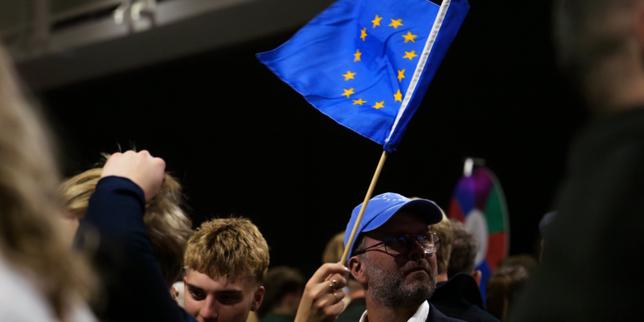
When the citizens of Iceland headed to the polls on August 29, 2026, to vote on whether to restart EU accession negotiations, Brussels expected a straightforward validation of its magnetism. Instead, a narrow majority said no. Nearly 53% of voters rejected picking up talks, slamming the door on what europhiles hoped would be a triumphant eastward or rather northward win.
Instantly, commentators started panicking about the health and reach of the European project. They shouldn't be. You might also find this similar article insightful: Why Russia Just Openly Handed India A Seat At The Ukraine Peace Table.
An island nation of fewer than 400,000 people making a specific domestic choice about its coastal waters doesn't signal an empire in decline. It reflects a localized calculation that has zero to do with how the rest of the world views the European Union.
The Fishing Industry Always Wins Local Politics
To understand why Iceland voted down the negotiations, you don't need a degree in geopolitics. You just need to look at a fishing net. As highlighted in recent reports by NPR, the effects are significant.
Marine products make up roughly 40% of Iceland's total exports and account for around 8% of its entire GDP. For rural communities scattered across the rugged coastlines, the Common Fisheries Policy of the European Union looks less like an integration tool and more like an existential threat. Opening up Icelandic waters and submitting to Brussels-imposed quotas is a political third rail.
Unsurprisingly, the divide split cleanly along geographic and economic lines. Reykjavik, where white-collar professionals are deeply intertwined with international markets, leaned toward restarting talks. The countryside, anchored in traditional trades, rejected it outright. This wasn't a philosophical referendum on European values. It was a pragmatic defense of local livelihoods.
Iceland is Already Halfway Inside the House
Treating Iceland's decision as a rejection of European cooperation ignores reality. Iceland is already deeply integrated into the European apparatus.
The country belongs to the Schengen Area, participates in Erasmus+, and sits within the European Economic Area. It has already adopted a massive chunk of EU legislation simply to maintain friction-free trade with the bloc.
When a country already enjoys single-market access without having to hand over control of its fishing grounds, why take the political risk of full membership? The status quo gives Reykjavik the best of both worlds. Opting out of formal accession isn't an anti-European statement; it's a cold, hard optimization of national self-interest.
Looking Past Reykjavik Toward the Actual Enlargement Frontier
If you want to measure the true pull of the European Union, looking at a wealthy North Atlantic island with a GDP per capita higher than Germany or Sweden is the wrong benchmark.
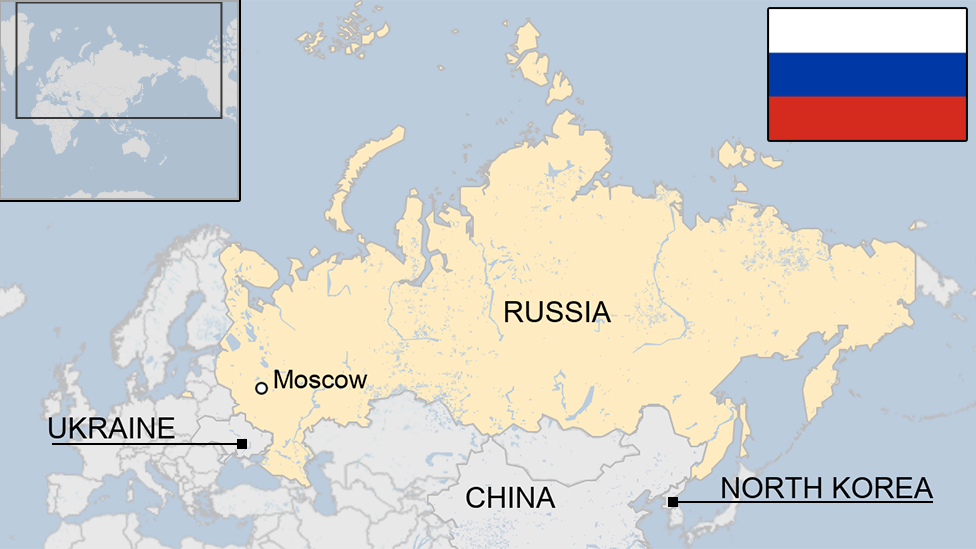
The real test of European gravity happens further south and east. Countries like Ukraine, Moldova, and the nations of the Western Balkans are actively overhauling their judicial systems, fighting corruption, and reshaping their economies specifically to meet membership criteria. They are doing this despite active conflict and institutional instability because the gravitational pull of the European model remains unmatched in the region.
Brussels isn't losing sleep over Iceland because the core mechanics of enlargement rely on countries that have everything to gain from judicial and economic alignment. Iceland was always an outlier—a rich, sovereign nation perfectly content with its specialized arrangement.
Stop reading a systemic crisis into a local fishing dispute. The European Union's attraction isn't fading just because a tiny island nation decided to keep managing its own cod.