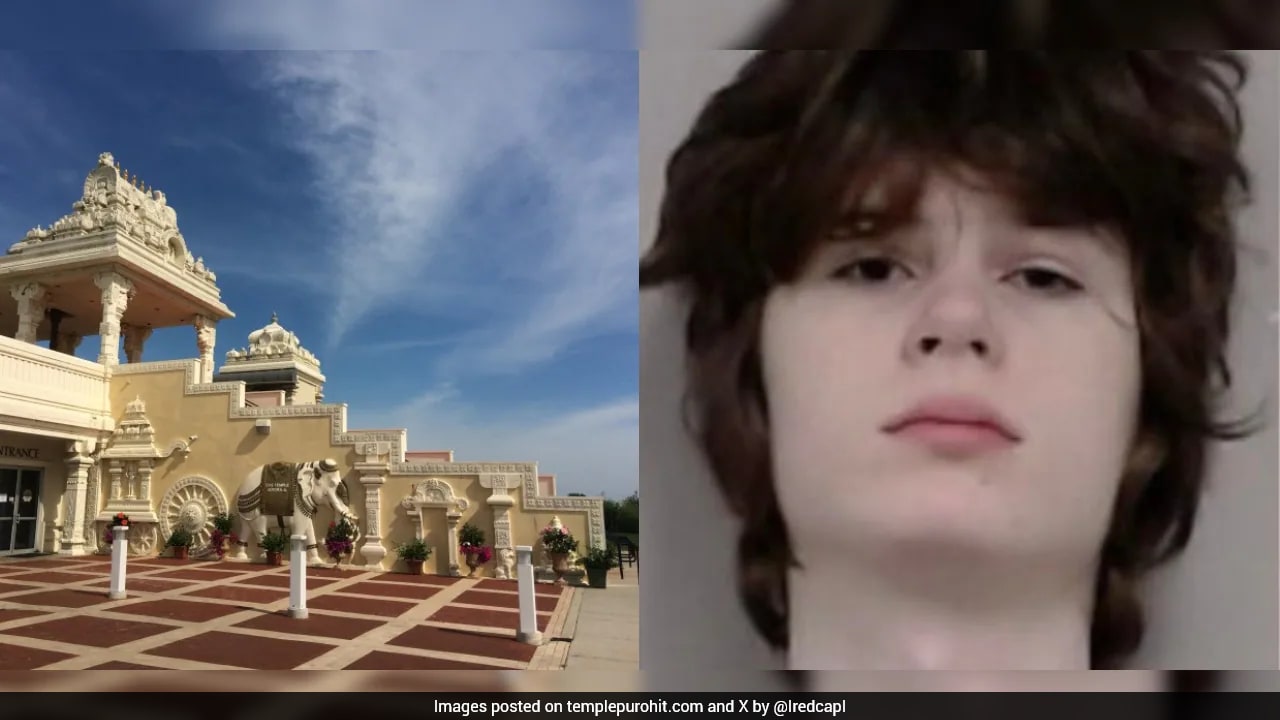
Houses of worship shouldn't need fortress walls. Yet, when a 19-year-old targeted a Hindu temple in Illinois with a planned mass shooting, it laid bare a terrifying reality for South Asian communities across the United States.
The threat wasn't a random act of suburban violence. It was targeted, calculated, and deeply rooted in a climate of rising hostility that federal agencies have been too slow to track. Now, lawmakers are stepping in because inaction is no longer an option.
Inside the Congressional Push for Federal Accountability
Lawmakers aren't just sending polite letters. Members of the House India Caucus, including Representatives Rich McCormick and Ro Khanna, officially demanded that Attorney General Todd Blanche and FBI Director Kash Patel treat the failed Illinois attack as a federal hate crime.
They want answers. Did the teenager act completely alone, or did an online extremist echo chamber feed him the blueprints for violence?
The core of their demand goes beyond a single courtroom trial. The lawmakers are pushing federal law enforcement to dig deep into online radicalization networks. When digital spaces normalize bigotry, physical violence usually follows. Ignoring the digital footprints of these plots leaves entire communities vulnerable to copycat attacks.
The Data Behind the Fear
Stats rarely capture the human cost, but they reveal a terrifying trajectory. FBI tracking data shows an upward tick in reported hate crimes targeting Sikh, Hindu, and Buddhist communities throughout 2025.
Numbers from independent watchdogs paint an even grimmer picture. Research from the Centre for the Study of Organised Hate shows that anti-South Asian hate posts on platforms like X skyrocketed by roughly 240 percent between January 2024 and June 2026. Meanwhile, a Carnegie Endowment survey from 2026 revealed that one in four Indian American adults faced direct slurs since the start of 2025.
These aren't just anonymous internet comments. They bleed into real-world targeting. When rhetoric goes unchecked, perpetrators assume they have implicit permission to act.
Protecting South Asian Houses of Worship
Local police departments often lack the specialized resources to monitor transnational extremist networks or sophisticated digital hate groups. That's why the recent congressional appeal stresses real-time intelligence sharing.
Temples, gurdwaras, and other South Asian houses of worship need actionable threat information before a gunman pulls into the parking lot. Law enforcement agencies need to establish direct lines of communication with community leaders, offering protective resources rather than waiting for a tragedy to prompt a response.
Security upgrades cost money. Cameras, reinforced doors, and private security guards drain budgets that small religious communities would rather spend on charity or community outreach. Federal grant programs exist for this exact reason, but access needs to be streamlined and expanded immediately.
What Happens Next
If the Department of Justice handles this case as a standard local offense, it sends the wrong signal. Hate crimes require federal weight, federal investigators, and federal deterrence.
You can't talk about religious freedom in America while ignoring the people who look over their shoulders every time they walk through sanctuary doors. Holding extremists accountable at the highest level isn't optional anymore. It's the baseline requirement for keeping communities safe.