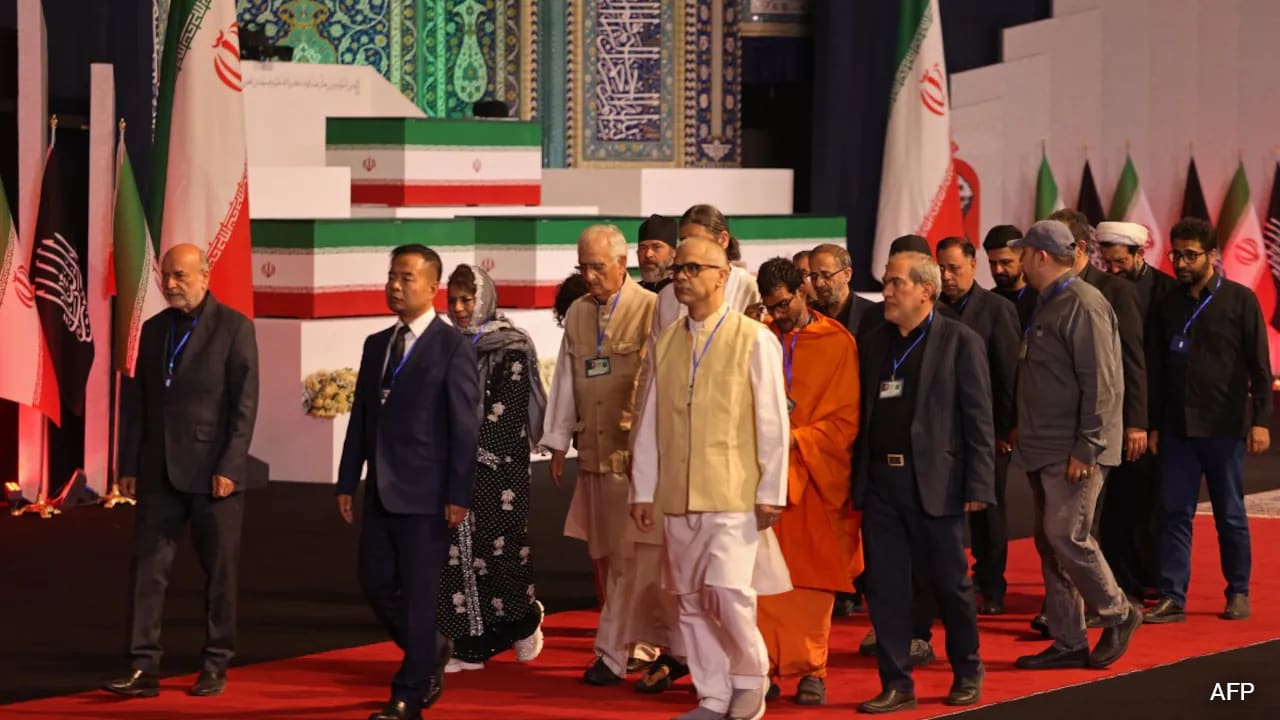
Geopolitics doesn't pause for sentiment, but sometimes sentiment becomes the sharpest geopolitical tool available. When New Delhi dispatched a diverse, multi-faith delegation to Tehran for the Khamenei funeral, it wasn't just checking a diplomatic box. It was sending a loud message to the West and the Middle East alike. Iran noticed. The Iranian Embassy in New Delhi quickly fired off a public thank-you note on X, declaring that the people of Iran will never forget this gesture of friendship.
For anyone watching the volatile Middle Eastern theater, this exchange highlights a massive reality check. While Washington and Tel Aviv view Tehran as an absolute adversary, India treats it as a critical regional anchor. The official Indian team featured Minister of State for External Affairs Pabitra Margherita and Bihar Governor Lieutenant General Retired Syed Ata Hasnain. But the optics went much deeper than government officials.
Opposition figures like senior Congress leader Salman Khurshid and Peoples Democratic Party chief Mehbooba Mufti joined the cohort. Alongside them stood Hindu, Muslim, Sikh, and Christian religious leaders. This wasn't an accidental gathering. It was a calculated demonstration of India's pluralism deployed on a highly tense global stage.
The Thank You Note That Stirred the Diplomatic Pot
Tehran chose its words with extreme precision. The embassy statement praised the presence of Indian MPs, scholars, and religious figures. They called the attendance a powerful expression of mutual respect and sincere solidarity.
This public display of gratitude shows how much Iran values its ties with India during moments of extreme isolation. The Supreme Leader was killed in US-Israeli strikes in late February, an event that pushed the region into a devastating war. The months of delay before the final funeral rites only heightened the geopolitical stakes.
"The people of Iran will never forget this gesture of friendship, compassion, and heartfelt respect."
- Embassy of the Islamic Republic of Iran in India
By explicitly thanking the friendly government and people of India, Tehran is signaling that its eastern partnerships remain rock solid. They view these old connections as a vital diplomatic lifeline when Western pressure hits a breaking point.
Deciphering New Delhi Strategy on Iran
Why would India risk irritating its crucial partners in Washington and Israel by showing up so visibly at the Khamenei funeral? The answer lies in cold, hard national interest. New Delhi has spent decades mastering the art of strategic autonomy. It refuses to let external powers dictate its bilateral friendships.
First, think about geography. India needs a transit pathway to Central Asia and Afghanistan that completely bypasses Pakistan. Iran provides exactly that through the Chabahar Port. India has poured millions of dollars into developing this maritime hub. Walking away from Tehran would mean flushing those strategic investments straight down the drain.
Second, energy security remains a quiet but dominant driver. While India stopped buying Iranian crude under past US sanctions pressure, it keeps the diplomatic channels fully lubricated. If global energy markets face massive supply disruptions due to the ongoing West Asia war, India needs open lines of communication with every major player in the Persian Gulf.
Third, regional stability matters directly to India's domestic security. Millions of Indian expatriates live and work across the Gulf region. Their safety and the billions in remittances they send home depend entirely on preventing a total regional meltdown. Keeping a direct line to Tehran gives New Delhi a seat at the table when things go sideways.
The Diverse Delegation That Surprised Western Observers
Western commentators often misread Indian diplomacy because they try to view it through a rigid, binary lens. They expect countries to pick a side. India doesn't play by those rules.
The inclusion of Lieutenant General Retired Syed Ata Hasnain is a perfect example of this nuance. As a highly respected retired military officer and a prominent Indian Muslim, his presence sent a dual signal. It showed India's institutional respect while reflecting its unique cultural demographic.
Then you have Mehbooba Mufti and Salman Khurshid. Their participation proves that when it comes to crucial foreign policy matters, India's domestic political divides vanish. Mufti explicitly stated her solidarity with the resilient people of Iran upon departing Tehran.
The inclusion of leaders from diverse faiths, including Hinduism and Christianity, served a brilliant diplomatic purpose. It quietly countered the narrative that support for Iran is strictly an Islamic or sectarian issue. It framed India's condolence as a national act of empathy from one ancient civilization to another.
Balancing Washington and Tel Aviv While Staying Close to Tehran
Make no mistake, Indian diplomats are walking a razor-thin tightrope. Prime Minister Narendra Modi has built an incredibly tight strategic partnership with Washington through the Quad framework. At the same time, India's defense and technological cooperation with Israel has reached historic highs over the last decade.
So how does New Delhi justify standing in solidarity with Iran during the Khamenei funeral?
They do it by keeping the engagement strictly diplomatic and civilizational. India didn't send military hardware or issue aggressive anti-Western joint statements. They sent a delegation to pay respects at a state funeral. In the lexicon of international relations, this is classified as standard diplomatic protocol, giving India a shield against Western criticism.
Washington might not like the optics, but they understand the reality. US policymakers know that pushing India too hard on its Iran policy will only backfire. They need New Delhi as a counterweight in the Indo-Pacific region. Because of that structural reality, India enjoys the diplomatic leverage to chart its own course in West Asia.
What Happens Next to India Iran Relations
The funeral ceremonies are wrapping up, but the real work is just beginning. Investors and analysts are watching how this political goodwill translates into tangible economic moves.
Expect to see a renewed push toward stabilizing the trade mechanisms between the two nations. The rupee-rial trade arrangements have faced massive hurdles due to global banking restrictions, but both sides want to find a viable workaround.
The Chabahar Port project will likely see accelerated operational timelines. India wants to ensure that its access corridor to the International North-South Transport Corridor stays functional, regardless of how the broader war shakes out.
Security cooperation regarding the threat of piracy and maritime disruptions in the Arabian Sea will also dominate the upcoming bilateral agenda. India's navy has assumed a far more assertive role in protecting commercial shipping lanes recently. Regular intelligence sharing with Iranian authorities will be crucial to keeping those vital shipping lanes open.
To stay ahead of these unfolding regional dynamics, keep a close watch on the upcoming bilateral meetings at the United Nations. Track the actual volume of commercial cargo moving through Chabahar over the next two quarters. Pay attention to how Indian state-owned oil companies navigate the evolving energy trade rules. The rhetoric on social media is fascinating, but the real shifts always happen quietly in the shipping manifests and banking corridors.