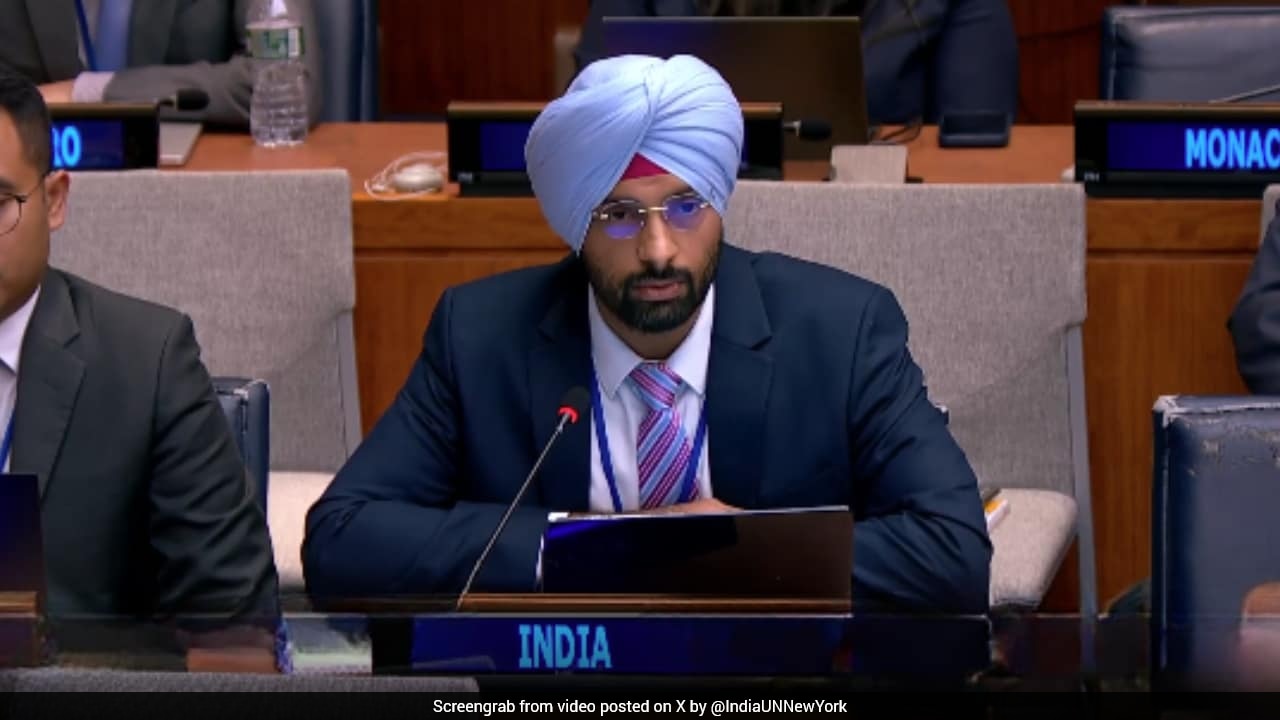
Geopolitics often sounds like a game of diplomatic chess until someone flips the board. When India's young diplomat Anmol Sher Singh Bedi stepped up to the podium at the United Nations General Assembly's First Committee, he didn't use polite diplomatic code. He drew a hard line against what New Delhi calls nuclear blackmail, making it clear that cross-border terrorism will no longer get a free pass behind a nuclear shield.
If you have been following South Asian security dynamics, you know the script. A terror attack happens, tensions spike, and international actors rush in to preach restraint while reminding everyone about the nuclear arsenals involved. India is done playing that script.
The Core Conflict at the United Nations
The recent diplomatic showdown wasn't just another routine verbal sparring match. It centered around accountability, state-sponsored non-state actors, and the weaponization of nuclear deterrence. Bedi called out Islamabad's reliance on what he termed a nuclear overhang designed to limit the consequences of subconventional warfare.
Think about how that works in practice. For years, strategists worried that any conventional military response to a terror strike could spiral out of control because both nations possess nuclear weapons. That fear created a safe zone for proxy violence. India's latest stance shatters that comfort zone. By stating explicitly that nuclear weapons cannot be treated as routine instruments of statecraft, New Delhi is signaling that deterrence does not equal immunity.
Why the Rules of Engagement Have Shifted
Following the tragic civilian casualties in Pahalgam, India's military actions last year were measured, targeted, and designed to avoid widespread regional war. Yet, international reactions often focus more on managing the immediate crisis than punishing the root cause.
New Delhi is pushing back against this double standard. You cannot expect a democracy to absorb repeated shocks while preaching peace to the aggressor. The message delivered at the UN rested on three unyielding pillars:
- Any terrorist attack against Indian territory will receive a fitting response.
- India refuses to bow to nuclear intimidation or threats of escalation.
- States that sponsor terrorism share identical culpability with those who mastermind and execute it.
This posture strips away the plausible deniability that states historically rely on when using militant proxies. If you sponsor the violence, you own the fallout.
Beyond Borders: The Indus Waters and Nuclear Non-Proliferation
The diplomatic offensive wasn't limited to defense and terrorism. India also took direct aim at the foundations of bilateral cooperation, specifically pointing to the Indus Waters Treaty. Trust is a two-way street. A government cannot undermine the foundational goodwill of a historic water-sharing agreement while demanding that all privileges remain intact.
Furthermore, Bedi brought up the historical specter of the A.Q. Khan proliferation network, linking it directly to UN Security Council Resolution 1540. Unquestioning nuclear cooperation and the transfer of advanced military tech to unstable regimes pose a global danger, not just an Indian one. When advanced capabilities leak through clandestine networks, the security of the entire international community fractures.
What This Means for Future Regional Stability
The immediate future of India-Pakistan relations remains frosty, but the tactical reality has fundamentally evolved. By dismantling the utility of nuclear coercion, India has forced a recalculation in regional risk assessment.
Peace cannot simply mean a quiet pause between major terror attacks. Durable stability requires genuine accountability, strict vigilance against proliferation, and the permanent closure of safe havens for militant proxies. As New Delhi continues to reshape its foreign policy doctrine, the takeaway for observers is simple: the old rules of engagement are gone, and deterrence no longer guarantees protection for sponsors of terror.