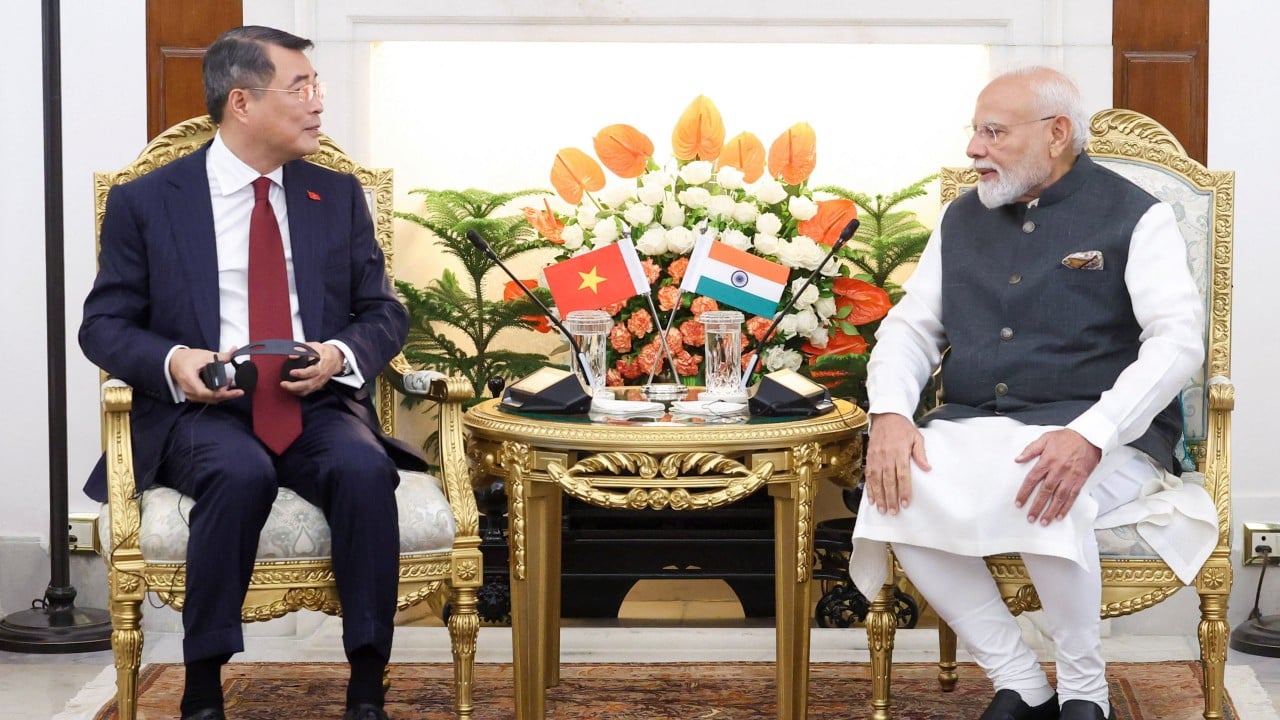
For years, headlines frame global supply chain shifts as a zero-sum death match. If a massive electronics manufacturer picks a factory site in Vietnam, pundits assume New Delhi lost. If an investor locks in land deals across Indian industrial corridors, Hanoi is supposedly left behind.
That narrative is wrong.
New Delhi and Hanoi are done competing for crumbs. Instead, they want to fuse India's massive domestic market scale with Vietnam's export-oriented manufacturing agility. They are carving out a coordinated play to capture the massive reallocation of capital fleeing factory floors in mainland China.
You need to look past the superficial race for headlines. India and Vietnam are quietly stitching together a trade corridor targeting a shared 25 billion dollar bilateral trade milestone, setting up a blueprint for how middle powers survive a fractured global economy.
The Reality of the China Plus One Strategy
Multinational corporations are tired of keeping all their eggs in one basket. Rising labor costs, regulatory pressures, and geopolitical friction made reliance on a single manufacturing hub a liability. That realization triggered the rush toward diversification.
Vietnam captured the early wave. Its streamlined customs clearance, compact geography, and aggressive trade deals turned it into a magnet for electronics assembly and tech hardware. Brands like Apple and Samsung built dense manufacturing ecosystems there.
India took a different path. It leaned on its massive domestic consumption base, paired with targeted financial incentives like production-linked incentive schemes that pulled in smartphone assembly, green tech, and auto components.
Yet, treating these two nations as rivals misses the structural mismatch. Vietnam's labor force maxes out around 50 million people, limiting its domestic absorption capacity. India boasts a workforce exceeding 500 million, offering scale that Southeast Asia cannot replicate.
When you combine India's raw demographic weight with Vietnam's specialized supply chain execution, you get a powerful economic axis. They aren't fighting over the same factory floor; they are playing complementary positions on the same team.
Fixing the Bottlenecks That Actually Matter
If you talk to supply chain executives on the ground, they'll tell you that shifting operations isn't as simple as drawing a new line on a corporate presentation. Bureaucracy, logistical choke points, and inconsistent regulations usually slow down the best-laid plans.
India's state-level friction has historically tested corporate patience. Import rules, local approvals, and state tax variations create a fragmented environment compared to Vietnam's unified central governance. On the flip side, Vietnam faces constraints in heavy industry and raw material sourcing, often depending heavily on imported inputs from East Asia.
To bridge these gaps, bilateral talks have zeroed in on practical fixes. Both countries are working to ease market access for pharmaceuticals, specialty agriculture, and high-tech components. They are scaling up direct flights, establishing robust seaport connections linked directly to primary shipping lanes, and pushing for faster digital payment integrations like cross-border QR code retail settlements.
These aren't glamorous diplomatic talking points. They are nuts-and-bolts operational upgrades designed to remove friction for businesses moving components back and forth across borders.
Technology and the Next Industrial Phase
The real upside isn't just about assembling consumer electronics or stitching garments. Both nations are positioning themselves for higher-value production, focusing on emerging tech, green energy infrastructure, and advanced semiconductor packaging.
India brings heavy research muscle, a deep pool of engineering talent, and massive digital infrastructure. Vietnam brings disciplined project execution and established electronics testing protocols. By encouraging joint research, university partnerships, and technology ecosystems, both economies are trying to move up the value chain before automation disrupts traditional low-cost labor advantages entirely.
Look at how they handle their foreign policy. Both maintain strategic autonomy, refusing to get trapped entirely inside any single superpower's orbit. That independent posture gives foreign investors confidence that their supply lines won't suddenly snap due to sudden geopolitical shifts.
Stop viewing Asian manufacturing through the lens of a winner-take-all tournament. India and Vietnam are proving that cooperation beats cutthroat rivalry when you are up against established industrial titans.
Review your supply chain diversification models now and factor in multi-hub strategies that leverage both South and Southeast Asian nodes simultaneously.