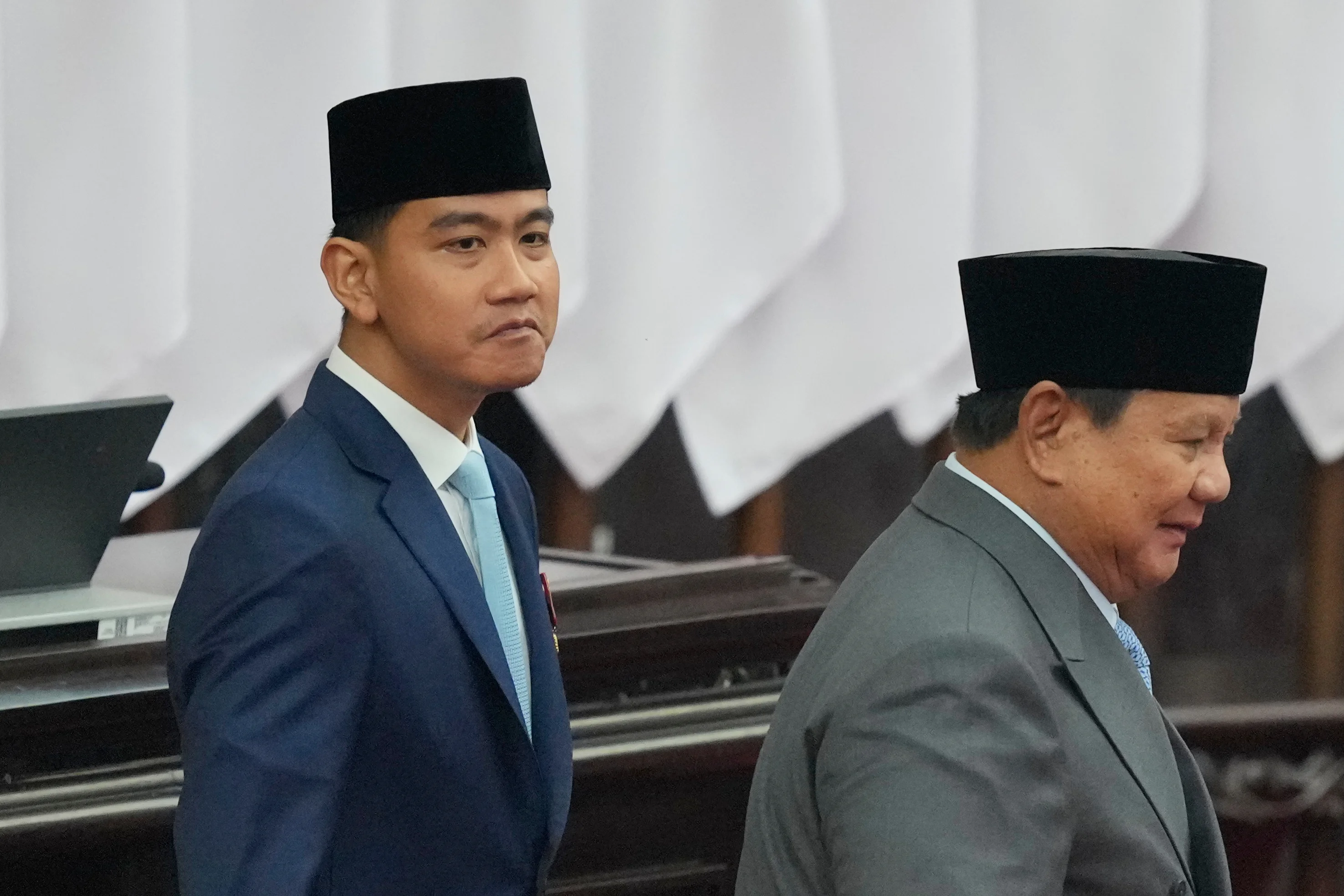
Indonesian politics just took a sharp, chaotic turn. Vice President Gibran Rakabuming Raka surprised the nation by offering to step down during a closed-door meeting with President Prabowo Subianto in Jakarta.
If you've been following Southeast Asian headlines, you know this didn't come out of nowhere. Months of intense scrutiny over educational credentials, high court rulings, and escalating friction inside the political establishment finally hit a boiling point. Gibran stated he didn't want his position to spark prolonged national instability, but the shockwaves are already reshaping the government.
Let's break down what's actually happening behind the scenes and why this eligibility crisis matters so much.
The Diploma Dispute That Triggered the Crisis
At the center of this political storm is a very basic legal requirement. Under Indonesian election laws, anyone running for president or vice president must hold a valid senior high school diploma or an equivalent qualification.
Gibran completed parts of his secondary and higher education overseas. Because of this, he needed to submit specific equivalency certificates to prove he met the standard. Critics and political opponents questioned those documents from day one.
The pressure intensified exponentially after legal challenges reached the courts. The Supreme Court eventually ruled that key documents regarding his overseas secondary credentials did not satisfy election requirements. That ruling handed fuel to opposition lawmakers who immediately began pushing for formal impeachment proceedings.
Gibran found himself cornered. Facing a mounting legislative rebellion and a fractured public image, he walked into the presidential palace and offered his resignation directly to Prabowo. Presidential spokesperson Prasetyo Hadi confirmed the talks lasted over two hours, leaving the final constitutional next steps hanging in the balance.
The Jokowi Factor and Shifting Alliances
You can't understand this crisis without looking at the family dynamic. Gibran is
Why Indonesia's Vice President Resignation Changes Everything Right Now
news
Political earthquakes rarely happen quietly. They shake foundations when you least expect them.
Indonesia's political landscape just hit a massive tremor. The country's vice president has stepped forward with an offer of resignation. Why? Severe questions regarding constitutional eligibility began mounting from every corner. Critics and legal scholars started asking uncomfortable questions. The pressure simply became too loud to ignore.
If you're trying to figure out what's really happening behind closed doors in Jakarta, you aren't alone. This isn't just a standard political squabble. It strikes right at the heart of institutional credibility in Southeast Asia's largest democracy.
Let's break down what led to this moment. We need to look at why eligibility rules matter so much, and what happens next for the nation's leadership.
The Roots of the Eligibility Crisis
Constitutional requirements exist for a reason. They protect the system from sudden power grabs or rushed candidacies. In Indonesia, the legal framework governing executive office is strict. Every candidate must meet precise age, residency, and qualification benchmarks.
Cracks appeared early. Legal experts started raising red flags about how the vice president's paperwork cleared the election board in the first place. Was there political interference? Did loopholes get exploited?
Public skepticism grew fast. People talked on social media. Analysts wrote scathing op-eds. Independent watchdogs demanded transparent audits of the initial vetting process. The administration tried to brush off the early noise. That strategy backfired completely.
When you ignore constitutional compliance, the public smells blood. Protests didn't flood the streets immediately, but the digital backlash was fierce. Lawmakers faced angry constituents during recess periods. Pressure mounted inside the ruling coalition itself. Nobody wanted to sink with a ship built on shaky legal ground.
Why Resigning Now Changes the Game
Stepping down voluntarily is a calculated gamble. It's rarely an admission of pure guilt. Instead, it's a damage control tactic.
By offering to resign, the vice president attempts to seize control of the narrative. The move aims to cut short an ugly impeachment trial or a formal constitutional court ruling that could delegitimize the entire administration. It buys breathing room. It tries to save face.
Yet, the fallout remains messy. You can't just hand back executive power without triggering a constitutional scramble. Indonesia's legal minds are now working overtime. They are pouring over texts to determine the exact succession protocol.
Here is what most casual observers miss. This situation exposes deep institutional friction. When a high-ranking official's credentials face valid challenges months into a term, the oversight bodies look weak. The elections commission faces intense scrutiny. People want to know how past vetting committees missed red flags that independent lawyers spotted in minutes.
The Broader Impact on Indonesian Politics
Indonesia has worked hard for decades to build a stable, democratic reputation. Foreign investors love stability. They hate sudden executive shakeups.
Market reactions were immediate, though subdued. Investors hate uncertainty above all else. When top leaders step down amid legal clouds, currency fluctuations follow. Business leaders start pausing expansion plans until the dust settles.
Domestically, this saga energizes the opposition. They finally have a tangible issue to rally behind. They aren't just complaining about economic policy or inflation. They are talking about the rule of law. That resonates powerfully with middle-class voters who value institutional integrity.
Presidential allies are now scrambling to distance themselves from the controversy. Survival instincts kick in fast in politics. Expect loyalists to throw the vice president under the bus if it protects the broader executive branch from collapsing.
What to Watch Next
The story isn't over yet. Resignation offers still need formal processing, acceptance, and legal confirmation.
Watch the constitutional court's next moves closely. Pay attention to how the legislative branch handles the vacancy process. If lawmakers try to rush a replacement through without public debate, expect a fresh wave of public backlash.
Indonesia stands at a crucial crossroads. How the nation handles this eligibility crisis will set a precedent for decades. It will show whether laws truly apply to the powerful, or if exceptions can be carved out behind closed doors.
Keep your eyes on Jakarta. The fallout from this resignation will dictate the rhythm of regional politics for a long time.