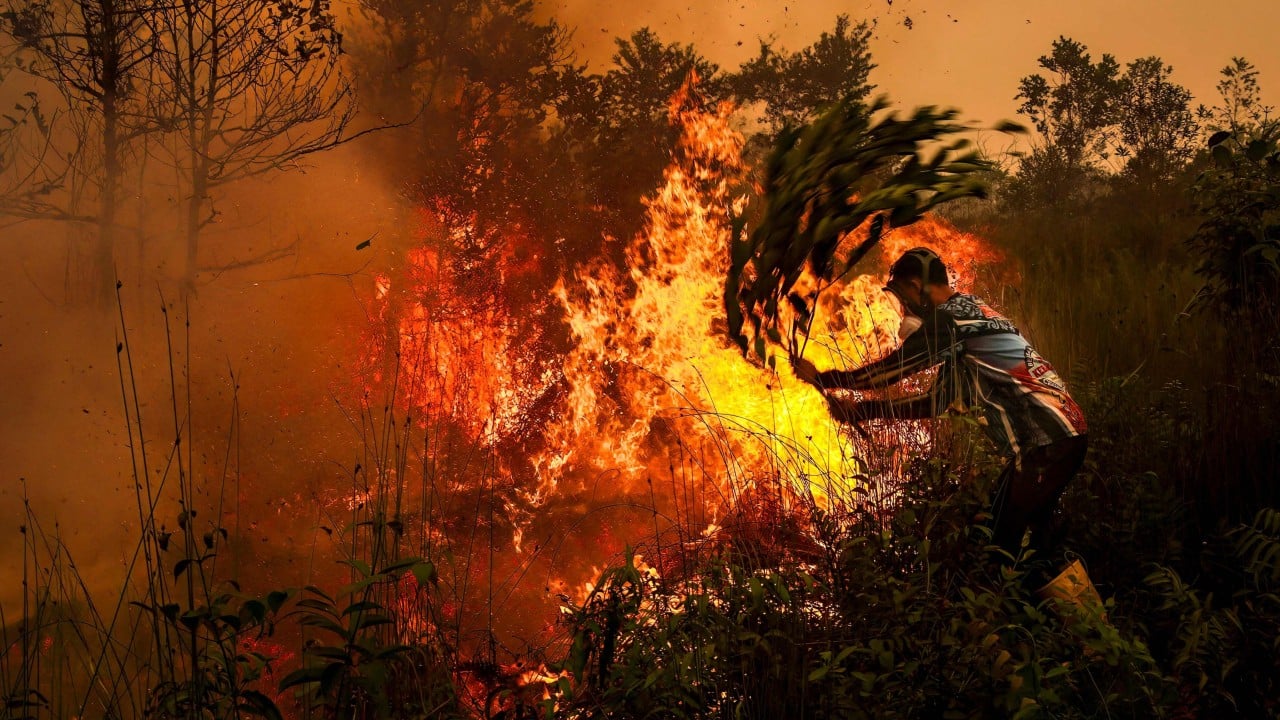
When millions of hectares of carbon-rich peatland go up in smoke, the math behind a country's climate pledges starts to look grim. Yet Indonesia is refusing to back down from its international climate commitments, even as surging wildfire emissions threaten to derail years of careful tracking.
If you look past the standard political talking points, a much harder truth emerges. Balancing rapid domestic economic growth with a massive energy transition while managing extreme seasonal fires is an uphill battle. But the government insists its core climate roadmap remains intact, raising questions about how Jakarta plans to reconcile soaring carbon spikes with its long-term decarbonization targets.
The Reality Behind the Smoke and Peat
Fires in Southeast Asia are rarely just accidental brush blazes. When severe El Niño conditions hit, they dry out ancient, carbon-dense peatlands across regions like Kalimantan and Sumatra. Once these underground layers catch fire, they release centuries of trapped carbon back into the atmosphere in a matter of weeks.
In recent monitoring cycles, millions of hectares burned, sending toxic haze across borders and instantly ballooning national greenhouse gas output. Critics argue that these spikes make national emissions targets mathematically impossible to achieve on schedule.
Yet Indonesian officials point out that treating seasonal fires as a permanent failure of climate policy misses the broader picture. Environment Minister Jumhur Hidayat laid out key priorities ahead of global climate summits, stressing that national development and aggressive climate action must run in parallel rather than canceling each other out.
The Energy Transition Paradox
You can't talk about Indonesia's climate strategy without confronting the energy sector. Fossil fuels still dominate the energy mix, and renewables have lagged behind initial government timelines. Renewable sources hovered under 19 percent of the total energy mix, falling short of previous domestic projections.
At the same time, massive infrastructure and self-sufficiency drives push heavy investments into domestic power capacity. President Prabowo Subianto's administration announced ambitious pushes for solar and clean energy scaling, including massive photovoltaic targets.
The tension lies in execution. Building out 100 gigawatts-peak of solar capacity sounds incredible on paper, but translating that into actual grid stability while phasing out coal-reliant captive power plants requires massive capital and administrative discipline.
Where the Strategy Falls Short
Let's be honest about what isn't working. Relying heavily on future offsets or long-term forestry promises doesn't stop immediate smoke from choking major cities today.
- Enforcement gaps: Investigating a handful of corporate concession holders after fires break out is reactive policing, not prevention.
- Peat restoration delays: Rehydrating drained peatlands is slow, expensive, and often clashes with commercial agricultural expansion.
- Financing bottlenecks: International climate finance rarely moves fast enough to match the scale of local restoration needs.
If Indonesia wants to maintain credibility on the global stage, token investigations won't cut it. Real deterrence requires hitting corporate polluters where it hurts before the dry season even begins.
What Needs to Happen Next
Doubling down on climate goals only works if the enforcement mechanism matches the rhetoric. To keep emissions targets alive, look for three concrete shifts over the next fiscal cycle:
- Stricter real-time monitoring of groundwater tables in high-risk peat concessions.
- Faster regulatory approval and grid integration for utility-scale solar projects.
- Transparent penalties for concession holders who fail to maintain fire prevention infrastructure.
The ambition is there, but policy survival depends entirely on execution on the ground.