You read that right. People are willingly paying thousands of dollars to have fat harvested from dead bodies injected into their faces, breasts, and butts.
Social media calls it zombie filler.
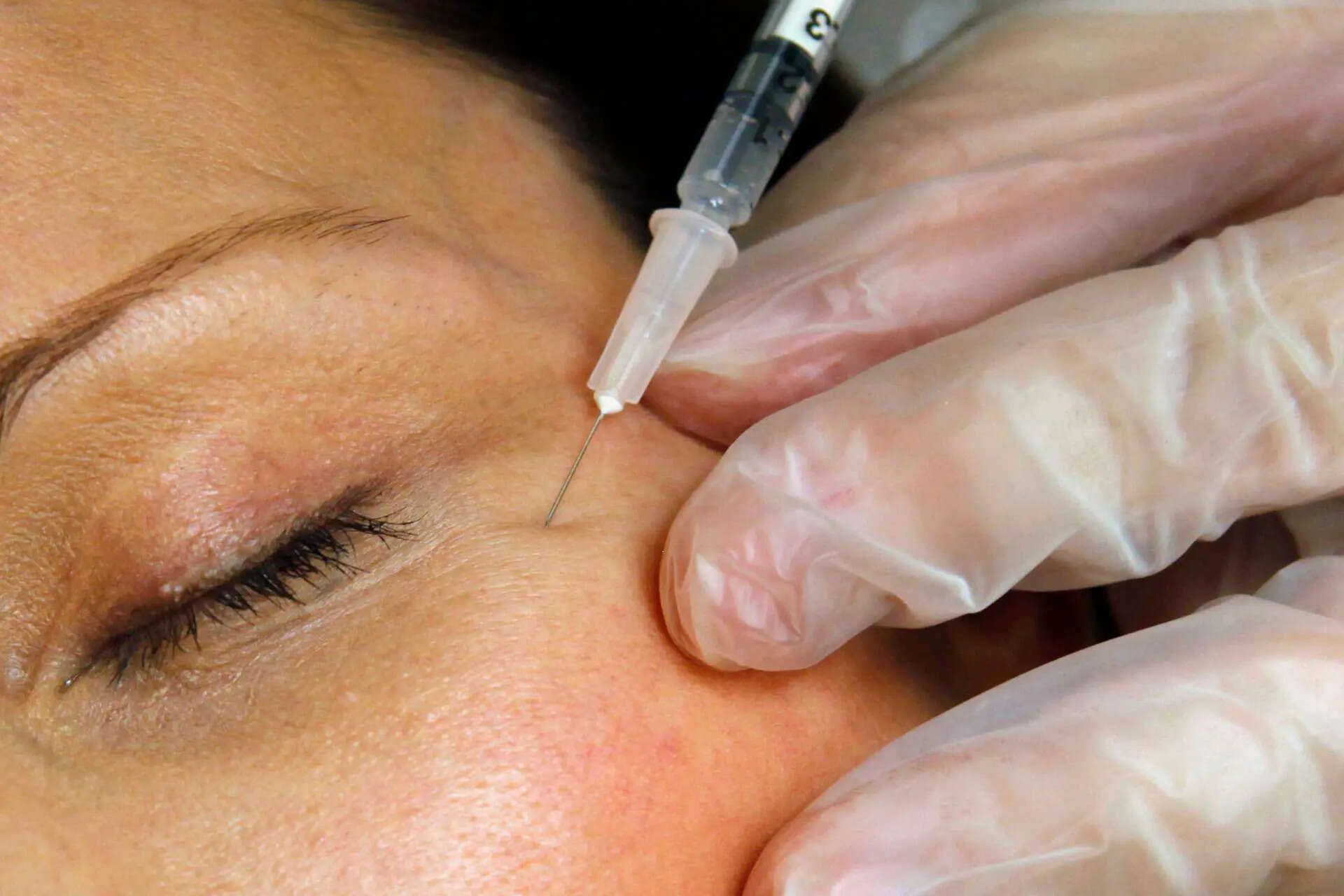
In clinical settings, doctors refer to it by brand names like AlloClae, DermaClae, or Renuva. It is marketed as an off-the-shelf alternative to traditional fat grafting, promising the natural feel of real fat without the painful downtime of liposuction.
But beneath the sleek marketing campaigns lies a deeply polarizing reality. The medical community is divided. Bioethicists are raising alarms. Regulatory battles are heating up.
If you are looking for a way to restore lost facial or body volume, you need the hard, unfiltered truth. Let's pull back the curtain on this bizarre trend, look at the actual science, and figure out if it is a brilliant medical breakthrough or a terrifying safety risk.
The Secret Mechanics of Bottled Cadaver Fat
To understand zombie filler, you first have to understand why traditional fillers can sometimes look bad.
Synthetic dermal fillers, usually made of hyaluronic acid, work like temporary water-retaining sponges. They plump the skin. But if they are overused or injected poorly, they migrate. They cause puffiness. They can make faces look unnaturally pillowy or distorted.
Traditional fat grafting is different. A surgeon performs liposuction on your stomach or thighs, processes your own fat, and injects it where you need volume. It looks incredibly natural. But it requires surgery, anesthesia, and recovery time.
Enter allograft adipose matrices.
These products use fat harvested from human cadavers. But you are not getting raw, dead fat cells placed directly under your skin.
During the manufacturing process, a processing company takes donated human fat and strips away the living cells, cellular debris, lipids, and DNA. What remains is an acellular matrix—essentially a microscopic scaffolding made of natural structural proteins, collagen, and growth factors.
When a doctor injects this sterile scaffold into your face, hands, or body, it does not just sit there. It acts as a biological magnet.
Your body recognizes the collagen matrix and begins to migrate its own living fat cells into the scaffold. New blood vessels form. Over the course of twelve weeks, your own body repopulates the area with fresh, living fat.
The donor scaffold eventually degrades and disappears entirely. You are left with your own, permanent fat tissue. No surgery required. No liposuction needed. It is performed in a simple, ten-minute office visit.
Why the GLP-1 Weight Loss Boom Created This Craze
The sudden explosion of zombie filler in 2026 is not an accident. It is directly tied to the massive rise of GLP-1 weight-loss medications like Ozempic and Wegovy.
These drugs are incredibly effective. Millions of people are shedding massive amounts of weight rapidly. But rapid weight loss comes with a frustrating side effect.
Extreme volume loss.
People are losing fat in their faces, leaving them with sunken cheeks and deep hollows—a look widely dubbed Ozempic face. They are losing targeted volume in areas that define their physical silhouettes, like the breasts and buttocks, leaving them with loose skin and a deflated appearance.
Plastic surgeons are seeing a massive influx of patients who want to restore this lost volume.
Many of these patients do not want to undergo invasive surgery. They do not want the scarring, pain, and downtime of a traditional fat transfer.
Even more importantly, many of these patients are now so lean that they simply do not have enough excess body fat left to harvest via liposuction. They literally have no fat to graft.
That is why off-the-shelf cadaver fat has become highly attractive. It solves a supply problem.
Patients can walk into a clinic, get an injection of a sterile, pre-packaged biologic, and walk out with a natural-looking volume restoration. It sounds like the perfect solution. But the reality is far more complicated.
The Dark Side of Injecting Cadaver Fat
Before you schedule an appointment to get injected with donor tissue, you must understand the severe risks and the major gaps in clinical data. This is not Botox. It is a complex biological implant.
First, there is the terrifying risk of fat necrosis.
If the injected donor matrix fails to vascularize—meaning your body fails to grow new blood vessels to supply the area with oxygen and nutrients—the tissue dies. It decays inside your body.
Take the case of a patient who spent $13,000 on a donor fat treatment. She developed severe fat necrosis. She watched in horror as a thick, oily, yellow fluid began seeping from her injection site. It was the sound of her body rejecting the dead tissue.
Second, unlike hyaluronic acid fillers, zombie filler cannot be dissolved.
If you get hyaluronic acid filler and hate the way it looks, your injector can inject an enzyme called hyaluronidase to melt it away in minutes. You cannot do that with a fat matrix.
Once your body grows its own fat inside that scaffold, it is permanent. If your body produces too much fat, or if it grows in an asymmetrical, lumpy way, your only option for removal is surgical excision. You will have to go under the knife to cut it out.
Third, we simply do not have long-term human data.
Plumping a small acne scar or a minor liposuction divot with a tiny amount of Renuva is one thing. Pumping large quantities of newer products like AlloClae into breasts or buttocks to mimic a surgical enhancement is a completely different beast.
Plastic surgeons are warning that we do not know how these larger volumes will behave over a five- or ten-year period.
We do not know what happens if you lose or gain weight after getting the injection. Will the newly generated fat shrink and sag at a different rate than your natural fat? We do not know.
Furthermore, we do not know the metabolic status of the donor whose fat was harvested. Was their fat highly active and metabolic, or was it structural? This genetic history can alter how the fat behaves once it is growing inside your face.
These are massive, unanswered questions.
The Intense Ethical and Legal Battles
Aside from the medical risks, zombie filler carries a heavy ethical weight.
Most human tissue is donated under the assumption that it will be used for lifesaving medical procedures—skin grafts for severe burn victims, bone grafts for reconstructive surgeries, or heart valve replacements.
Is it ethical to take tissue donated from a deceased person and sell it for a high-end cosmetic butt lift or breast enhancement?
Arthur Caplan, a prominent professor of bioethics at NYU's Grossman School of Medicine, argues that commercializing donated bodies for cosmetic profits is a deep betrayal of altruism. Many families of organ and tissue donors might feel horrified to learn their loved one's remains were sold to a clinic to erase a wealthy patient's cellulite dimples.
Regulators are starting to step in.
The state of New York blocked the distribution of AlloClae over safety and regulatory concerns. In response, the manufacturer, Tiger Aesthetics, filed a lawsuit against the New York Department of Health to fight the ban.
Meanwhile, in countries like Australia, regulatory bodies have not approved these products at all. Medical experts there are advising patients to stay far away until real, independent, long-term human clinical trials are published.
How to Protect Yourself If You Are Considering This Trend
If you are still intrigued by the idea of off-the-shelf fat transfer, do not rush into a clinic because of a flashy TikTok video or an influencer's glowing review. You must protect your health, your wallet, and your body.
Here is exactly how to navigate this controversial trend safely:
- Avoid the bargain clinics. Do not get this done at a local medspa by an injector who just finished a weekend training course. Seek out a board-certified plastic surgeon or dermatologist who has extensive experience with traditional fat grafting and reconstructive medicine. They understand tissue vascularization and how fat actually behaves.
- Stick to small areas first. If you want to try an adipose matrix, start with tiny, reconstructive corrections. Using a small dose of Renuva to correct a minor acne scar, a hollow temple, or a small liposuction indentation is much safer than injecting large volumes into your breasts or buttocks.
- Ask hard questions during your consultation. Ask your provider exactly which brand they are using and where they source it. Ask how many of these procedures they have performed, how they handle complications like fat necrosis, and what their plan is if the results are uneven or lumpy.
- Acknowledge the permanent nature. Remember that this is not a temporary filler that will wash out of your system in six months. You are modifying your body's biological tissue permanently.
The beauty industry moves at a lightning-fast pace, often far quicker than clinical science or safety regulations can keep up with. While the idea of bottled, off-the-shelf fat sounds like a dream, the medical, ethical, and safety risks are incredibly real. Take your time, weigh the risks, and make your decision with eyes wide open.