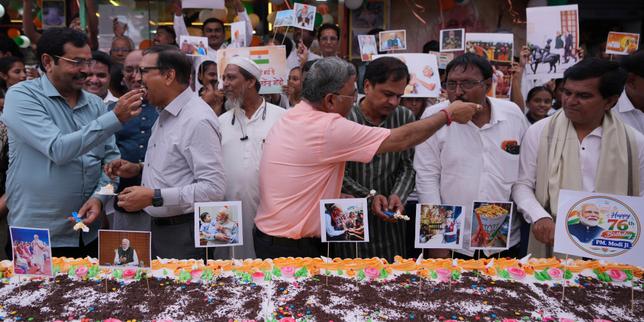
India recently witnessed an enormous wave of political mobilization, public outreach, and high-profile celebrations as Prime Minister Narendra Modi marked his 76th birthday. Across the country, the ruling Bharatiya Janata Party launched the month-long "Seva Sankalp Abhiyan," combining massive public spectacles with grassroots community service. While supporters view these large-scale events as a testament to his quarter-century in public office, the sheer scale of the festivities sparks intense national debate over political messaging and modern governance.
The Anatomy of a Massive Political Milestone
Turning 76 on September 17, 2026, Narendra Modi reached a significant juncture, nearing 25 uninterrupted years in executive office since first taking oath as Gujarat Chief Minister in October 2001. Rather than a quiet affair, the date kicked off a sprawling 30-day campaign running until October 17. Recently making headlines in this space: Inside Robert F Kennedy Jr And The White House Vaccine Shift.
The strategy relies heavily on organized community outreach. Party workers, local schools, and government departments coordinated thousands of events nationwide. From lighting oil lamps in beneficiaries' homes under the banner of "Ashirwad Ka Diya" to staging street plays and organizing blood donation drives, the apparatus touches nearly every level of civil society.
At the same time, major economic and technological events intersected with the milestone. At the SEMICON India 2026 conference in New Delhi, attendees burst into spontaneous cheers and birthday greetings as Modi took the stage to discuss domestic chip manufacturing and digital infrastructure expansion. More insights into this topic are explored by NPR.
Divergent Perspectives on Large Scale Political Events
Mega-celebrations for sitting leaders always draw polarized reactions, and this milestone was no exception. Proponents argue that tying a leader's birthday to nationwide welfare campaigns injects energy into public administration. Cabinet ministers and regional leaders emphasized that initiatives like the "PM Vishwakarma" scheme and grassroots welfare checks demonstrate a direct connection between leadership and public utility.
Critics and opposition figures, however, question the blurred lines between party propaganda and state machinery. Public policy analysts often point out that institutionalizing a leader's personal milestone through government-backed school competitions and mandatory administrative participation creates a cult of personality. Gen Z commentators and urban critics have voiced skepticism online, arguing that public resources shouldn't subsidize political image-building.
What the Numbers and Campaigns Reveal
Beneath the political theatre lies a sophisticated logistical machine designed to cement governance narratives. The "Seva Sankalp Abhiyan" features 25 distinct service activities, aiming to document millions of individual beneficiary stories through the "Kahani Badlav Ki" initiative.
Furthermore, the integration of digital creators and social media influencers marks a modern shift in political communication. By flying in hundreds of content creators to showcase infrastructure projects like GIFT City and regional tech hubs, the administration bypasses traditional media filters to broadcast its narrative directly to younger demographics.
Ultimately, these massive festivities show how political survival and brand consolidation operate in contemporary democracies. Whether viewed as an inspiring display of grassroots connection or an excessive exhibition of political power, the strategy proves that political momentum remains carefully orchestrated down to the very last detail.
Take a look at how global leaders and supporters celebrated the milestone in this Global Leaders Extend Birthday Wishes to PM Modi video.