For more than eight decades, a second-floor room inside London's iconic Natural History Museum has sat entirely sealed off from the public. Closed down in 1943 during the height of the Second World War, this historic space inside the South Kensington Waterhouse Building is finally swinging its doors back open.
If you've ever wondered what happens to the hidden corners of world-class institutions, you're about to find out. Starting September 16, 2026, visitors can step inside the newly minted Nature and Us exhibition completely free of charge.
Why the Gallery Was Hidden For 83 Years
Most regular visitors assume museums are static places where exhibits stay put forever. The reality is much more chaotic.
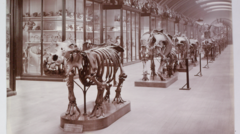
Back in the 19th century and early decades of the 20th century, this specific room served as an osteology and mammals gallery. Skeletons and stuffed specimens lined the halls. Then came the Blitz and the grim realities of WWII.
When the museum's original herbarium suffered severe bomb damage, curators had to scramble. They repurposed the mammal and skeleton gallery into a makeshift storage facility for vital botanical collections. The public was locked out, and the room became a back-of-house workspace. Original wooden herbarium cabinets still line the walls today, holding fast to that strange wartime history.
What You Will Actually See Inside
Forget dusty display cases with zero context. The museum is using this 18-month trial run as an experimental testing ground for a permanent gallery planned for 2029.
Fifty carefully chosen objects drive the narrative. You aren't just looking at dead things behind glass; you're looking at the messy relationship between humanity and the environment.
- A 400,000-year-old hand-axe that flips the script on early human timelines.
- A Victorian skeleton of a monk seal named Jenny, exposing how wildlife was historically used for public spectacle.
- A replica jaw of an ancient British dog, dating back roughly 14,300 years to show our oldest animal partnership.
- A miniature Crystal Palace dinosaur model, revealing Victorian sci-fi imaginations of prehistoric beasts.
- An 1980s Star Wars toy encrusted with marine bryozoans, proving that even plastic junk becomes part of nature given enough time.
The Master Plan Behind the Doors
This reopening isn't a random event. It forms a key pillar of the museum's ambitious NHM150 campaign.
Museum leadership wants to expand public access footprint by roughly 16 percent ahead of their milestone 150th anniversary in 2031. Dr. Doug Gurr, the museum's director, points out that creating these restored spaces helps turn casual tourists into active advocates for the planet.
Instead of dictating what people should learn, curators are taking a backseat. They want visitor feedback over the next year and a half. Your thoughts, comments, and survey responses inside the gallery will directly dictate which stories make the cut when the permanent space launches in 2029.
Head down to South Kensington this autumn, grab a free ticket, and check out a room that most living people have never laid eyes on.