Pakistani security forces claim to have killed 74 militants during intense counterterrorism sweeps across the country's western frontier. These operations, spanning the last ten days, target volatile areas long plagued by insurgent violence and cross-border tension.
If you've been following South Asian geopolitics, you know that the frontier regions bordering Afghanistan have turned into pressure cookers. Let's break down what actually happened during these latest raids, why Islamabad is pointing fingers at its neighbors, and what this means for regional security.
Where the Raids Happened
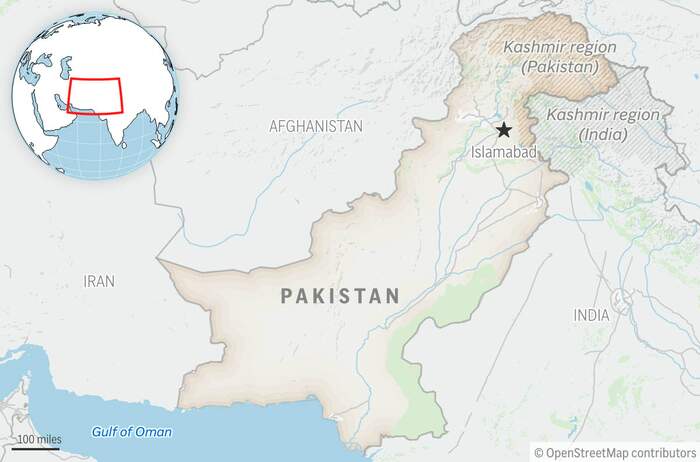
The military's media wing, the Inter-Services Public Relations (ISPR), reported that the casualties occurred across two distinct provinces: Khyber Pakhtunkhwa (KP) and Balochistan.
In the northwestern province of Khyber Pakhtunkhwa, troops carried out high-risk intelligence-based raids in districts like Mir Ali and Orakzai. According to official military statements, these specific operations left 43 militants dead. Soldiers also uncovered substantial caches of weaponry, ammunition, and improvised explosive devices (IEDs) meant to fuel further attacks.
Meanwhile, down southwest in Balochistan, troops eliminated another 31 fighters in multiple engagements starting from November 3. This region faces a persistent, bloody insurgency driven by separatist outfits like the outlawed Baloch Liberation Army (BLA).
The Cross-Border Finger-Pointing
Islamabad isn't keeping quiet about who it believes is pulling the strings. Pakistani officials openly claim that the targeted fighters are part of what the government labels "Fitna al-Khawarij"—a blanket term primarily aimed at groups like the Tehrik-e-Taliban Pakistan (TTP), along with other elements they accuse of operating with foreign backing.
The military's public statements went a step further, explicitly alleging that these militant networks receive support from elements in Afghanistan and India. Both Kabul and New Delhi have repeatedly rejected these accusations, maintaining that Pakistan's security troubles stem from internal governance issues rather than external sponsorship.
Tensions have simmered constantly since the Afghan Taliban took power in Kabul back in 2021. Islamabad insists that TTP leaders use safe havens across the Afghan border to plan and launch attacks inside Pakistan, creating a cycle of border closures, trade bottlenecks, and diplomatic friction.
The Domestic Security Toll
These recent military strikes arrive on the heels of mounting casualties among Pakistan's own law enforcement personnel. Just days before the latest casualty figures were released, a deadly ambush in the Kohat district of Khyber Pakhtunkhwa claimed the lives of 10 police officers.
Data compiled by research organizations like the Center for Research and Security Studies (CRSS) underscores just how concentrated the violence has become. Khyber Pakhtunkhwa and Balochistan account for roughly 96 percent of all violence-related fatalities in the country, turning routine police patrols and military posts into frontline combat zones.
What Comes Next
Prime Minister Shehbaz Sharif and President Asif Ali Zardari have publicly praised the security forces for neutralizing the fighters. The government's stated position under the "Azm-e-Istehkam" anti-terror framework is that operations will continue at full throttle until militant infrastructure is entirely dismantled.
Yet, kinetic military operations alone rarely solve deep-rooted insurgencies. Unless intelligence sharing improves between Islamabad and Kabul, and cross-border infiltration is genuinely halted, these bloody flashpoints along the frontier are bound to flare up again. Expect security lockdowns to remain the immediate reality for residents in KP and Balochistan as troops press forward with clearance sweeps.