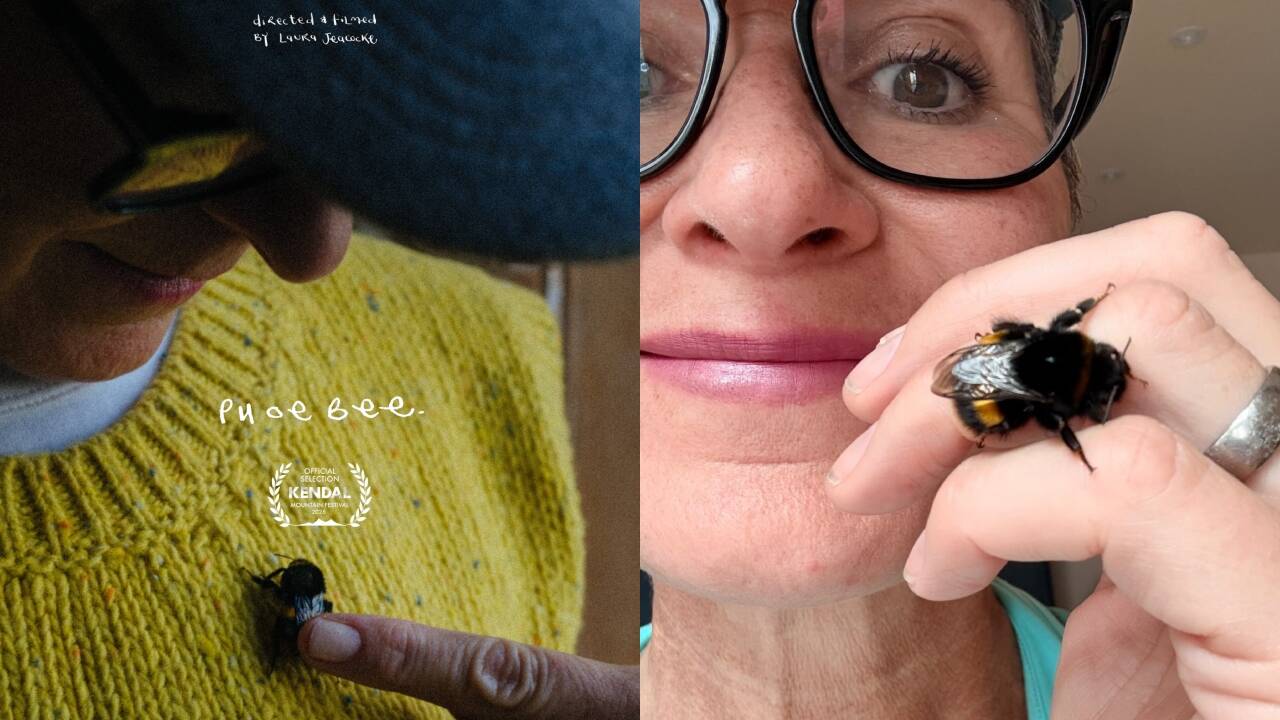
You see animal rescue stories every single day. Someone pulls a shivering puppy from a drainage ditch or coaxes a terrified cat out from behind a kitchen appliance. We scroll past them in seconds. But when Gilly McArthur picked up an injured queen bumblebee struggling on hot concrete with a broken wing, nobody expected the insect to become a global digital phenomenon.
One hundred days later, the bee named Phoebee is climbing up arms, resting on necks, and hiding inside hair while millions watch online.
People aren't just clicking out of mild curiosity. They are deeply invested. Why does a flightless queen insect in Scotland spark a worldwide obsession? Let's look at what's really happening.
The Accidental Rescue That Defied the Odds
It started on a hot pavement. McArthur spotted the large insect lying helplessly by the roadside. Thinking the creature wouldn't survive past sunset, she scooped her up, carried her home, and arranged a modest bed of fresh flowers.
Bumblebees don't usually live long lives. Most worker bees and drones survive for only a single season. Newly mated queens are the exception, hiding away underground to hibernate through the autumn before emerging in spring to establish new colonies. Because Phoebee had lost a critical wing and never mated, her prognosis was grim.
Instead of perishing in a day, she bounced back.
McArthur was scheduled for a week-long sailing expedition off the West Coast of Scotland shortly after the rescue. Leaving the insect behind wasn't an option. Phoebee packed her bags—metaphorically speaking—and went to sea. Documenting their voyage on Instagram changed everything.
Why Phoebee Captured Our Collective Attention
Social media feeds are loud, aggressive, and engineered for outrage. Phoebee provided a massive course correction.
When McArthur woke up the morning after posting their first sailing updates, her inbox was flooded. People weren't leaving toxic comments or arguing about politics. They were sharing their own quiet stories of saving backyard caterpillars, nursing butterflies back to health, and noticing the small, fragile details of the natural world.
According to experts like Andy Benson from the Bumblebee Conservation Trust, part of Phoebee's viral appeal comes down to raw biology. As a buff-tailed bumblebee, she belongs to one of the largest and fluffiest British species. She's a queen, making her even larger and more visually distinct than standard foragers.
Beyond her physical fluffiness, the timing struck a nerve. We're living through an era of constant global anxiety. People are tired, overwhelmed by relentless digital noise, and yearning for something authentic, quiet, and kind. Watching a tiny insect meticulously clean herself like a house cat or extend a long tongue to extract nectar offers a powerful antidote to burnout. It forces you to slow down.
The Grim Reality Behind the Viral Cuteness
It's easy to get swept up in the charm of a celebrity insect living rent-free on a human companion's shoulder. However, the wider ecological picture isn't nearly as cozy.
Wild pollinators are in serious trouble. In the UK and across Europe, roughly a third of wild bees and hoverflies face population decline. Habitat loss, intensive farming practices, climate shifts, and chemical pesticides are squeezing native species out of existence.
Bees matter far beyond aesthetic appreciation. One in every three mouthfuls of human food depends directly on animal pollination. Crops like apples, beans, squash, and almonds rely entirely on these tiny workers to produce yields. When bee populations collapse, agricultural systems wobble right behind them.
What You Can Actually Do to Help Local Bees
You don't need to adopt a flightless queen or take an insect sailing along the Scottish coast to make a difference. In fact, conservationists strongly advise against trying to bring wild bumblebees indoors unless they are in immediate, life-threatening danger.
If you want to support real bee populations right where you live, skip the social media stunts and focus on habitat restoration:
- Plant local flora: Ditch sterile decorative lawns and plant native, nectar-rich flowers in your garden, window boxes, or balcony pots. Early-blooming plants are crucial for queens waking up in spring.
- Stop spraying chemicals: Eliminate neonicotinoids and harsh commercial pesticides from your yard. These chemical agents destroy navigation and foraging abilities across entire colonies.
- Provide fresh water: Set out a shallow dish of water with pebbles inside so thirsty pollinators can land safely, drink, and fly away without drowning.
- Leave wild spaces alone: Resist the urge to aggressively tidy every square inch of your yard. Piles of brush, dead wood, and patches of undisturbed long grass provide essential nesting and overwintering sites.
Phoebee's story is charming, but her legacy shouldn't just be a viral video clip you double-tap and forget. Let her remind you to look down, notice the overlooked wildlife right outside your door, and give them room to survive.