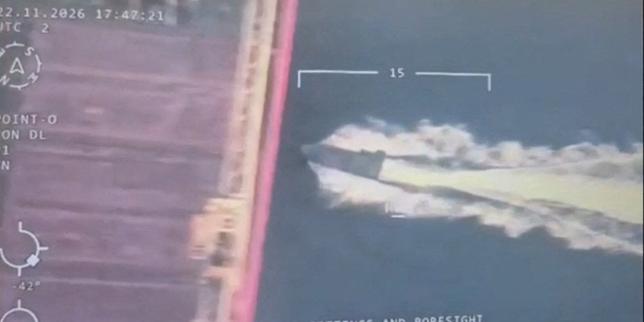
Iran says it will use "all available means" to counter a U.S. naval blockade imposed against its ports and oil exports. That vow sounds explosive on cable news. In practice, it reflects a regime squeezed tight between choking oil revenues and a narrow set of moves that don't trigger overwhelming U.S. retaliation.
Foreign Ministry spokesman Esmaeil Baqaei laid out Tehran's line during his weekly press briefing on November 23, 2026. He called the U.S. naval blockade, economic sanctions, and land-route disruption an act of military aggression. He also pointed to Article 51 of the U.N. Charter, arguing Iran has the right to defend itself with any means at its disposal. Don't forget to check out our recent article on this related article.
Wait. Let's look past the diplomatic phrasing. What does "all available means" actually look like on the water and inside Tehran right now?
What Triggered Iran's Threat to Counter the US Blockade
Tehran didn't wake up on November 23 and pick those words out of thin air. The warning followed a tightening vise around Iranian crude exports. If you want more about the context here, USA.gov offers an excellent breakdown.
After war broke out on February 28, 2026—following U.S.-Israeli strikes that killed Iran's supreme leader, Ayatollah Ali Khamenei—the Strait of Hormuz became a central flashpoint. Iran moved to restrict or blockade the waterway, and Washington answered with a counterblockade targeting Iranian ports, alongside sanctions and a task force aimed at land routes into Iran.
Then came the ship-to-ship loophole test. Since the blockade was reimposed on July 14, tracked crude oil departures avoiding U.S. enforcement from the Gulf of Oman have dried up. On November 17, commodity tracking firm Kpler spotted the first observed ship-to-ship oil transfer since that reinstatement, with another transfer reported on November 19 by TankerTrackers. United Against Nuclear Iran (UANI) also documented a November 17 transfer south of Kharg Island where the tanker OLYM fed roughly 200,000 barrels of Iranian crude to the smaller vessel HAO FAN, which was spoofing its location near Shinas in the Gulf of Oman.
Washington moved fast to shut that down. On November 18, the Joint Maritime Information Centre—an intelligence cell tied to U.S. Central Command—issued an advisory warning that vessels taking cargo from ships loaded at Iranian ports could be treated as evading the blockade even without entering Iranian waters. Those ships risk being stopped, boarded, diverted, or captured, and failing to comply immediately could bring escalating or disabling fire.
Add one more piece of context: Foreign Minister Abbas Araghchi declared the Islamabad peace agreement dead less than 24 hours before Baqaei's briefing. Put those events together, and Tehran's rhetoric is a pushback against U.S. maritime enforcement closing off its last creative workarounds.
How Tehran Reads Washington After the US Midterms
Here's a detail plenty of commentators gloss over. Tehran isn't just reacting to ships off Kharg Island. It's reading U.S. domestic politics after the November 3 midterm elections, in which Democrats won control of both the House and the Senate.
From Tehran's perspective, those results look like political headwinds for President Donald Trump. Iranian officials and analysts close to the government have argued that a Democratic Congress shapes war funding and that domestic pushback against the conflict gives Washington less room for massive new escalation.
Honestly, that reading can cut both ways. Thinking an opponent faces political constraints might tempt a government to hold firm or test boundaries rather than fold. Yet misreading U.S. resolve—or pushing right up to the edge of CENTCOM's rules of engagement—is how crises spiral when neither side wants to blink first.
The Real Tools Behind "All Available Means"
When officials say "all available means," they're bundling legal arguments, shipping pressure, regional strikes, and economic survival into one phrase. None of those levers is cost-free.
- International law and diplomacy: Routing the threat through the Foreign Ministry—citing Article 51, Article 2(4), and U.N. General Assembly Resolution 3314—frames the blockade as unlawful aggression for international bodies and diplomatic audiences, even while Tehran insists the Strait of Hormuz could reopen within two days if Washington meets its demands.
- Tanker convoys and maritime friction: Revolutionary Guards-linked outlets, lawmakers, and coordinated Friday prayer sermons have floated sending tankers to break the blockade and warned of hits on Persian Gulf oil infrastructure if fired upon. Running a convoy straight into U.S. naval interdiction is high-risk theater unless paired with real escalation.
- Regional pressure and Strait disruptions: Iran has continued attacking targets in neighboring states—including reported strikes affecting Bahrain and Kuwait—alongside tanker incidents and disruptions around Hormuz to raise political and economic costs on regional partners and global shipping.
- Shadow shipping and small-vessel workarounds: While crude shipments have been choked off, UANI noted that around a dozen small LPG tankers have gotten past the blockade line since its resumption, showing how smaller-scale evasion still tries to slip through.
Why the Economic Math Hurts Iran More
Let's be blunt about the leverage here. The U.S. naval blockade and sanctions hit Iran's economy much harder than the conflict hits the U.S. economy.
Visible Iranian crude exports have dropped near zero in recent months, leaving Iran as the only Persian Gulf state unable to export oil anywhere near pre-war levels. As analysts at The Soufan Center have noted, relieving that economic squeeze is a central short-term goal for Tehran, while Iranian leaders also worry that pre-emptive escalation or weapons of mass destruction use against the U.S. would invite heavy retaliation without forcing a U.S. exit from the region.
That's the bind Tehran is in. Holding out for a full lifting of the blockade, sanctions relief, war compensation, and U.S. troop pullbacks—while refusing to budge on its enriched uranium stockpile ahead of a deal—keeps pressure on Washington, yet prolongs the economic pain at home.
Common Misconceptions About This Standoff
People often flatten Middle East shipping crises into two oversimplified stories. Both miss how the current blockade actually works.
First, a naval blockade isn't just warships parking in a straight line and firing at anything that moves. In practice, enforcement relies heavily on intelligence tracking, maritime advisories like JMIC's guidance on ship-to-ship transfers, AIS location spoofing detection, and selective boarding or diversion.
Second, tough talk from Tehran doesn't mean a deal is dead forever or a full-scale blockade run is guaranteed. Even as Foreign Minister Araghchi called the Islamabad agreement dead and hardliners talked up tanker convoys, officials have kept linking reopening the Strait of Hormuz to negotiations and conditional commitments.
Practical Next Steps for Tracking the Situation
If you're following this crisis for markets, supply chains, or policy, skip the loudest headlines and watch concrete indicators instead:
- Track actual vessel movements, not just speeches: Watch maritime intelligence updates from sources like UANI, Kpler, or TankerTrackers to see whether ship-to-ship transfers drop off after the November 18 JMIC advisory or whether vessels test enforcement anyway.
- Watch how convoy talk moves through official channels: Notice the difference between commentary on Guards-affiliated media and confirmed operational orders, since Tehran often floats ideas through outlets, parliament, and Friday sermons before—or instead of—acting.
- Separate nuclear demands from shipping terms: Check whether statements from Tehran and Washington show any movement on the core gap—Iran keeping its enriched uranium inside the country versus U.S. demands to resolve the nuclear issue before easing the blockade and sanctions.
- Monitor regional spillover and insurance signals: Keep an eye on incidents in the Persian Gulf and Gulf of Oman—such as attacks involving neighboring states or tanker disruptions—since those directly move shipping risk and energy prices.