Shipping containers are stacking up across Pakistan's capital like heavy steel building blocks, and you can feel the tension in the air. Islamabad is once again bracing itself for gridlock as Imran Khan's party pushes forward with a high-stakes march toward Parliament.
If you've followed Pakistani politics for even a week, you know the script. A protest is announced, the government barricades the city, and a high-stakes game of political chicken begins. But this time, the stakes feel heavier. An International Monetary Fund mission happens to be in the country reviewing a seven billion dollar bailout program, adding immediate economic pressure to an already explosive security situation.
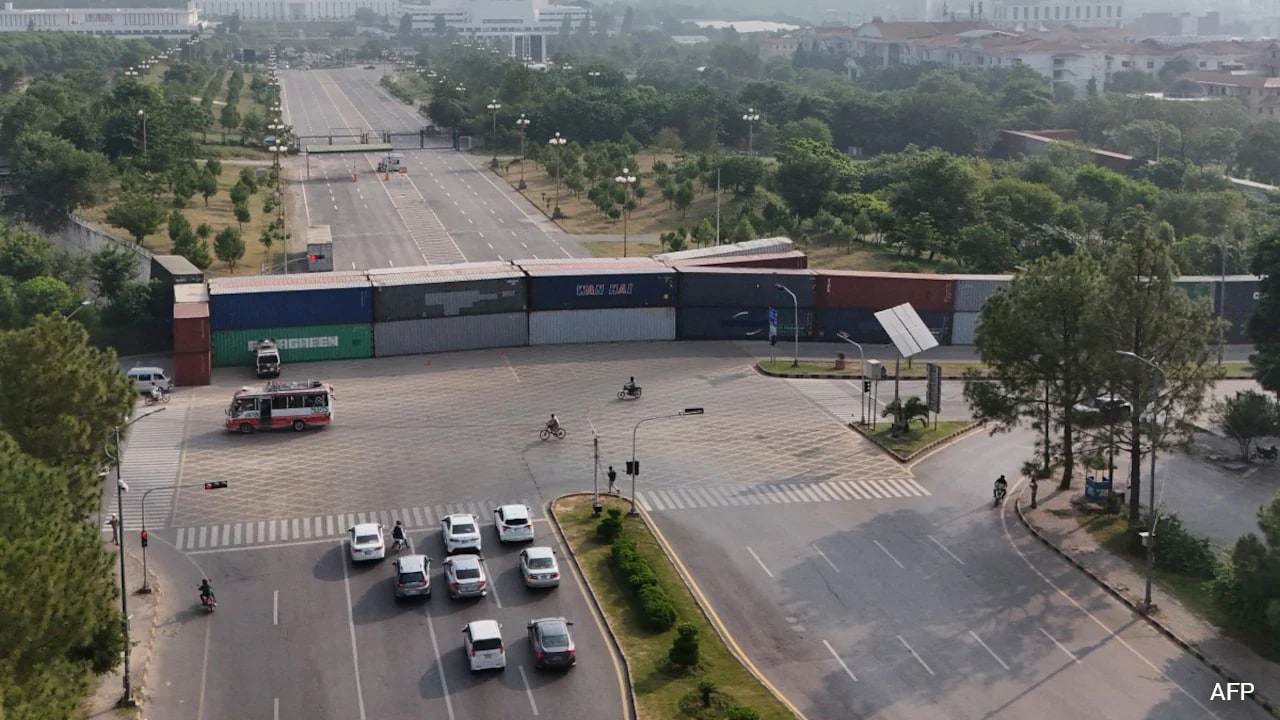
Let's look at what's actually happening on the ground. Authorities have deployed over twenty-two thousand security personnel across Islamabad. They've dropped roughly one thousand shipping containers into strategic choke points, turning major arteries into dead ends. Major highways connecting the capital to Khyber Pakhtunkhwa—the northwestern stronghold governed by Khan's Pakistan Tehreek-e-Insaf party—are effectively cut off.
Why are shipping containers always the weapon of choice here? It's an ironic staple of Pakistani political theater. Years ago, Imran Khan himself used to climb atop these exact metal barriers to rally his crowds. During a 2022 protest march, he was shot in the leg while standing on one. Now, the state uses those same containers to keep his supporters out.
The government isn't just relying on concrete and steel. Under emergency rules, gatherings of five or more people are strictly illegal in Islamabad for two months. Officials have detained Khan's sisters alongside several lawmakers, sweeping up party members in a aggressive pre-emptive crackdown. Interior Minister Mohsin Naqvi has made it clear that authorities won't allow the city to come to a standstill.
On the other side, PTI leaders aren't backing down. Party chairman Gohar Ali Khan insists they'll enter the capital with a festive atmosphere and national flags waving. But security forces and provincial authorities in Punjab are taking zero chances, requesting paramilitary Rangers and pushing for wide-scale mobile and internet shutdowns to break the momentum of the march.
The timing couldn't be worse for the broader economy. The IMF team started discussions in Karachi and is scheduled to move to Islamabad for crucial talks regarding the financial bailout that keeps the national ledger afloat. Officials whisper that those meetings could face delays or complications if the capital descends into street battles and complete chaos.
Imran Khan himself remains locked away, serving a fourteen-year sentence in a corruption case. His legal team paints a grim picture of his daily routine, claiming he spends twenty-three hours a day isolated in a cramped cell without natural light. State officials flatly deny those claims, but the narrative feeds the raw anger driving his base into the streets.
You're left watching a classic immovable object meet an unstoppable force. The state wants absolute order to protect its economic standing and security posture. A mobilized populace wants its ousted leader back in the political light. Sunday's planned march will test whether heavy barricades can actually contain a movement fueled by deep public frustration.
Keep your eyes on the transit corridors leading into Islamabad over the next forty-eight hours. If the protesters breach the container lines, the political fallout will shake the entire country.