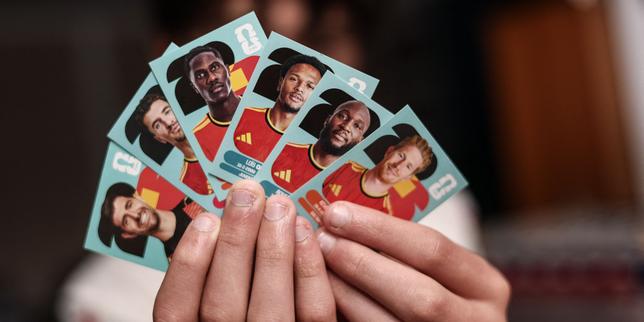
Italian football fans are living through a unique kind of torture right now. If you walk into any edicola—the local newsstands that dot the street corners of Rome, Milan, or Modena—you'll see the massive, shiny new Panini sticker collection for the 2026 World Cup. It's the biggest one ever made. A staggering 980 stickers are needed to fill the 112 pages, stretching across all 48 teams competing in North America.
But for Italians, flipping through those pages is like rubbing salt into an open, festering wound. Meanwhile, you can explore similar events here: Why Zinedine Zidane Taking Over France Changes Everything.
First, there's the sporting humiliation. Italy missed out on the tournament entirely. Again. That means generations of Italian kids and grown-ups are buying these packs only to realize their own heroes aren't part of the main attraction. But there's a second, deeper layer of grief hitting the country right now, and it's purely commercial. The historic bond between the Italian-born Panini brand and the World Cup is officially dead.
FIFA signed a massive deal with American corporate giant Fanatics, handing over the exclusive rights for future tournaments after 2030. This 2026 edition is the beginning of the end. For a nation that treats football as a religion and Panini as its holy scripture, it feels like the ultimate cultural eviction. To see the full picture, check out the recent report by FOX Sports.
The Double Whammy of 2026
To understand the mood in Italy, you have to look at the brutal timing. The national team’s failure to qualify for the tournament created a massive void. Italians are forced to watch a expanded, historic 48-team tournament from their couches. When you don't make a 48-team cut, the excuse of "bad luck" stops working. It's an institutional failure.
Then comes the physical album. Usually, when the Azzurri miss a tournament, collectors might still buy the packs out of pure habit or love for global stars like Mbappé or Messi. But this year, the ritual feels hollow.
Panini was founded in Modena back in 1961 by the Panini brothers. Benito, Giuseppe, Umberto, and Franco took a simple concept—selling pictures of football players—and turned it into a global rite of passage. They published their first World Cup album for the 1970 tournament in Mexico. For over 50 years, the smell of that specific glue and the frantic swapping of ce l'ho, mi manca (have it, need it) defined Italian childhoods.
Knowing that an American conglomerate is sweeping in to take the reins feels like losing a piece of national heritage. It's corporate globalization conquering a localized romance.
Why Fanatics Changed the Playbook
Money talks, and FIFA always listens to the loudest wallet. Fanatics, through its trading card arm Topps, has been aggressively eating Panini’s lunch for years. They already snatched away the rights for the UEFA European Championships, leaving Panini to release unofficial, stripped-down albums for Euro 2024 that lacked official team kits and logos.
Now, the corporate giant has secured the crown jewel. The transition away from Panini after the 2030 cycle represents a massive shift in how sports collectibles work.
- The American Model: Fanatics focuses heavily on artificial scarcity, limited-edition "parallels," numbered cards, and high-end hobby boxes meant for investors rather than kids.
- The Traditional Model: Panini built its empire on the democratic idea that any kid with a few coins could walk to a newsstand, buy a pack, and reasonably expect to finish an album through playground trading.
By shifting the license to an American company focused heavily on the tech-driven, high-yield collector market, the classic European newsstand culture is being systematically phased out. Italian collectors aren't just losing their license; they're losing the plot of what collecting used to mean.
Shifting from Playground Swaps to Digital Scarcity
Walk around Modena today and the anxiety is palpable. The Panini factory is a symbol of local pride. While the company still retains various domestic league rights, losing the World Cup is a blow to its global identity.
The industry is moving toward shiny foil variants, ultra-rare 1-of-1 parallels, and digital web-based collections. In the US and UK markets, this has caused a massive boom in trading card values. But in Italy, it kills the communal spirit. You can't easily swap a digital token or a 200-euro short-print card on the school steps.
Italians are realizing that the 2026 album is essentially a beautiful swan song. It's a relic from an era where a small company from Emilia-Romagna could capture the imagination of the entire planet every four years.
What to Do if You are Collecting in 2026
If you're a purist trying to navigate this weird transition period, don't let the corporate gloom ruin the hobby entirely. Here is how you should handle the current landscape:
- Treat 2026 as a Historical Marker: Buy the physical hardcover album for this tournament if you can find one. Because of the expanded 48-team format and the looming end of the classic Panini era, this specific edition will likely hold immense nostalgic and financial value down the road.
- Avoid the Artificial Scarcity Trap: Don't get sucked into spending thousands on "Crumple parallels" or rare border variants unless you are purely an investor. Stick to the base set of 980 stickers. The joy is still in the completion, not the financial speculation.
- Support Local Newsstands: If you are in Europe, buy your packets from independent edicole or local shops rather than massive online retail giants. Once these physical touchpoints lose football sticker revenue, they disappear from our neighborhoods for good.
The era of Panini dominance is drawing to a close, and Italy is mourning it alongside their missing national team. It's a reminder that in modern football, even your childhood memories eventually get sold to the highest bidder.