Prime Minister Giorgia Meloni’s government just pushed through a sharp new education decree that changes how classrooms operate across the country. Under the fresh rules, schools can no longer have more than 30 percent of students in a single classroom who lack sufficient Italian language skills. On top of that, the package implements an outright ban on face-covering Islamic veils—specifically burqas and niqabs—while keeping standard headscarves like hijabs legal.
If you're wondering why this is happening right now, the timing isn't random. Meloni faces a growing challenge on her right flank from hard-line figures like retired army General Roberto Vannacci, who thrive on anti-immigrant rhetoric. By moving fast on school integration and cultural lines, the conservative coalition is tightening its grip on its core voter base ahead of upcoming political cycles.
How the 30 Percent Cap Actually Works
Let's break down the mechanics of the new policy. The threshold isn't based strictly on citizenship. It is based entirely on language proficiency. That means a child born in another European Union country who cannot speak fluent Italian counts toward the cap just as much as a non-EU immigrant student.
Education Minister Giuseppe Valditara pointed out that the policy targets a relatively small slice of the system. Around 1,000 classrooms nationwide—roughly 0.3 percent of the total—will see immediate adjustments. Schools exceeding the limit will receive extra funding and resources to hire specialized language tutors, while newly arrived foreign students who push past a 20 percent school-wide enrollment trigger additional state support.
There are exemptions, too. Children born in Italy who already speak the language or who completed Italian preschool are completely exempt from the cap.
Why School Principals and Unions Are Pushing Back
Critics aren't buying the government's narrative of smooth integration. Antonello Giannelli, head of the National Association of Principals, raised a very practical question that politicians haven't answered. What happens when an entire neighborhood consists of immigrant families? You can't just ban kids from attending their local school.
"If the majority of pupils in that area are foreign nationals, what are we supposed to do? Send them away?" Giannelli asked publicly.
Teachers' unions are equally frustrated. They argue that the state's initial funding package—around 14 million euros, or roughly 16 million US dollars—is a drop in the ocean. Hiring cultural mediators and specialized language teachers costs real money. Handing down a mandate without funding the infrastructure to back it up just creates logistical chaos for administrators.
Meanwhile, opposition parties note that a 30 percent classroom guideline isn't even entirely new. The Ministry of Education floated similar guidance back in 2010. Critics claim the current government is just repackaging old ideas to score cheap political points rather than fixing systemic education gaps.
The Veil Ban and Family Accountability
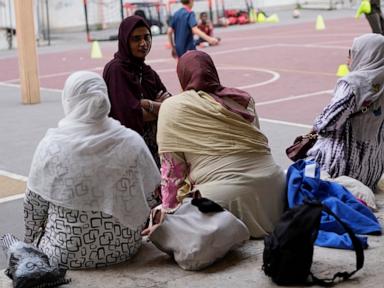
The second major pillar of the decree targets face-covering veils. While hijabs remain permitted, full-face coverings like the niqab and burqa are now barred from school grounds.
Education experts note that full-face veils are exceedingly rare in Italian schools anyway. That makes the ban largely symbolic. It targets a cultural symptom rather than solving an educational crisis.
The decree goes a step further by putting pressure on parents. If a child struggles at school or acts out due to language barriers at home, the state can now require parents to attend Italian-language courses. It's an aggressive attempt to enforce assimilation from the household level upward.
What Happens Next
The decree takes effect immediately, but it faces a strict 60-day window to win approval in parliament. Because Meloni's coalition commands a solid majority, it will almost certainly pass.
Yet, passing a law in Rome is very different from enforcing it in a crowded school in Milan or Rome. Real integration requires more than arbitrary percentage caps. It requires funding, patience, and resources that schools simply do not have right now. Watch how local authorities manage these forced student redistributions over the coming months. That is where the policy will either succeed or completely fall apart.