You pack a cooler, grab your family, and head down to the shoreline you've visited for decades. When you arrive, you find a massive concrete wall and an armed security guard telling you to turn around. This isn't a hypothetical nightmare. It's the daily reality for locals across Jamaica.
Right now, a major corporate land grab is slicing up the island's famous coastlines, sealing them off behind luxury resort gates. Locals call it plantation tourism. It's an aggressive business model where foreign mega-corps and local elites pocket the profits while ordinary citizens are left staring at concrete barriers.
The issue has hit a boiling point. The Jamaica Beach Birthright Environmental Movement (Jabbem) is taking the fight directly to the courts to stop the privatization of iconic spots like Mammee Bay, Little Dunn's River, and the world-renowned Blue Lagoon. If you want to understand why a country's citizens are being legally banned from dipping their toes in their own ocean, you have to look at the ugly intersection of colonial law and modern corporate greed.
The Myth of Public Beaches in Jamaica
Most people booking a flight to Montego Bay assume beaches are natural public spaces. They aren't. In Jamaica, the legal framework actively works against the public. Only about 1% of the island's beaches are fully open to the public for free. The rest belong to hotels, private villas, or are completely inaccessible.
This systemic exclusion stems directly from the Beach Control Act of 1956. This piece of legislation was passed before Jamaica even gained independence from Britain. It gives ownership of the foreshore and the floor of the sea directly to the Crown, meaning the state controls who gets access. It doesn't guarantee a single right to ordinary citizens. Instead, it was built to help the government lease out prime coastline to private developers.
Activists have historically relied on the Prescription Act to fight back. This law states that if the public has used a pathway or a beach continuously for 20 years without interruption, they win a legal right to keep using it. But hotel developers have found easy ways around this. They build walls overnight, hire private security with assault rifles, and use temporary closures to break that 20-year streak.
How Plantation Tourism Profits From Exclusion
The economic setup of Jamaican tourism mimics the old colonial plantation system. Foreign hospitality chains buy up massive tracts of land, import everything from construction materials to packaged food, and trap tourists inside all-inclusive bubbles.
Look at what happened at Mammee Bay in St Ann. For generations, it was a community hub. Fishers sold their daily catch under almond trees. Kids learned to swim there. In 2019, private investors building a luxury resort threw up a fence and hired armed guards to lock locals out. When the community tore the fence down in protest, developers waited out the pandemic lockdowns. While citizens were forced to stay home, the developers built permanent concrete walls.
The money generated by these mega-resorts rarely stays on the island. It flows directly back to corporate headquarters in Spain, the US, or the UK. The local population gets stuck with low-wage housekeeping and security jobs while losing the natural resources that sustained their livelihoods and mental health.
The Blue Lagoon Betrayal
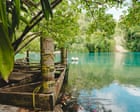
If you want a clear example of how local authorities mislead communities, look at Portland's famous Blue Lagoon. In 2022, local authorities closed public access to the lagoon. They promised the closure would last just 90 days to upgrade the facilities and create better opportunities for local guides and craft vendors.
It was a lie. Years later, campaigners discovered the true plan was to permanently close the public access roads. The goal? To facilitate the construction of exclusive, private luxury villas. The local guides who spent their lives navigating those waters were completely cast aside to protect the privacy of ultra-wealthy tourists.
The government claims these restrictions are necessary for security and to protect the multi-billion-dollar tourism industry from crime. But local advocates see right through this. They point out that treating the local population as a security threat to be managed is just a modern spin on colonial logic. It treats citizens as outsiders in their own birthplace.
The Political Failure to Protect Local Rights
Don't mistake this for a problem caused by a single political party. Both major forces in Jamaican politics—the ruling Jamaica Labour Party (JLP) and the opposition People's National Party (PNP)—have spent decades selling off the coastline to the highest bidder.
- The Failed Policies: Prime Minister Andrew Holness recently proposed a new beach access and management policy. While the government spins this as a modern step forward, the fine print tells a different story. It only offers "qualified rights." This means the state or a private owner can still legally charge hefty fees or decide to block you at the gate based on arbitrary rules.
- The Legislative Power Grab: The government has introduced the National Arena and Resort Authority (Narra) legislation. Activists argue this law strips away crucial checks and balances. It concentrates immense power directly in the office of the prime minister to fast-track massive tourism projects, completely overriding local environmental and community objections.
The opposition now claims they want the privatization to stop, but their historical track record shows they were completely complicit when they held power. This is why grassroots organizations like Jabbem are bypassing politicians entirely and taking their fight to the supreme court.
Real Solutions to Reclaim the Coast
Upgrading a few public beaches and charging an entry fee isn't a real solution. It forces working-class Jamaican families to pay to access the nature that belongs to them by birthright.
True reform requires a complete overhaul of the legal system. The 1956 Beach Control Act must be scrapped and replaced with legislation that guarantees free, unfettered, and permanent legal rights to the ocean for all citizens. Countries like Barbados have successfully managed to maintain open beach access policies while growing a booming tourism sector. Jamaica can do the same.
If you are a traveler planning a trip to the island, stop funding the isolation. Skip the foreign-owned all-inclusive mega-resorts that wall off local communities. Instead, spend your money directly with Jamaican-owned boutique hotels, local guesthouses, and independent neighborhood vendors. True sustainability isn't a corporate marketing slogan on a resort brochure. It starts by respecting the rights of the people who actually live there.