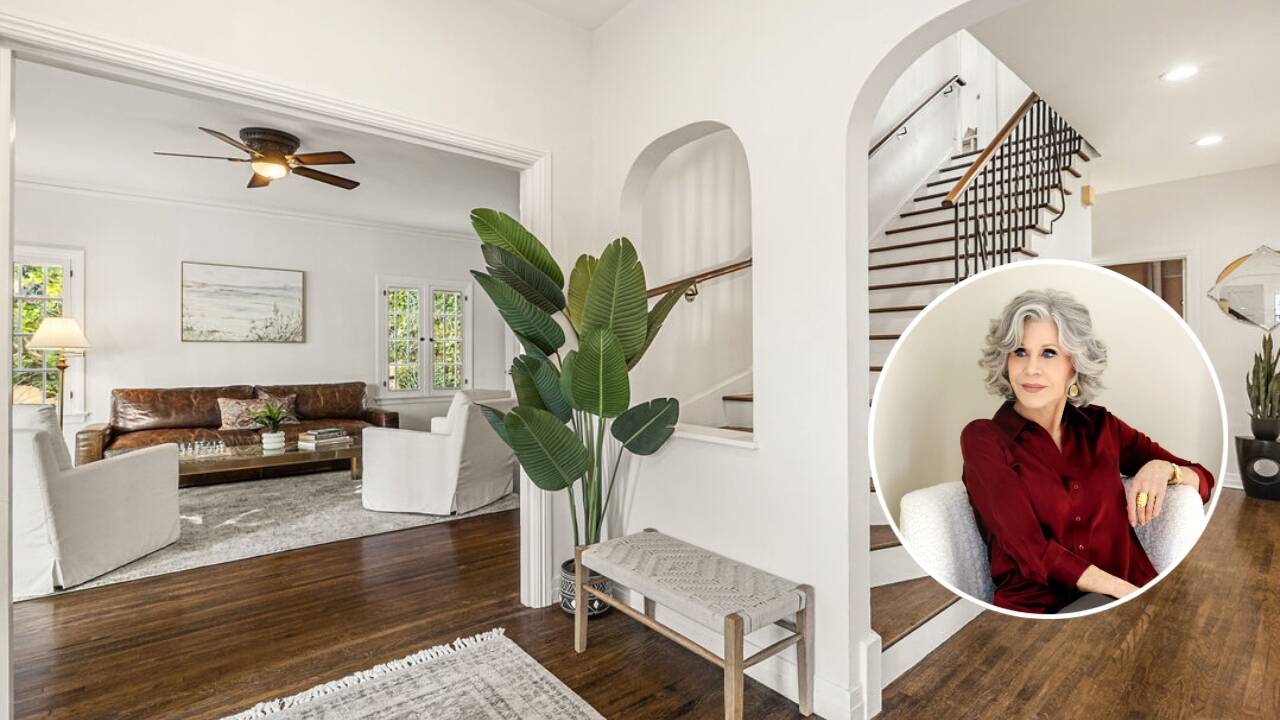
Real estate price cuts always tell a story. When a property lingers on the market and sheds nearly a third of its asking price, buyers start looking past the glossy marketing photos to find the catch. That is precisely what is happening with the Mediterranean Revival villa perched on Holly Hill Terrace in Whitley Heights, which recently re-listed for $1.99 million after initially targeting $2.79 million.
This historic address at 2001 Holly Hill Terrace is not just any piece of Los Angeles architecture. Built in 1932 by developer H.J. Whitley as his final project in Hollywood's first National Register historic district, it carries a heavy legacy. Jane Fonda lived here during two separate marriages—first with French film director Roger Vadim, and later with political activist Tom Hayden. But the walls hold a darker piece of Cold War history: federal surveillance. Don't forget to check out our recent article on this related article.
Living Under Government Watch
Long before celebrity real estate listings boasted about celebrity chefs kitchens and infinity pools, this hillside home was the epicenter of intense federal paranoia. During the Vietnam War, Jane Fonda became one of the country's most high-profile anti-war activists. The federal government did not take her dissent lightly.
Declassified records from the National Security Archive show that the CIA tracked Fonda and specifically monitored her Holly Hill Terrace address in 1971. The agency didn't just watch from a distance; they intercepted and illegally opened her mail. Documents proved the CIA acquired four letters sent directly to her from the Soviet Union. If you want more about the background here, Associated Press provides an informative summary.
Decades later, admissions from top intelligence officials laid bare the blatant constitutional overreach of that era. Former CIA Director William Colby admitted to President Gerald Ford in 1975 that intercepting domestic mail was illegal, noting that the agency finally halted the practice in 1973. Living through that pressure cooker of political hostility while managing a high-profile personal life makes you look at those charming canyon views a bit differently.
Inside the Whitley Heights Villa
Beyond the surveillance baggage, the property itself is an architectural survivor. Whitley Heights was designed to mimic an Italian hillside village, drawing Old Hollywood icons like Rudolph Valentino, Bette Davis, and Jean Harlow to its winding steps and terracotta roofs.
The house spans five bedrooms and five bathrooms across a multi-level layout. It features a two-story veranda added in 1941, dual entrances from both Holly Hill Terrace and Grace Avenue, a formal dining room, a home office, a library opening onto a canyon-view patio, and a swimming pool surrounded by mature fruit trees.
Fonda never actually owned the house; she rented it. The sellers who recently put it on the market are Kathleen Whyte and her family, children of character actors Bryan Clark and Jo Deodato Clark. They purchased the home back in 1985 for $234,180 and spent four decades maintaining its historical integrity. Protecting a historic home in Los Angeles is no small feat. The property is one of only two houses in the neighborhood protected by a Los Angeles Conservancy facade easement, meaning owners face strict regulations when it comes to any structural modifications or exterior renovations.
The Reality of Historic Real Estate Price Cuts
Dropping from $2.79 million down to $1.99 million represents an $800,000 slash in value. Buyers shopping in Whitley Heights face a unique set of compromises. While you get unmatched architectural character and a front-row seat to Hollywood lore, historic preservation easements can turn routine remodeling projects into bureaucratic nightmares.
If you are hunting for vintage Los Angeles real estate, properties with heavy historical footprints require patience and deep pockets for maintenance. Evaluate the actual square footage utility against the restrictive zoning rules before writing an offer. Do your homework on local preservation guidelines so you don't end up trapped by the very history you bought the house to celebrate.