The federal government has been flying partially blind for weeks, and honestly, it is a self-inflicted wound.
On June 12, 2026, Section 702 of the Foreign Intelligence Surveillance Act (FISA) officially expired. This is not just some boring legislative footnote. It is the powerhouse surveillance program that lets the National Security Agency (NSA) sweep up foreign emails, texts, and phone calls without a warrant. When it lapsed, a massive hole opened in our national security apparatus.
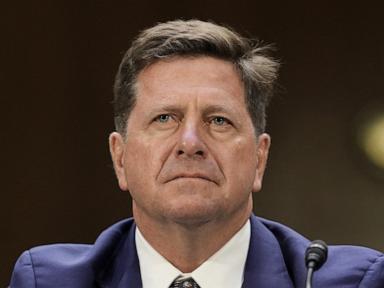
How did we get here? A messy political standoff on Capitol Hill over who gets to run the country's spy agencies. But today, July 15, 2026, the path to fixing this mess finally started to clear. Jay Clayton, the former Securities and Exchange Commission (SEC) chairman and current U.S. Attorney for the Southern District of New York (SDNY), just sat down for his rescheduled confirmation hearing before the Senate Intelligence Committee.
Clayton is the compromise candidate. He is the guy Washington hopes can calm the waters, get confirmed as the permanent Director of National Intelligence (DNI), and grease the wheels to get Section 702 back on the books.
The Bill Pulte Hand Grenade
You can't understand why Section 702 is dead without understanding the fury surrounding Bill Pulte.
When Tulsi Gabbard stepped down as DNI, President Donald Trump bypassed traditional intelligence professionals and tapped Pulte—the head of the Federal Housing Finance Agency and a fierce Trump loyalist—to serve as the acting spy chief.
Pulte has zero national security experience. Instead, he is famous for using his housing post to launch aggressive mortgage fraud investigations into Trump’s political opponents, including Federal Reserve Governor Lisa Cook and New York Attorney General Letitia James.
Democrats, alongside a handful of deeply uncomfortable Republicans, panicked. The idea of putting a partisan warrior with no intelligence background in charge of the nation's most powerful spy tools was a non-starter. To force Trump's hand, Senate Democrats drew a hard line: no FISA Section 702 renewal until Pulte is out of the DNI office.
To break the logjam, Trump nominated Clayton on June 11. Clayton is a serious, highly respected corporate lawyer and prosecutor. He isn't an intelligence insider, but he's a known quantity who isn't viewed as a partisan wrecking ball.
But then, Trump did what Trump does.
A Delayed Hearing and a Hostage Situation
Just hours before Clayton was scheduled to testify in mid-June, Trump scuttled his own nominee's hearing with a post on Truth Social.
Trump demanded that Clayton's confirmation stay on ice until his chosen successor at the SDNY, Jamie McDonald, was confirmed. He also tried to hold the surveillance tool hostage to force Congress to pass the SAVE Act, a highly controversial bill requiring proof of citizenship to vote.
"I will not approve FISA without THE SAVE AMERICA ACT going along with it," Trump posted.
With Clayton's hearing canceled, Pulte took over as acting DNI on June 19. Predictably, he immediately started firing career intelligence officials and sending others packing back to their home agencies. The intelligence community went into a tailspin, and Section 702 remained completely dark.
What Happened at the July 15 Hearing
Today's hearing was Clayton's chance to prove he can restore order. He spent hours walking a tightrope, trying to appease skeptical Democrats while staying loyal to the president who nominated him.
The Clash Over Election Integrity
Committee Democrats, led by Senator Mark Warner, pushed Clayton hard on whether he believes the 2020 election was stolen. Clayton navigated the minefield carefully. He explicitly stated he is "not an election denier" and acknowledged Joe Biden's election was "certified." Yet, he pointedly refused to use the word "won" when pressed repeatedly, instead arguing that substantial cybersecurity work is needed to secure future voting systems.
The Journalist Subpoena Controversy
Clayton also faced intense heat from Senator Ron Wyden over his recent decision as SDNY U.S. Attorney to subpoena New York Times journalists. The subpoenas were issued to find out who leaked information about a Qatari-gifted Air Force One aircraft. Wyden blasted the move as a "flagrant attack on journalists and the First Amendment."
Clayton refused to discuss the specifics of the active investigation but defended his actions, stating he consulted extensively with DOJ lawyers and deeply respects the role of the free press.
A Leaner, Meaner ODNI?
Interestingly, committee Chairman Tom Cotton took the opportunity to advocate for a massive gutting of the Office of the Director of National Intelligence. Cotton complained that the ODNI has become a "bloated agency" and argued its staff should be slashed from thousands down to "dozens, maybe a couple hundreds."
Clayton did not commit to a mass firing, but he did suggest the DNI should operate like a "board of directors," focusing heavily on broad oversight rather than micromanaging daily operations.
Why the Tech Giants Hold the Real Power Now
While politicians play chicken in Washington, the real crisis is unfolding in Silicon Valley.
National security officials warn that operating without Section 702 is incredibly dangerous. Under the law, companies like Google, Apple, and Microsoft are legally forced to hand over data on foreign targets.
But with the law expired, those companies are in a legal gray zone.
Without the statutory shield of Section 702, tech companies are highly likely to stop cooperating. They don't want to get sued by privacy groups for handing over user data without a warrant. If the tech giants lock their doors, America's ability to track foreign terrorist cells, foreign cyber threats, and hostile state actors drops off a cliff.
What Happens Next
Clayton's performance today was strong enough that his confirmation is highly likely to move forward. Lawmakers on both sides are desperate to get Pulte out of the acting DNI seat before he does any more damage to the intelligence agencies.
Once Clayton is confirmed, the pressure shifts back to Congress to fix the surveillance gap.
If you want to watch how this plays out, keep your eyes on these immediate indicators:
- The Senate Intelligence Committee Vote: Watch for how many Democrats vote to advance Clayton out of committee. A strong bipartisan vote means his path to full Senate confirmation will be incredibly fast.
- The Jamie McDonald Confirmation: Watch if Trump holds up Clayton's final vote over his SDNY replacement.
- The FISA Compromise Bill: Look out for a stripped-down surveillance renewal bill. Civil libertarians will fight hard to add a warrant requirement for any searches involving American citizens' data, while hawks will try to push a clean extension through.