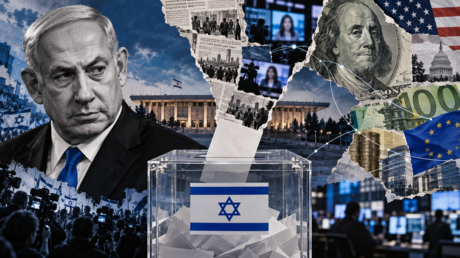
Foreign policy fractures rarely happen by accident. When Vice President JD Vance sat down for an interview with journalist Mark Halperin on the digital program 2WAY Tonight, he drew a sharp line in the sand. Just a day after President Donald Trump offered a glowing, full-throated endorsement of Benjamin Netanyahu ahead of Israel's October 27 parliamentary elections, Vance flatly refused to follow suit.
"I endorse American candidates, and that's where I'm focused on in the midterms," Vance said aboard Air Force Two, sidestepping the chance to back the embattled Israeli leader.
You see, the split isn't just about a single election cycle in the Middle East. It highlights a growing ideological tension within the modern conservative movement. While Trump remains willing to hand out powerful political stamps of approval internationally, Vance is signaling a disciplined adherence to domestic political boundaries—or at least a very selective approach to foreign interference.
The Split Screen in Washington
The contrast between Trump and his vice president couldn't be starker. Trump took to social media to hail Netanyahu as a "Great Warrior Prime Minister," praising his wartime leadership and arguing that Israeli voters need his proven strength. It’s a classic move from a politician who views personal relationships as the bedrock of international diplomacy.
Vance took a different path. Pressed on whether his refusal to back Netanyahu meant he secretly opposed him, Vance tried to clear the air without backing down. "I'm not anti-endorsing him. I'm not pro-endorsing him. I'm not getting involved in Israeli elections," he explained.
This calculated neutrality is fascinating. Critics might point out that Vance isn't universally opposed to foreign involvement—after all, he traveled to Hungary earlier this year to support Viktor Orbán's reelection campaign, an effort that ultimately fell flat when Orbán's party lost. Yet, when it comes to the high-stakes theater of Israeli politics, Vance prefers to stay parked firmly in the domestic lane.
Why the Timing Matters
Israel's upcoming election on October 27 is shaping up to be a fierce referendum on Netanyahu’s long-term grip on power. The political survival of the veteran leader is tied directly to intense domestic debates over security, regional war strategies, and post-conflict governance.
Meanwhile, Washington is juggling its own diplomatic pressure points. U.S. Defense Secretary Pete Hegseth recently made an unannounced trip to Israel, holding high-level meetings with Netanyahu and Defense Minister Israel Katz. With American defense officials on the ground trying to manage complex security realities, Vance's public detachment serves a dual purpose. It protects the administration's official posture while allowing the vice president to appeal directly to the non-interventionist, "America First" wing of the Republican base that remains skeptical of endless foreign entanglements.
The Real Cost of Foreign Endorsements
Let's be honest about how political endorsements work. In major international races, they rarely sway voters on the ground; instead, they serve as signals to domestic interest groups and foreign capitals. Trump's endorsement tells allies that personal loyalty and hardline security stances still command top dollar in his administration. Vance's refusal tells everyone else that the future guard of the conservative movement is prioritizing domestic electoral fights, like the upcoming U.S. midterms, over the turbulent waters of foreign coalition-building.
When leaders in Washington project a divided front on something as foundational as an Israeli election, foreign capitals take notice. Netanyahu himself has warned about the potential threat of future U.S. administrations taking a hostile posture toward Israel. In that light, Vance's refusal to jump into the fray isn't just a dodge—it's a calculated preview of how post-Trump foreign policy might look.
Watch how these divergent approaches play out over the coming weeks. As the ballots are counted in Israel and the midterms heat up in the U.S., the gap between old-school personal diplomacy and strict domestic prioritization will only widen. Keep your eyes on how future conservative figures choose to balance international alliances with local political survival.