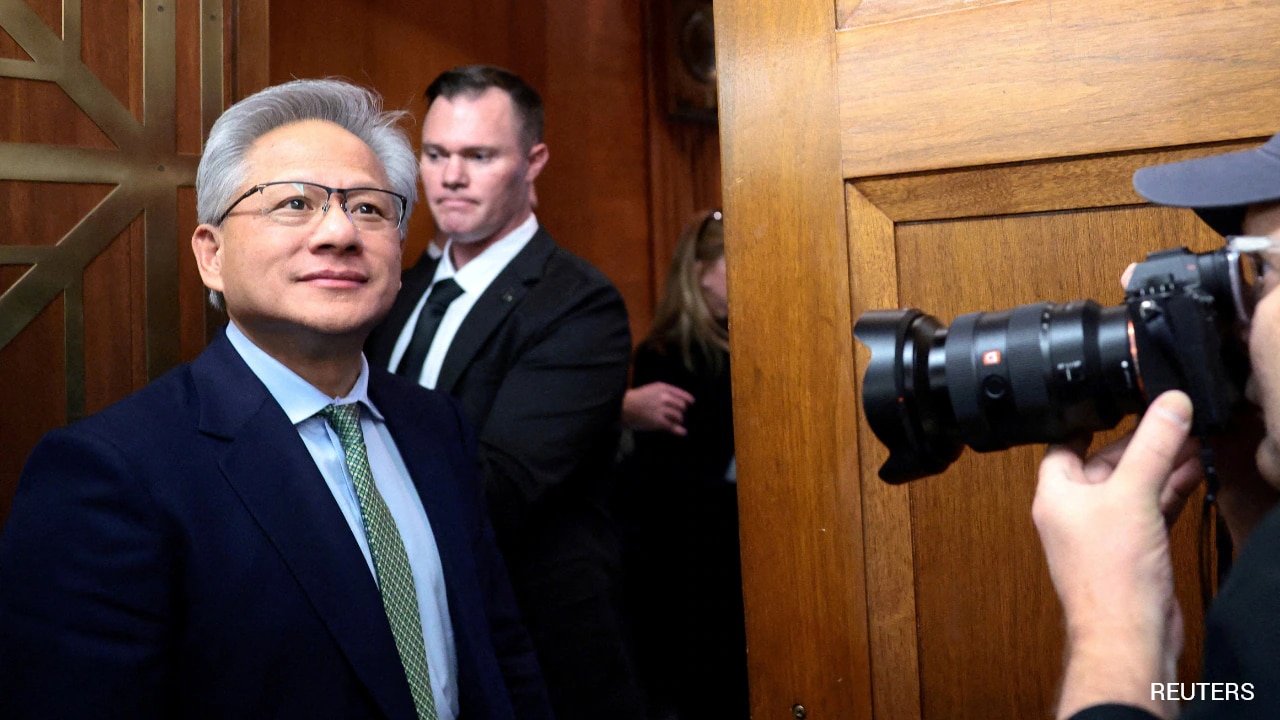
Eleven days. That's all it took for Jensen Huang to go from an ousted founder in disgrace to a cheered chief executive walking back into Nvidia's Santa Clara campus.
If you only read the surface headlines, it looks like a neat Hollywood comeback. Crowd roars, founder bows, shares pop. Honestly, that misses the real story. Jensen Huang returning to Nvidia on November 23, 2026 wasn't just a feel-good office reunion. It exposed how tightly AI hardware, national security, and corporate power are tangled together right now. If you found value in this post, you should check out: this related article.
Why Jensen Huang Returning to Nvidia Shook Both Wall Street and Washington
When Huang stepped down on November 12, 2026 after admitting to extramarital affairs—including one with Alice Huang, a Chinese national whom U.S. intelligence officials reportedly suspected of espionage—many figured his run at the top was finished. Her former firm, Megaspeed, also faced criminal scrutiny over potential export-control violations. For a company sitting at the center of global AI infrastructure, personal choices quickly turned into national security questions. For another angle on this story, see the latest update from Ars Technica.
Then came the whiplash. On November 23, Nvidia's board unanimously reinstated Huang as president, CEO, and director. Shares surged more than 30% on the news, dragging broader indices higher as traders breathed a collective sigh of relief.
"I am going to be a better CEO the second time around." — Jensen Huang addressing Nvidia employees in Santa Clara
Yet the reinstatement didn't happen in a vacuum. President Donald Trump told CNBC he had personally convinced the board and made the deal to bring Huang back, while Nvidia's board pointed to input from senior U.S. government officials indicating Huang posed no national security risk. A petition urging his return had already gathered over 180,000 signatures, including from Elon Musk.
Inside the Scene at Santa Clara
Video shared with CNBC and reported across outlets showed staff packing floors at Nvidia's Santa Clara headquarters to greet him. He apologized for a "truly terrible mistake," thanked workers for a second chance, and even joked that his first day back felt like starting from scratch without a work computer from IT.
Employees cheering a founder back makes sense emotionally. Founders built the culture, the roadmap, and the muscle memory that turned GPUs into the backbone of modern AI. Still, applause doesn't erase federal probes or make export rules disappear.
Can a Founder Pledge to Change When Power Is This Concentrated?
Pledging to be a better CEO sounds great on a town hall stage. The harder test starts behind closed doors.
In tandem with Huang's return, Nvidia announced plans to hire its first Chief Compliance Officer reporting to the Nominating and Corporate Governance Committee, following the board's creation of a National Security and Export Control Oversight Committee. On paper, those guardrails are smart moves. In practice, governance experts have already raised a blunt question: when a visionary founder holds unmatched stature inside a company, can a new compliance executive actually tell them no?
Here's what I've seen play out in high-growth tech companies time and again. Crisis brings new titles, new committees, and sincere promises. Six months later, speed and founder instinct collide with compliance friction. Usually, founder instinct wins unless the board enforces real boundaries with teeth.
Investigations Haven't Vanished Just Because the Stock Spiked
Wall Street treated Huang's return like a cleared sky. That's wishful thinking.
Nvidia still faces active government scrutiny, including inquiries tied to the U.S. Securities and Exchange Commission and the Department of Justice, alongside broader probes into chip exports and export controls. Plus, Huang faces upcoming Senate testimony. A board vote on national security risk doesn't shut down every regulatory line of inquiry overnight.
The Political Leverage Problem
What bothers me most about this saga isn't one executive's personal life. It's the precedent.
When a single company becomes so central to AI compute that political intervention and market panic swing tens of billions in value in hours, corporate governance starts looking less like independent oversight and more like high-stakes diplomacy. If you're an investor, you shouldn't confuse a relief rally with long-term regulatory immunity.
What This Means for Investors, Founders, and Builders
Whether you trade semiconductor stocks, run a startup, or build software on top of Nvidia hardware, this episode has real takeaways.
- Don't price single-leader rallies as risk-free. Sharp bounces after founder returns often reflect short-term relief rather than resolved legal or geopolitical overhangs.
- Watch reporting lines, not press releases. A newly created compliance role only matters if the person in that seat has real independence, budget, and direct board backing.
- Diversify your AI stack early. Relying on one vendor or one geopolitical corridor leaves teams exposed when export rules or leadership drama hit.
If you track Nvidia or work in the AI ecosystem, take these practical steps this week:
- Read the official governance filings and board updates rather than relying on social media clips of office cheers.
- Audit your own supply and platform dependencies for export-control or single-vendor bottlenecks.
- Separate personal redemption arcs from hard metrics like order backlog, margin durability, and regulatory clarity.