A security camera in Jerusalem's Old City captured a brutal, senseless moment. A man ran up behind a French Catholic nun walking in her religious habit, shoved her violently to the ground, and kicked her as she lay helpless. Months later, the legal fallout has concluded, but the controversy is just beginning.
A Jerusalem Magistrate's Court officially acquitted Yona Simcha Schreiber of criminal responsibility for the April assault, citing an insanity defense. Judge Ophir Tishler accepted a district psychiatrist's evaluation that Schreiber was suffering from severe schizophrenia and was entirely in a psychotic state during the attack. Instead of a prison sentence, the court ordered him into psychiatric hospitalization for up to six years.
Legal rulings based on mental illness rarely satisfy everyone. This verdict is no exception.
The Anatomy of a Volatile Verdict
The court faced a clear medical consensus. The state's district psychiatrist diagnosed Schreiber with long-standing schizophrenia, concluding that he lacked the capacity to understand the nature of his actions or stop himself from carrying them out.
Under Israeli law, an individual cannot be held criminally liable if a mental disorder strips them of their cognitive control at the time of an offense. The evidence proved Schreiber committed the physical acts detailed in the indictment—including the assault on the researcher from the French Biblical and Archaeological School of Jerusalem and a subsequent scuffle with a passerby who tried to help. Yet, the legal threshold for criminal intent simply wasn't met.
The six-year psychiatric commitment is a ceiling rather than a fixed stay, meaning his release depends entirely on future medical evaluations. But for local Christian communities and advocacy groups, medical technicalities do not erase the terrifying reality on the ground.
Broader Realities Behind the Violence
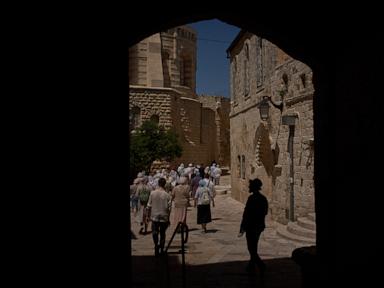
You cannot understand this trial by looking at the courtroom alone. The attack happened near Mount Zion, right outside the Cenacle, in a tense urban space where Christian, Jewish, and Muslim residents and pilgrims constantly cross paths.
For years, local clergy and watchdog organizations have documented a sharp rise in hostility toward Christians in Jerusalem. Spitting incidents, verbal harassment, and vandalism targeting monasteries and churches have grown increasingly common, largely driven by religious nationalists.
Critics of the social climate argue that mental illness exists within a cultural ecosystem. Yisca Harani, founder of the Religious Freedom Data Center, points out that even unstable individuals absorb the ambient hostility around them. When anti-Christian sentiment circulates openly, vulnerable minds translate that friction into violence. Even if the attacker was psychotic, he selectively targeted a nun among a crowd of diverse pedestrians. That choice leaves people wondering how much external influence shaped a clinical breakdown.
What Happens Next for Jerusalem's Minorities
The ruling leaves community leaders caught between legal definitions and the demand for basic public safety. Friar Olivier Poquillon of the French Biblical and Archaeological School voiced open regret over the absence of a criminal penalty, noting that true deterrence requires accountability.
At the same time, authorities are scrambling to contain the fallout. The appointment of a dedicated English-speaking police officer to act as a direct liaison for the Christian community represents a tangible step toward faster incident responses. Officials insist that monitoring and reporting mechanisms are finally improving after years of underreporting and delayed reactions.
Mental health institutions will now determine the timeline for the perpetrator. Meanwhile, the streets of the Old City remain tense, where every glance between communities carries the weight of a fragile coexistence.