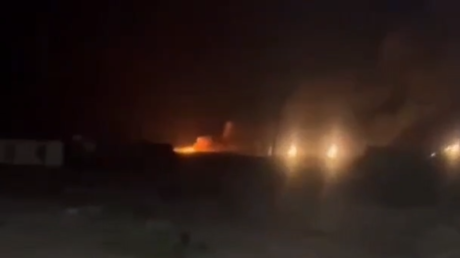
The fragile calm in the Middle East just shattered. If you thought the recent quiet between Washington and Tehran meant a return to stability, Tuesday changed that reality entirely. United States and Saudi warplanes carried out coordinated military strikes inside Iraqi territory, targeting Iran-backed militias that had unleashed a heavy wave of drone and missile assaults. This isn't just another routine skirmish. It's a direct expansion of the regional conflict that drags Gulf powers deeper into active combat.
Let's look at what actually happened on the ground and why this particular escalation matters so much for the future of regional security.
Breaking the Ceasefire and the Missile Interceptions
For a few days, the region experienced a rare pause in hostilities. Both sides held fire over the weekend following weeks of nightly exchanges. That brief window slammed shut when Iran launched a surprise barrage of ballistic missiles aimed at American forces.
According to US Central Command (CENTCOM), air defense systems intercepted every single incoming missile before they could strike their targets. But the attempt itself destroyed any remaining illusion that a lasting diplomatic off-ramp was near. Washington made it clear that surviving a missile barrage wasn't going to be the end of the response.
Simultaneously, Saudi air defenses reported intercepting multiple explosive drones launched from Iraqi territory toward petroleum facilities in the Eastern Province and the Riyadh regions. For Riyadh, protecting its critical energy infrastructure has become an existential priority, especially after previous threats to shipping lanes and oil installations by regional proxies.
Why Iraq Has Become the Flashpoint
Iraq finds itself caught directly in the crossfire of a war it desperately wants to avoid. The country's state-backed Popular Mobilisation Forces (PMF) confirmed that several of its members were killed and wounded during the joint Saudi-US air raids on its headquarters.
Baghdad's official stance is a tightrope walk. Iraqi officials previously stated they ordered immediate investigations and insisted their sovereign territory wouldn't be used as a launchpad for attacks against neighboring or friendly nations. Yet, the presence of powerful Iran-aligned factions operating outside strict state control means Baghdad often lacks the muscle to stop these groups from firing drones across borders.
When groups directed by the Iranian Islamic Revolutionary Guard Corps (IRGC) use Iraqi soil to target Saudi oil facilities and American outposts, sovereign borders stop acting as a shield. Washington and Riyadh decided they couldn't wait for Baghdad to rein in the militias. They took the fight directly to the source.
The Direct Saudi Military Role
What makes this latest wave of strikes genuinely notable is the explicit, public participation of Saudi Arabia. Riyadh has spent considerable diplomatic energy trying to insulate its economic transformation projects from regional wars. But relentless drone attacks hitting home territory changed their calculus completely.
The Saudi Ministry of Defence released statements emphasizing that while the kingdom doesn't seek wider escalation, it will respond with full force to external aggression. By openly coordinating air operations with CENTCOM against militias inside Iraq, Riyadh is signaling a much more aggressive defensive posture. They aren't waiting for Washington to pull all the weight anymore.
What Happens Next in the Region
The immediate fallout is grim. Proxy groups have already sworn harsh retaliation against any Saudi or American action, and local security forces are bracing for a fresh wave of asymmetric retaliation.
Economic anxieties are spiking alongside the military tension. Global oil markets react instantly to any threat near Gulf energy hubs, and every drone intercepted over Saudi refineries drives the baseline cost of energy higher.
You're looking at a conflict that has moved past posturing. With air strikes hitting sovereign Iraqi territory and ballistic missiles targeting US positions, the illusion of containment is gone. Keep a close eye on the Strait of Hormuz and Iraqi security perimeters over the coming days, because the threshold for a wider conflagration has dropped significantly.