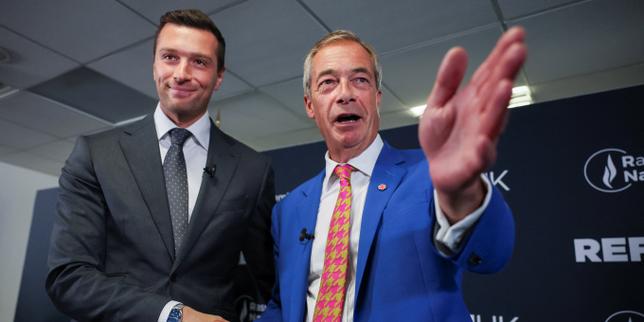
Political alliances are rarely built on pure affection. They are forged when two ambitious operators realize that standing next to each other makes them both look larger than life. That reality played out in full view during the annual conference of Britain's Reform UK party in Birmingham.
While Nigel Farage found himself fending off fresh scrutiny over campaign donations and financial transparency, French right-wing heavyweight Jordan Bardella stepped right into the storm to offer public backing. Critics called it bad timing. Strategists call it calculated survival. If you found value in this piece, you should check out: this related article.
The Anatomy of a High-Stakes Alliance
Farage has spent decades disrupting British politics. Today, his party faces persistent questions regarding undeclared contributions and strict electoral compliance rules. Instead of distancing himself from the controversy, the president of France's Rassemblement National flew across the Channel to cement a formal partnership.
They didn't just pose for handshakes. They signed a memorandum of understanding targeting a shared obsession: immigration across the English Channel. For another angle on this development, refer to the recent coverage from BBC News.
The core agreement focuses on returning intercepted migrant boats back toward French shores should their respective parties ever capture executive power. It is a provocative policy proposal that immediately scrambles traditional diplomatic norms between London and Paris.
Why the Timing Matters Right Now
You have to look past the headlines to understand why Bardella chose this exact moment to stand shoulder-to-shoulder with Farage. European nationalist parties are desperate to shed their image of isolated protest movements. They want to look like governing alternatives-in-waiting.
By projecting an image of international cooperation, both leaders want voters to see them as statesmen rather than perennial agitators. Farage frames their arrangement as a pact between future governments. Bardella's presence acts as a stamp of cross-border validation.
Yet, translating rhetoric into actual governance remains deeply complicated. Legal hurdles, financial transparency laws, and the harsh realities of maritime logistics mean these grand declarations often outpace administrative feasibility.
What Most Observers Miss About Cross-Border Right-Wing Politics
Observers often assume these alliances are completely seamless. In practice, they require delicate balancing acts.
- National interests collide: A policy that sounds great to voters in Dover might cause massive diplomatic friction in Paris.
- Financial scrutiny follows the money: As populist parties scale up, their internal accounting and donor networks face intense regulatory scrutiny that informal political networks struggle to manage cleanly.
- The optics of rebellion versus responsibility: Voters want disruptors until those disruptors are asked to manage complex state budgets and international treaties.
Farage and Bardella are betting that voters care far more about a shared message on borders than they do about procedural funding scandals. Whether that gamble pays off depends entirely on how well they can weather the ongoing investigations while convincing mainstream skeptics that they are ready to run actual governments.
Stop expecting these movements to implode over administrative fines or donor lists. They thrive on conflict, and every new controversy just feeds the anti-establishment narrative they sell so effectively.
Congrès du parti d'extrême droite Reform UK
This video provides footage and reporting on Jordan Bardella joining Nigel Farage at the Reform UK congress to sign agreements on immigration and project a united political front.