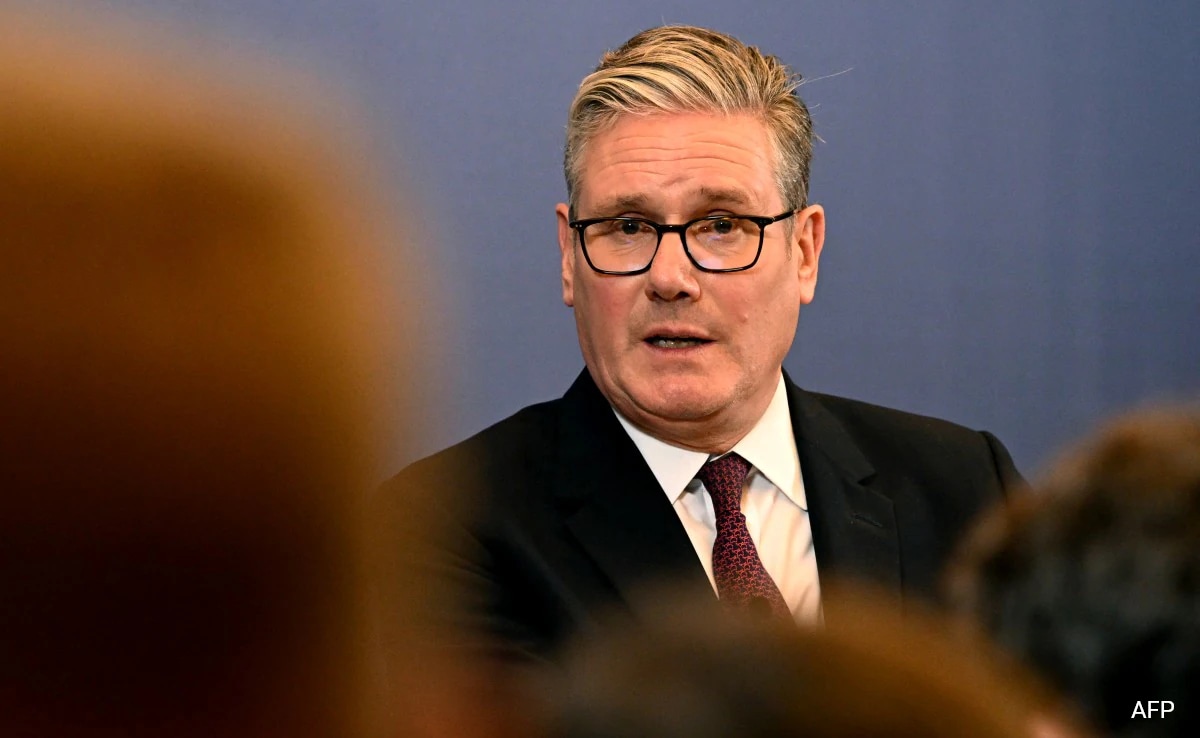
British politics just fractured again. Less than two years after securing a massive parliamentary landslide that was supposed to bring stability to a chaotic nation, Keir Starmer standing outside 10 Downing Street announced his resignation. It is a stunning, historic collapse. He is stepping down as leader of the Labour Party and Prime Minister, bowing entirely to an internal mutiny from his own lawmakers. The decision follows a brutal sequence of local election losses, high-profile cabinet desertions, and the sudden parliamentary arrival of his fiercest internal rival, Andy Burnham.
The immediate trigger for the collapse came when Andy Burnham, the former Greater Manchester Mayor, won a fast-tracked by-election in the Makerfield constituency. That win handed him a seat in the House of Commons and a direct platform to launch a leadership challenge. Starmer tried to act tough at first, vowing to stand and fight over the weekend. But behind closed doors, his support evaporated. Over the weekend, more than half a dozen cabinet ministers told him flatly that his time was up. Faced with overwhelming numbers, Starmer chose to jump before he was pushed. Meanwhile, you can read related developments here: Ce Que La Démission De Keir Starmer Change Vraiment Pour La Diplomatie Européenne.
The Fatal U-Turns and Scandals That Broke the Starmer Premiership
You cannot understand why Starmer had to quit without looking at the baggage he accumulated in less than 24 months. He ran in 2024 as a technocratic fixer, a former chief prosecutor who would run government with quiet competence. Instead, voters got a leader who looked entirely stuck. He continually reversed major policy decisions, creating a widespread impression among both the public and his own backbenchers that he lacked core convictions. To explore the bigger picture, check out the detailed report by Al Jazeera.
Then came the unforced ethical errors. The biggest one was appointing Peter Mandelson as the UK Ambassador to the United States. Mandelson is a legendary Labour power broker, but his historical association with Jeffrey Epstein became an active political toxic waste dump. When fresh US Justice Department files revealed the depth of those old connections, the British press went wild. Starmer tried to ride out the storm, but it cost him his moral high ground.
His problems compounded on the policy front. He struggled to kickstart a stagnant UK economy, failed to fix the crumbling National Health Service (NHS), and faced heavy criticism for his awkward handling of international crises. Just last month, Defence Secretary John Healey resigned in protest over Starmer’s military spending restrictions. When your own defense chief walks out during a period of global instability, the writing is on the wall.
How the Local Elections Triggered the Labour Mutiny
The dam officially broke during the nationwide local elections in May. It was a bloodbath. Labour shed over 1,000 local council seats and lost its absolute control over the Welsh legislature, a region the party had dominated for 27 consecutive years.
Voters were punishing Labour from two completely different sides. In working-class northern towns, traditional Labour supporters defected en masse to Nigel Farage's Reform UK party. In affluent southern areas, progressive voters abandoned Labour for the Green Party, furious over Starmer's cautious policies.
Rank-and-file Labour lawmakers panicked. They realized that if these local results were repeated in a general election, dozens of them would lose their jobs. A quiet murmur of discontent turned into an open rebellion. Roughly a quarter of all Labour members of parliament publicly demanded that Starmer set a firm date for his exit. He tried to save himself with a heavily promoted speech where he rolled up his sleeves and promised to prove his doubters wrong. It completely flopped. One lawmaker colorfully summarized the party's reaction to the speech as just "Meh."
The Northern King Moves to London
While Starmer was drowning, Andy Burnham was preparing his move. Burnham has spent years building an independent power base as the Mayor of Greater Manchester. He positioned himself as a champion of the ordinary worker, a plain-spoken contrast to Starmer's stiff, legalistic London style.
Because British prime ministers must be sitting members of the House of Commons, Burnham was locked out of direct national leadership while serving as mayor. That barrier vanished when the Makerfield seat became vacant. Burnham resigned his mayoralty, ran for the seat, and won a crushing victory. It was a clear signal to Westminster.
The final piece of the puzzle fell into place when Wes Streeting, the former Health Secretary who had been plotting his own leadership bid, stood down. Streeting acknowledged that a prolonged, bitter internal battle would destroy the party ahead of a general election. He threw his weight entirely behind Burnham, essentially ending the contest before it even began. With the party unifying around Burnham, Starmer was entirely isolated.
What Happens to the UK Government Now
The political transition will move fast, but it carries immense risk. Britain is about to install its seventh prime minister in just ten years, an unprecedented level of political instability for a major Western democracy.
Starmer announced that nominations for the next leader will open on July 9 and close before Parliament goes into summer recess on July 16. If the party unites behind Burnham without a formal rank-and-file vote, he could walk into 10 Downing Street by July 17. If a contest occurs, Starmer will remain as a caretaker leader until September 1.
The immediate challenge for the incoming prime minister is massive. They inherit an economy under severe strain, public services on the verge of breakdown, and a deeply fractured electorate. The biggest challenge will be managing the rapid rise of Reform UK. If the next leader cannot quickly prove that Labour can deliver visible changes to daily life, this political revolving door will keep spinning.
Immediate Steps for Following the UK Leadership Transition
If you want to understand how this transition impacts global markets and international policy, you need to watch specific indicators over the next few weeks. Do not just read the front-page headlines. Focus on the structural movements below.
- Track the July 9 nomination deadline: Watch if any fringe candidates emerge to challenge Andy Burnham. If he runs unopposed, the transition happens instantly, providing a brief window of market stability.
- Monitor the British Pound and gilt yields: Financial markets hated the chaos of the Liz Truss era but expected Starmer's exit. Watch for any sharp drops in sterling as an indicator of investor panic regarding Burnham's economic policies.
- Watch the July NATO summit: Starmer confirmed he will still represent the UK at the upcoming summit. Look closely at his interactions with foreign leaders to see how a lame-duck prime minister handles defense commitments.
- Analyze the upcoming July 22 EU reset summit: This meeting was supposed to be Starmer's big moment to reshape post-Brexit relations. If a new prime minister is in place by then, their presence will signal the immediate direction of UK-Europe trade policy.
- Observe cabinet appointments: The moment the new prime minister takes over, look at who gets the Chancellor and Foreign Secretary roles. This will tell you whether the new government is moving further to the left or maintaining a centrist economic policy.
This is not just a change of face at the top. It is a fundamental shift in the direction of the British government. The technocratic experiment failed, and the populists are waiting at the gates.