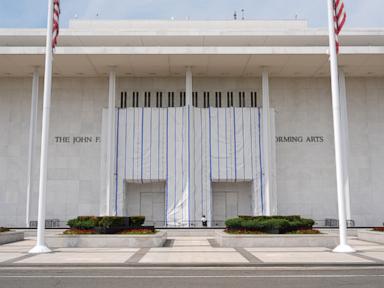
A chunk of plaster crashed down onto the grand foyer red carpet at the Kennedy Center. Heavy rain had soaked the Washington, D.C. area for days, and the building simply gave way. Luckily, nobody was standing under it when it happened. But this structural failure is doing much more than leaving a hole overhead. It has instantly ignited a fierce political and legal war over the future of the iconic cultural institution.
If you've spent any time tracking D.C. infrastructure, you know that aging public landmarks require constant upkeep. Built and opened in 1971 as a living memorial to President John F. Kennedy, the center features vast concrete and plaster spaces that are now over fifty years old. When a roughly four-by-five-foot section of the ceiling fell during Friday night storms, it didn't just scatter dust and debris on the floor. It handed board leadership an immediate, high-profile talking point in an ongoing courtroom drama.
The Immediate Aftermath and Safety Response
Management acted quickly after the incident. Internal emails and official statements confirmed that the main building faced immediate restrictions. The grand foyer—which serves as the main artery leading to the Opera House, Concert Hall, and Eisenhower Theater—was cordoned off for the weekend. Crews mobilized to secure the area, while performances scheduled in adjacent spaces like the REACH continued with adjustments.
Tourists and patrons arriving for weekend shows were greeted by caution tape instead of the usual pristine red carpet walk. Staff members worked through safety inspections to evaluate outer roof structures and prevent any secondary drops. While structural engineers checked surrounding plaster panels, the broader public conversation shifted away from routine maintenance and straight into a heated policy dispute.
Why This Collapse Matters Beyond the Damage
The timing couldn't be more loaded. A contentious legal battle is currently playing out in federal court over the board's controversial plan to close the institution for a sweeping two-year renovation. At the center of the dispute is a proposal to honor Donald Trump on the building's facade as the individual who restored and renovated the facility. Opponents have pushed back hard against the closure timeline and the renaming efforts, setting up a clash between preservationists, leadership, and legal challengers.
Board spokespeople seized on the plaster collapse immediately. They framed the incident as proof of systemic neglect and deferred maintenance left behind by prior leadership. In their view, closing down for major revitalization isn't optional anymore—it's an urgent safety necessity. On the flip side, critics view the timing of the collapse and the aggressive push for renovations with skepticism, wondering if routine water leaks are being weaponized to fast-track polarizing architectural changes.
What Happens Next for the Landmark
A federal judge is currently weighing whether to block parts of the board's master plan. Meanwhile, daily operations face mounting hurdles. The center hosts countless events, drawing thousands of visitors who expect a world-class cultural experience. When structural failures make national headlines, public confidence takes a hit, regardless of who is winning the political argument.
Fixing a historic roof isn't just about patching holes. It requires balancing modern waterproofing technology with the architectural integrity of a federal monument designed in the brutalist style of the 1960s. As engineering teams finish their comprehensive assessments of the grand foyer, the real test will happen inside the courtroom. Until a judge rules on the renovation injunction, visitors should expect ongoing access restrictions to certain parts of the main building, and taxpayers should expect this debate to stay front and center.