Seventy-three years after the guns fell silent on July 27, 1953, the Korean peninsula remains a fractured landscape. Most people forget that the Korean War never actually ended. There is no peace treaty. There is only an armistice, a temporary pause that hardened into the world's most heavily fortified border.
If you walk near the Demilitarized Zone today, the irony hits you instantly. It is called "demilitarized," yet it bristles with land mines, razor wire, and concrete anti-tank barriers. Recent photographic documentation from the region captures a stark reality: the division isn't just a historical footnote. It is an active, breathing wound shaping daily life in East Asia.
The Physical Scars That Refuse to Heal
Look past the tourist buses parked at the Imjingak Pavilion in Paju, and you see the rusted skeleton of a steam train. Bullet-pocked and stripped by time, it sits stranded on tracks that lead nowhere. Thousands of bullet holes trace the violence of the early 1950s.
Further north, near Cheorwon, the former North Korean Workers' Party building stands as a crumbling concrete shell. Vegetation crawls up its broken walls, yet the structure refuses to collapse. Warning signs for land mines dot the perimeter fences, reminding anyone passing by that the soil itself remains dangerous.
You won't find regular traffic crossing these paths. Instead, you find military checkpoints, observation towers, and steel barriers blocking streams. A North Korean flag flutters across the border town of Kaepoong, visible through binoculars from South Korean unification observatories. It is a visual standoff frozen in amber.
Living With a Permanent Fracture
The true cost of this split isn't measured in concrete or rusted rail cars. It is measured in human separation.
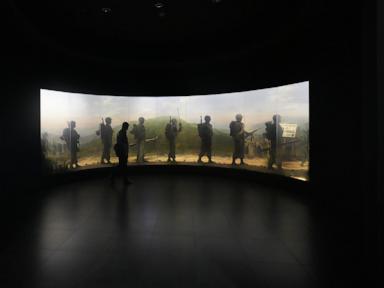
Generations have grown up knowing their closest relatives live just miles away, yet completely out of reach. Families were torn apart overnight when the armistice was signed. Elderly survivors who remember a unified Korea are dwindling in number. Memorials in Seoul, like the War Memorial of Korea, draw visitors who trace names of fallen soldiers and missing brothers onto polished stone monuments.
Tourists tie colorful ribbons to wire fences near the border, scribbling wishes for eventual reunification. Yet, official policy shifts tell a different story. Pyongyang abandoned decades-old goals of peaceful reconciliation, formally designating South Korea as a hostile separate state. Concrete actions match this rhetoric, as physical barriers thicken and communication lines fray.
Why This Stalemate Persists
People often ask why a permanent settlement hasn't been reached after more than seven decades. The answer lies in deeply entrenched security dilemmas.
- Mutual Distrust: Decades of military skirmishes and cyber warfare have built an impenetrable wall of hostility.
- Geopolitical Stakes: Major global powers maintain vested interests in the stability or shifting dynamics of the peninsula.
- Regime Survival: North Korea's leadership relies heavily on external threats to maintain internal control.
Security protocols keep changing, but the underlying tension stays identical. Barbed wire fences get reinforced. Surveillance cameras multiply.
History doesn't just repeat itself here; it refuses to move forward. The photographs coming out of the 73rd armistice anniversary tell a simple, brutal truth. Until leaders sign a formal peace accord, 1953 remains the unyielding anchor of Korean reality.