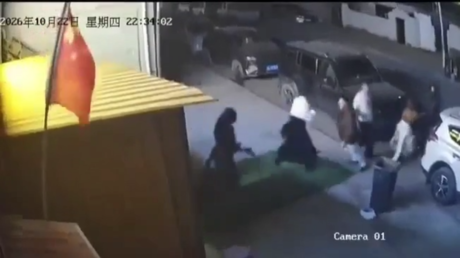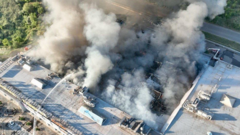
The term "double-tap" is usually reserved for military textbooks or Cold War espionage thrillers. It isn't a word you want to hear when discussing a Friday afternoon at a shopping mall. But on August 21, 2026, in the Ukrainian city of Kryvyi Rih, that theory became a lethal reality.
An initial drone strike hit the city’s largest shopping center. Emergency responders rushed to the scene. Minutes later—roughly half an hour by some accounts—a second drone followed the same flight path, slamming into the exact same location. This isn't just a tactic. It’s a deliberate, calculated move to maximize casualties among the very people whose job is to save lives. Don't forget to check out our previous post on this related article.
The mechanics of a calculated tragedy
When we look at the numbers coming out of the Dnipropetrovsk region, the scale is hard to process. At least 15 people are dead. Over 130 are wounded. Among the injured are 23 children. These aren't abstract statistics; they are families who were likely grabbing groceries or walking through a public space that, in any normal world, should be safe.
I've watched this conflict grind on for over four years now. If there's one thing I’ve learned, it’s that "escalation" isn't just a military buzzword. It's a changing of the rules of engagement. By using a second strike to target first responders, the intent shifts from hitting infrastructure to ensuring that even the rescue effort becomes a kill zone. If you want more about the context here, Associated Press provides an excellent summary.
President Volodymyr Zelenskyy, who grew up in Kryvyi Rih, didn't mince words. He called the attack an "act of barbarism." It's hard to argue with that assessment when you consider the deliberate nature of the gap between the two strikes. It’s a message, and it’s meant to be seen.
Why this changes the air war
Russia’s air campaign has intensified significantly this summer. The pattern is becoming painfully familiar. Thursday saw a massive barrage on Kyiv that claimed 16 lives. By Friday, the focus moved south.
The strategy appears to be exploiting a chronic gap in Ukraine's defensive shield. We know that Patriot missile interceptors are the gold standard for stopping high-speed ballistic threats, but they are in short supply. When air defense systems are spread thin, drones—even if they aren't the fastest projectiles—can wreak havoc.
What’s arguably more concerning for experts watching this is the "suppression" element. Ukraine’s Air Force reported shooting down 107 of 135 drones launched overnight. That sounds like a high success rate on paper. But it also means nearly 30 drones made it through. In a war of attrition, allowing even 20% of a swarm to reach a target is a catastrophic failure of security for any city, no matter how good the local air defense teams are.
The broader context of the August attacks
You can't look at Kryvyi Rih in a vacuum. The same day, strikes occurred in Mykolaiv and Kharkiv. The total death toll for that single Friday climbed to 21.
If you're asking why this matters to the average person, it’s because this isn't just about the frontline anymore. It’s about the reach of modern aerial warfare. The use of drones has democratized long-range destruction. Whether it’s Ukraine’s own long-range drones hitting refineries deep inside Russia—like the one in Perm—or Russian strikes on shopping malls, the geography of the battlefield has effectively ceased to exist.
Lessons from the ground
Living through or covering this kind of conflict changes your perspective on "safety." People in cities like Kryvyi Rih have become experts at assessing risk. They know the difference between the drone sound and a missile whistle. But what do you do when the first strike is just a setup for the second?
The common mistake is thinking the "all-clear" signal is immediate. Most people scramble to the scene of an explosion to help. In the past, that was a reflex born of community strength. Now, that same reflex is being exploited by planners who know exactly how long it takes for fire trucks and ambulances to arrive.
If you are tracking this situation, keep a few realities in mind:
- The reliance on local administration data: Early reports often fluctuate. The jump from 14 to 15 deaths is a grim reminder that casualty counts in rubble-clearing operations almost always climb over the first 24 hours.
- The logistical strain: Every strike, even those on shopping centers, pulls resources away from the front line. That’s the strategic secondary goal of these attacks—forcing the government in Kyiv to choose between protecting cities and arming the army.
- The psychological toll: Bombing a hometown, especially one as symbolically significant as Zelenskyy's, is meant to demoralize. It’s meant to make people feel that nowhere is safe, not even the grocery store.
We are currently in a phase of the war where both sides are betting on the other's patience. Ukraine is trying to hit logistics and oil facilities to squeeze the Russian economy. Russia is trying to make life in Ukrainian cities untenable to force a political concession.
This isn't a conflict that will be solved with a single diplomatic statement. The intensity we've seen this week, with back-to-back days of high civilian losses, suggests that the final months of this year will be the most dangerous yet.
Keep an eye on the upcoming diplomatic meetings, specifically those set for late August. That is where the reality of Western support levels will be tested against the backdrop of these civilian tragedies. The rhetoric is strong, but the need for more interceptors and long-range systems is the only thing that actually changes the math on the ground. Don't let the headlines distract you from the fact that this is a technological and logistical race to survive the winter.