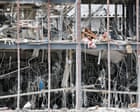
Thirteen people are dead and thousands remain displaced after a powerful 7.1-magnitude earthquake ripped through Japan's Kumamoto prefecture on the southern island of Kyushu. Prime Minister Sanae Takaichi has called the ongoing search operations a frantic race against time as military units and emergency crews comb through the rubble of a partially collapsed shopping center and a damaged paper mill.
If you are following the disaster, the immediate question is simple: what is happening on the ground right now, and who is still missing? Here is the reality of the situation. Over 9,000 residents have fled to more than 500 evacuation centers across five prefectures. Tens of thousands of homes are still sitting without stable power or gas lines. You might also find this similar coverage useful: Why 13 Indian Seafarers Trapped On Mv Amir1 Reveal The Ugly Reality Of Black Sea Shipping.
The epicenter of public anxiety focuses heavily on the Aeon Mall in Kashima town. Hundreds of people had managed to evacuate the building during the initial tremor. Then, about an hour later, a massive explosion tore through the structure, causing the second floor to cave in. Witnesses described a scene resembling a bomb blast, followed by thick smoke and gridlocked streets. Investigators are actively looking into whether a severe gas leak triggered the secondary disaster.
At the same time, emergency crews are working around the clock at the Nippon Paper Industries factory in Yatsushiro. A massive chimney collapse trapped workers underneath heaps of heavy debris. Japanese Self-Defense Forces personnel have deployed thousands of troops to the region to assist local firefighters, deliver emergency drinking water, and transport injured citizens to operating hospitals. As discussed in detailed articles by Wikipedia, the implications are worth noting.
Beyond the structural damage, survivors face a punishing heat wave. Temperatures in the disaster zone are soaring past ninety degrees Fahrenheit, turning gymnasiums and temporary shelters into sweatboxes. Government officials are scrambling to route portable air conditioning units and generators to evacuation facilities to prevent heatstroke among the vulnerable elderly population and displaced families.
Transportation networks across southern Kyushu have taken a major hit. Bullet train services and local rail lines remain suspended in key areas, and the runway at Aso Kumamoto Airport experienced temporary closures while engineering teams inspected cracks and structural integrity. Historic sites like Kumamoto Castle, which spent years rebuilding after the devastating 2016 tremor, have suffered fresh damage to their ancient stone walls.
The Japanese Meteorological Agency warns that strong aftershocks will continue rattling the region over the coming days. If you are tracking regional updates, expect relief efforts to focus heavily on stabilizing damaged infrastructure and clearing rubble before the heat wave intensifies further.