Old infrastructure quietly shapes our maps while we ignore it. Take Madison County, New York, where a stone and earth structure built back in 1836 is currently undergoing its most extensive overhaul in decades. Lake Moraine looks remarkably different right now. Its waters sit ten feet lower than normal, leaving docks stranded and boaters frustrated as a massive engineering project crawls forward.
If you're wondering why a nineteenth-century water source needs multi-year surgery today, the answer lies in a mix of changing safety standards, aging concrete, and heavy-duty state intervention. The New York State Canal Corporation isn't doing this for fun. They are racing against time to prevent a worst-case scenario on a high-hazard Class C dam.
The Chenango Canal Connection That Started It All
Most people assume Lake Moraine was always a scenic recreational spot for weekend anglers chasing largemouth bass and chain pickerel. That's completely wrong.
Back in the 1830s, New York was obsessed with canals. Governor DeWitt Clinton and his contemporaries realized that internal waterways were the veins and arteries of American commerce. To feed the massive 97-mile Chenango Canal—which connected Binghamton to Utica—engineers needed a reliable water supply to maintain the canal's summit levels.
Workers dammed Madison Brook, also known as Payne Brook, creating what was then called the Madison Reservoir. It wasn't built for fishing or lakeside real estate. It was an industrial feeder system. The canal itself was abandoned for navigation by 1878, but the reservoir stayed put. Over decades, the surrounding area transformed into a bustling lakeside community near Hamilton and Colgate University, while the New York State Canal Corporation kept ownership of the dam.
Why the Water Level Dropped Ten Feet
If you head out to Lake Moraine right now, you'll notice the shoreline has expanded aggressively. The water was deliberately dropped ten feet below the spillway crest, hitting elevation 1,201 Barge Canal Datum.
The drawdown started in late March and hit target levels by May. It's staying low through the end of 2027, with construction stretching well into 2028. Why keep it low for years? Engineers need a dry, controlled environment to demolish ancient concrete and rework earthen slopes safely.
Property owners got advance notice, and the state hosted public information sessions at Colgate University to explain the disruption. Even so, local recreation took a massive hit. The New York State Department of Environmental Conservation warned that launching trailered motorboats is a nightmare right now. Crews installed a temporary boat launch extension to help people reach six feet of water, but it's far from business as usual for local anglers and residents.
What Modern Rehabilitation Actually Entails
This isn't a quick patching job with bags of concrete. The Madison Reservoir Dam hasn't seen a significant overhaul since 1983. Standards have evolved drastically since then, and state regulators now classify it as a high-hazard Class C dam. That official label means a failure could cause catastrophic downstream damage and loss of life.
The current rehabilitation plan splits heavy work into two main phases.
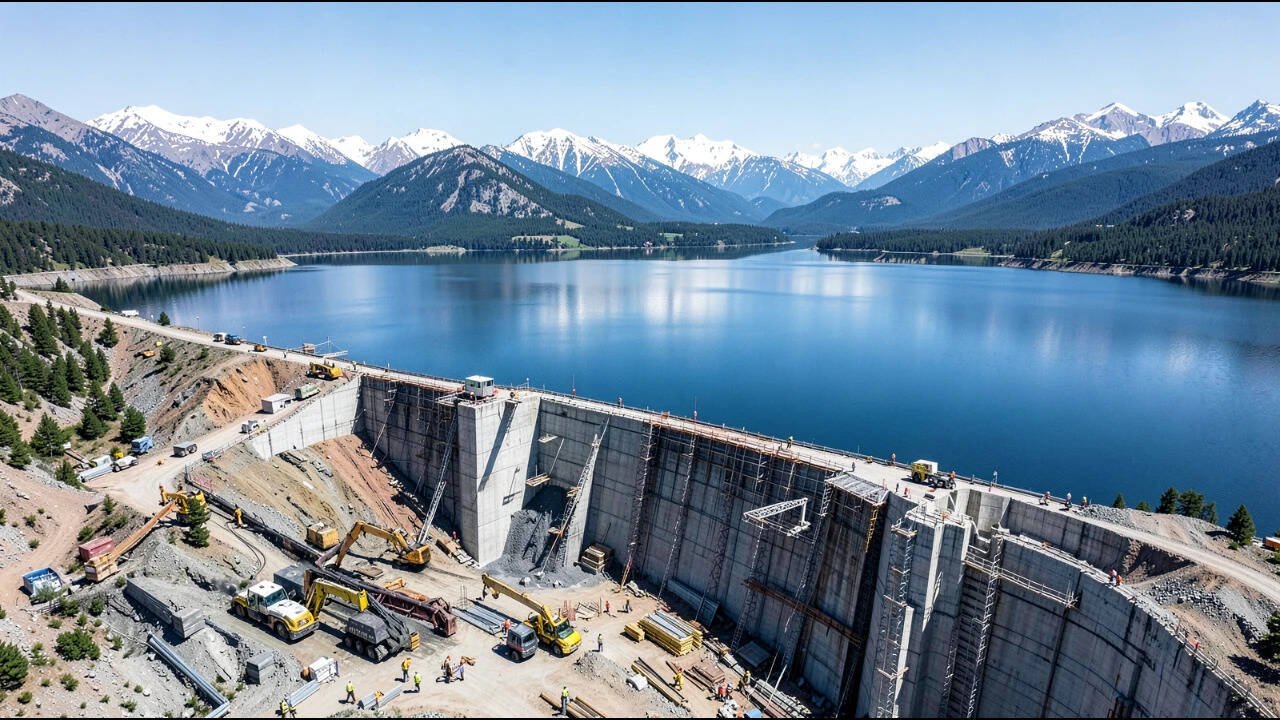
First, construction crews are completely decommissioning the old low-level outlet system. They're replacing it with a brand new siphon outlet. Second, the existing concrete spillway is getting torn out entirely. Workers are building a larger concrete labyrinth spillway in its place, which handles overflow much more efficiently during heavy rain events.
At the same time, the earthen embankments are getting reinforced. Crews are reshaping the slopes, installing modern drainage systems, and raising the dam crest slightly in limited areas to meet contemporary safety codes.
What This Means for Local Communities and Visitors
Infrastructure projects of this scale always create friction between public safety and local lifestyle. Residents have to deal with noise, altered views of a mud-ringed shoreline, and limited boating access for multiple seasons.
Yet, skipping this maintenance isn't an option. When you inherit a piece of 1830s engineering, you inherit the obligation to keep it from washing out downstream homes. The state insists there is no immediate danger of failure, but waiting until a structure breaks down completely is a gamble no community should take.
Keep an eye on the Canal Corporation's project portal if you plan to visit or fish the area. Track the water levels, watch out for the modified boat ramps, and remember that today's inconveniences buy another century of safety for the valley below.