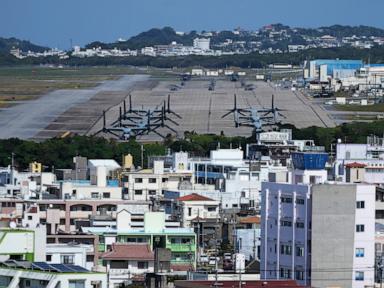
Another violent crime in Okinawa has reignited a bitter, decades-long diplomatic firestorm. A twenty-year-old US Marine stationed at Marine Corps Air Station Futenma was arrested by local authorities on suspicion of robbing and murdering a thirty-nine-year-old Japanese woman named Anna Yagi in a Naha hotel.
This isn't just an isolated tragedy. It's a flashpoint that exposes the deep structural tensions underlying the United States military presence in Japan.
If you live outside of Okinawa, you might view this as a standard crime report. But on the ground, local residents feel entirely different. Every time a service member commits a violent offense, it triggers immediate outrage, massive protests, and intense political friction between Tokyo and Washington.
Let's look at the facts of what happened, why the Status of Forces Agreement (SOFA) remains a lightning rod, and what this means for bilateral security moving forward.
What Happened in Naha
According to Okinawa prefectural police, the suspect—identified in local media reports as Davin Ballard—entered a hotel in Naha with Yagi during the early hours of Saturday. Later that morning, Yagi was found dead. Investigators state that her wallet and backpack were stolen during the attack.
Police spotted a man matching surveillance footage descriptions walking through Naha's entertainment district late Saturday night. They questioned him and took him into custody. The suspect has reportedly denied the allegations, and Japanese investigators are currently piecing together the timeline of events.
The diplomatic fallout was swift. Japan’s Vice-Minister for Foreign Affairs, Takehiro Funakoshi, lodged a formal protest with U.S. Ambassador to Japan George Glass, signaling the high-stakes political nature of the arrest.
The Heavy Burden of Okinawa
To understand why this arrest matters so much, you have to look at geography and history. Okinawa makes up a tiny fraction of Japan's total land area, yet it hosts the bulk of about 54,000 U.S. military personnel stationed across the country.
Decades of base-related noise, accidents, environmental concerns, and high-profile crimes have worn down local patience. When crimes occur, they don't stay local. They instantly become national news, fueling a powerful grassroots movement demanding the reduction or complete removal of American bases from the prefecture.
Okinawan governors have spent years pushing back against Tokyo and Washington, arguing that the island bears an unfair burden for national security. Incidents like this provide undeniable ammunition to local politicians who argue that the security alliance compromises the safety of everyday citizens.
The Status of Forces Agreement Debate
Whenever a U.S. service member is accused of a crime in Japan, public attention immediately shifts to the Status of Forces Agreement (SOFA). This treaty outlines how criminal jurisdiction is handled between the host nation and the U.S. military.
While Japanese police took the lead in arresting the suspect and are conducting the primary investigation, SOFA rules create complex legal negotiations. Critics frequently argue that SOFA grants too many protections to American personnel, making it difficult for local authorities to execute swift, transparent justice.
Japan's foreign ministry faces immense domestic pressure to show strength. Protests outside military gates are practically guaranteed whenever an incident like this makes headlines.
What Happens Next
The case will move through the Japanese judicial system, testing the diplomatic channels between the U.S. embassy and the Japanese government. For military commanders at Futenma and across other installations, the immediate response will likely involve strict curfews, liberty restrictions, and mandatory briefings aimed at damage control.
Yet, temporary curfews never solve the root problem. The fundamental friction point remains: a heavy foreign military footprint living side-by-side with a civilian population that expects safety and accountability.
This tragedy guarantees that the debate over American bases in Okinawa will dominate headlines for weeks to come. The question isn't just how this specific trial will unfold, but how long the fragile peace between local residents and foreign troops can hold.


