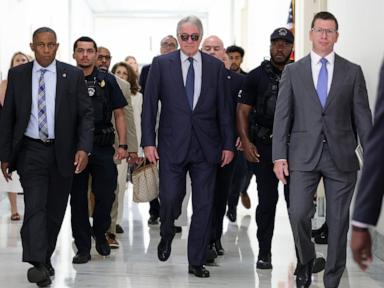
Billionaire Leon Black just walked out of a voluntary congressional interview, and the fallout is getting messy. If you think the Jeffrey Epstein investigation dried up years ago, look at what just happened on Capitol Hill. The co-founder of Apollo Global Management sat down with the House Oversight Committee for what was supposed to be a standard, closed-door talk. It didn't stay standard for long.
The room turned into a legal war zone the second lawmakers brought up nondisclosure agreements. Black refused to answer. He clammed up, conferred with his legal team, and eventually walked right out of the room.
This wasn't just a rich guy throwing a tantrum. It was a calculated legal gamble. Within minutes of his departure, Committee Chairman James Comer issued two immediate subpoenas. One demands the actual NDA documents. The other orders Black back into a chair on July 16, 2026—this time under oath, on camera, for a formal deposition.
The friendly, voluntary chat is over. The real legal battle has begun.
The Closed Door Blowup on Capitol Hill
Let's look at how this actually went down. Black went to Washington voluntarily. His team, led by high-profile defense attorney Susan Estrich, wanted to position him as a cooperative witness who had nothing to hide. Black even opened with a prepared statement reasserting that he never abused anyone, never paid Epstein for access to women, and knew nothing of Epstein's trafficking operation until the 2019 arrest.
He wanted to talk about taxes. He wanted to talk about estate planning. He wanted to talk about how Epstein lied to him.
Lawmakers didn't care about his rehearsed script. Republican and Democratic members started hammering him on his personal NDAs with various women.
Sources inside the room say Black repeatedly stopped the questioning to whisper with his lawyers. When the committee refused to move on from the topic, Black stood up and left. California Representative Robert Garcia didn't mince words, describing the billionaire as "storming out" and running from the room when pressed on survivors.
Estrich immediately fired back, calling the entire session a "planned political stunt". She insisted Epstein had zero involvement with any NDAs Black may or may not have signed.
The tension boils down to a single question. Why would a man worth billions risk a public congressional subpoena over a few private settlement agreements?
Why Nondisclosure Agreements Are the Real Target
Congress is hunting for a specific link. They want to know if Jeffrey Epstein acted as a financial and legal "fixer" for wealthy associates who needed to silence accusers.
Earlier this year, Senator Ron Wyden pointed to newly unsealed records suggesting Epstein helped orchestrate multi-million dollar payouts to keep women quiet. Investigators are trying to figure out if Black used Epstein's network or infrastructure to execute those deals.
Think about the leverage that gives an investigator. If Epstein helped write, fund, or negotiate these NDAs, it completely destroys Black’s narrative that his relationship with Epstein was strictly limited to legitimate wealth management advice.
Comer laid out the committee's objective bluntly to reporters outside the room. He wants to see the terms, the names, and the paper trail. Was Epstein's money used? Did Epstein introduce the parties? Who drafted the language?
For years, billionaires have used NDAs like a legal shield wall. You pay the money, the accuser signs the paper, the problem vanishes, and nobody can ever talk about it again under penalty of massive financial ruin. Congress is trying to smash that shield by using its investigative powers to force those documents into the light.
The 158 Million Dollar Question
You can't understand the walkout without looking at the massive financial history here. Black previously acknowledged paying Epstein a staggering $158 million for tax and estate advice between 2012 and 2017.
An internal investigation launched by Apollo's board and handled by the law firm Dechert LLP concluded that the money was for legitimate financial services. The report stated Black genuinely believed Epstein was a financial genius who saved him billions in estate taxes.
That explanation has always raised eyebrows in the financial world. Why pay a registered sex offender—who had already pled guilty to state prostitution charges involving a minor in 2008—hundreds of millions of dollars for advice you could get from any top-tier global accounting firm?
Black admits today that his association with Epstein was a massive mistake. He says hindsight shows Epstein manipulated him and lied prolifically. He claims the ongoing rumor mill has created a toxic environment for his family.
But remorse won't stop the subpoenas. Congress is looking past the $158 million tax advice and digging straight into the personal affairs Epstein reportedly helped manage.
Congress Flexes Its Subpoena Muscle
By walking out, Black forced the committee's hand. He changed the rules of engagement.
A voluntary transcribed interview allows a witness a lot of wiggle room. You can show up, read a statement, complain about the media, and refuse to answer things you don't like.
A subpoenaed deposition under oath changes the entire calculation. If Black skips the July 16 date, he faces contempt of Congress charges. If he shows up and lies, it is perjury.
The committee is show-running this aggressively. The July session will be fully videotaped. Imagine the public relations disaster for a Wall Street titan if video clips of him repeatedly taking the Fifth Amendment or refusing to answer questions about Epstein leak to the public.
His legal team is betting that they can challenge the scope of these subpoenas in court. They will likely argue that personal NDAs unrelated to Epstein's specific criminal network fall outside the legislative purpose of the committee.
Congress will counter that they cannot determine if the NDAs are related to Epstein until they actually see them. It is a classic legal catch-22.
How to Follow This Story as It Unfolds
This story is going to move fast over the next few weeks. If you want to watch how this plays out like a pro, ignore the sensational headlines and focus on three specific pressure points.
First, watch the federal court dockets. Black's lawyers have to file a motion to quash the subpoenas before the July 16 deadline if they want to block the deposition. If they don't file, he either has to show up or risk criminal referral.
Second, watch for the release of the June 26 interview transcript. The Oversight Committee usually releases these transcripts publicly after a review period. Reading the exact questions that made Black walk out will tell you exactly what names and dates the committee is focusing on.
Third, look for structural updates from other high-profile figures. Black is not the only billionaire who has faced scrutiny over Epstein ties. The committee's aggressive stance here sets a precedent for how they will handle other wealthy associates who try to stonewall their questions. The era of polite, voluntary closed-door meetings is giving way to hardball legal tactics.