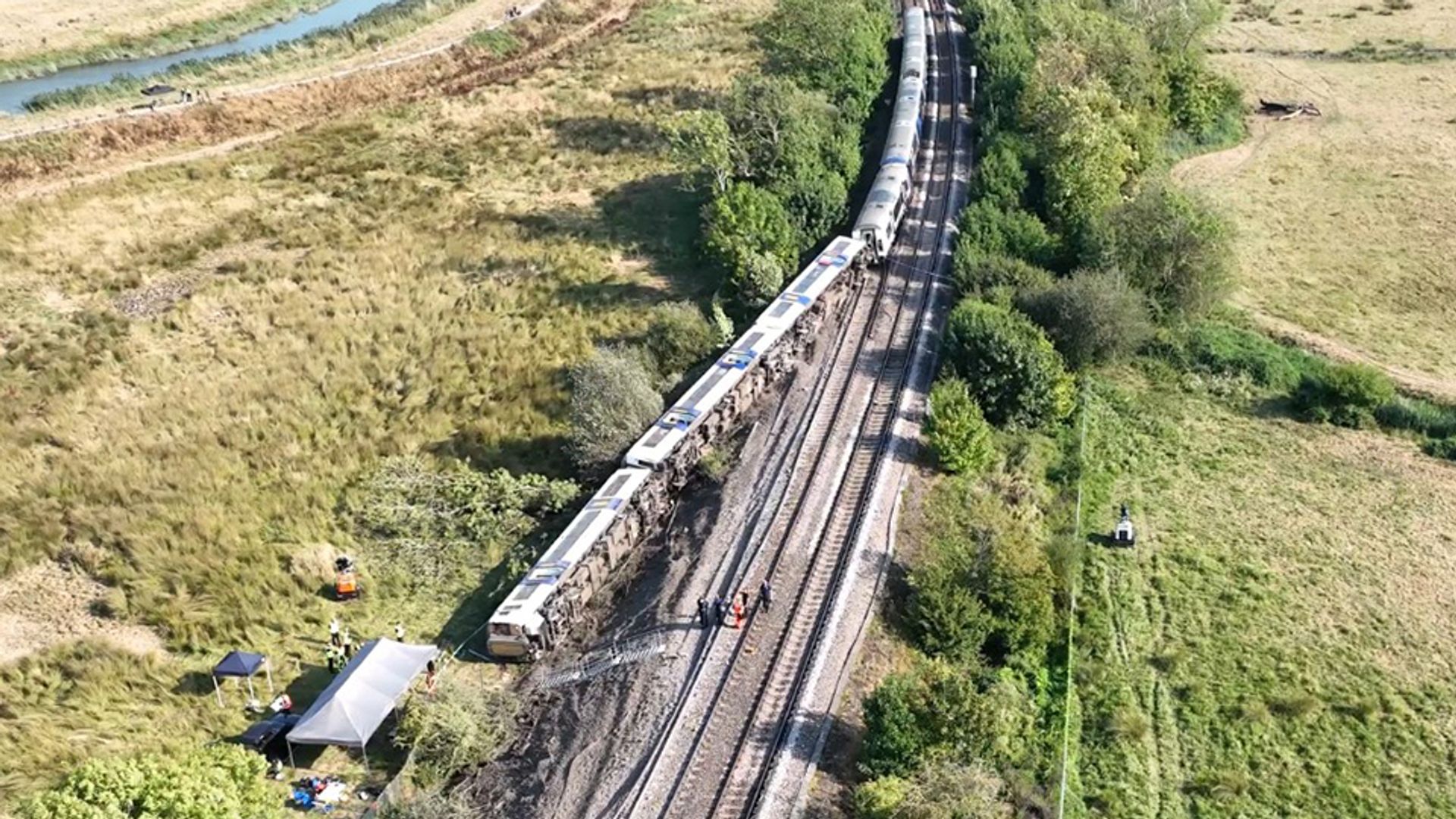
The rail industry often talks about safety as an absolute, but the recent interim findings regarding the Lewes derailment remind us that reality is far more complex. When a Southern train carrying 150 passengers came off the tracks near Lewes on August 13, 2026, it wasn’t just a freak occurrence. It was a breakdown that authorities are now pinning on a "track geometry irregularity."
If you’ve been following the news, you know 30 people were injured. That’s not just a statistic. It’s a group of commuters who expected a standard journey and ended up in an overturned carriage. Now, the Rail Accident Investigation Branch (RAIB) has confirmed what many regular commuters likely suspected: the track wasn’t right long before the train hit that section of the line.
What the track irregularity actually means
Let's be clear about what this terminology implies. A track geometry irregularity is essentially a misalignment of the rails. Think of it as a curve or a shift in the steel that shouldn't be there. According to the latest RAIB update, CCTV footage from trains passing through the area earlier that same day revealed the track was already showing signs of distress.
Why does this happen? The investigation is pointing heavily toward the weather. We’ve had a stretch of hot, dry conditions—temperatures hit about 27C—which can wreak havoc on infrastructure built on specific types of soil. The embankment in this area is composed of clay and alluvial deposits. If you know anything about civil engineering, you know these soils are notorious for shifting when their water content changes. When the ground dries out, it shrinks. When it shrinks, it moves. When the foundation moves, the track sitting on top of it shifts with it.
The warning signs people ignored
Perhaps the most frustrating part of this incident is the reports of "rough riding." Passengers had been flagging issues in this exact location before the derailment occurred. When you’re sitting on a train and you feel a jolt or a series of unusual vibrations, you might assume it’s just an old line or a windy day. But in the rail world, "rough riding" is a red flag. It’s the track talking to the train, telling it that the geometry isn't what it needs to be.
The RAIB isn't just looking at the track; they are looking at the maintenance history. They have evidence of previous work in that specific spot. That raises the obvious question: was the repair sufficient, or was it just a temporary fix for a deeper, geological problem?
Why this is a wake-up call for Network Rail
Network Rail and GTR have issued apologies, as they should. They’ve stated they are committed to learning from the incident. That's standard corporate speak, but the situation requires more than a statement. It requires a rethink of how we monitor lines built on sensitive ground.
We rely on remote sensing and inspection vehicles to catch these things. If the track had moved enough for a camera on a previous train to pick up a clear geometry issue, why wasn't that section locked down? It’s a question that needs an honest answer. Was the threshold for intervention too high? Or did the speed at which the soil shifted catch everyone off guard?
Looking ahead at the recovery
The line between Lewes and Haywards Heath is going to be out of commission for a while. Recovering a train that has tipped onto its side is a massive logistical challenge. You don't just "tow" that away. You need cranes, you need to preserve the evidence for the investigators, and you need to ensure the embankment is stable enough to support that heavy machinery.
If you’re a commuter in the Sussex area, you’re feeling the brunt of this. Expect delays and disruptions to be the norm for at least the next ten days, potentially longer depending on what engineers find once the wreckage is cleared.
What you should watch for next
The interim report is just the start. The full investigation will take time. They’ll look at the train’s condition, the embankment’s stability, and the effectiveness of the current heat-management policies.
If you travel this route, keep an eye on official updates, but don't hold your breath for a quick fix. Rail infrastructure on clay-heavy soil needs a serious, long-term engineering solution, not just patches that will fail when the next heatwave hits. If you see something, say something. Rough riding isn't "part of the ride"—it's a symptom of a larger issue. Report it to the operator immediately. Your input might be the warning that prevents the next major incident.