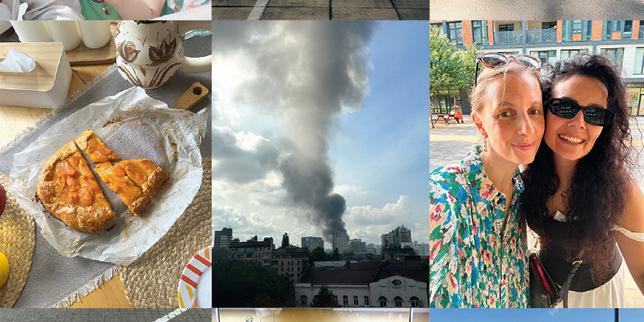
When the first Russian tanks crossed the border into Ukraine in February 2022, everyday routines shattered in an instant. For millions, life split into two distinct realities: the terrifying survival under air-raid sirens at home and the surreal, guilt-ridden safety experienced abroad. Two Ukrainian sisters, Olga and Sasha Kurovska, captured this fracture with raw honesty through a sustained epistolary journal. Their correspondence, famously featured in Le Monde and later adapted into books and stage performances, exposes the psychological cost of geographical separation during the war in Ukraine.
If you want to understand the true human cost of this conflict past the political headlines, you have to look at how families fragment across borders. One sister remained in Kyiv while the other settled near Paris, carving out entirely different daily rhythms from the exact same national trauma.
The Brutal Paradox of Adaptation in Kyiv
Sasha stayed in Kyiv. Living in the capital means accepting a terrifying new normal where drone attacks and missile strikes interrupt morning coffee and professional deadlines. Yet, the human psyche adapts in unsettling ways. Sasha has repeatedly noted her shock at how quickly normal life wraps around catastrophe. You hear the sirens, you head to the shelter, you check your phone, and then you try to finish your workday.
The danger is constant, but the shock wears off, replaced by a cold, functional endurance.
However, this adaptation comes with a devastating price. As Sasha describes in her letters, familiarity with danger doesn't make it safer; it just numbs the senses until reality strikes again with full force. Saying goodbye to loved ones heading to the front lines or parting ways after a brief reunion carries a permanent weight. It's the stark realization that farewells are no longer casual routines. They carry the heavy probability of being final.
Exile and Guilt in the Paris Suburbs
Meanwhile, a few thousand kilometers away in France, Olga lives a life completely detached from physical air raids, yet entirely consumed by the psychological shockwaves of the war. Working as a teacher and promoting Ukrainian cultural resilience, Olga faces a different kind of burden: survivor’s guilt.
Living in a peaceful Parisian suburb while your homeland burns creates an invisible wall. You buy groceries, walk through quiet streets, and listen to children play, all while your sister's phone buzzes with incoming missile alerts. Olga’s letters highlight the unique alienation of the diaspora. You want to integrate, work, and contribute, but your mind remains tethered to every explosion in Kyiv.
Cultural resistance becomes a lifeline. By teaching, sharing Ukrainian literature, and maintaining artistic output abroad, writers and artists in exile fight to keep their national identity alive on international stages. It's an active refusal to let erasure happen from afar.
Why Epistolary Chronicles Matter Now
Most mainstream news coverage focuses on troop movements, weapon shipments, and diplomatic summits. We get numbers, percentages, and geopolitical analysis. What gets lost in the statistics is the emotional architecture of a divided family.
Epistolary projects like the Kurovska sisters' journal fill that void. They show us how ordinary people manage extraordinary circumstances without breaking entirely. They dismantle the monolithic view of refugees and citizens left behind, replacing stereotypes with genuine human complexity.
If you're looking to grasp the ongoing psychological toll of the conflict, skip the tactical summaries for a moment. Read the letters exchanged between those on the front lines and those watching helplessly from foreign train stations. It's where the real history of this era is written.


