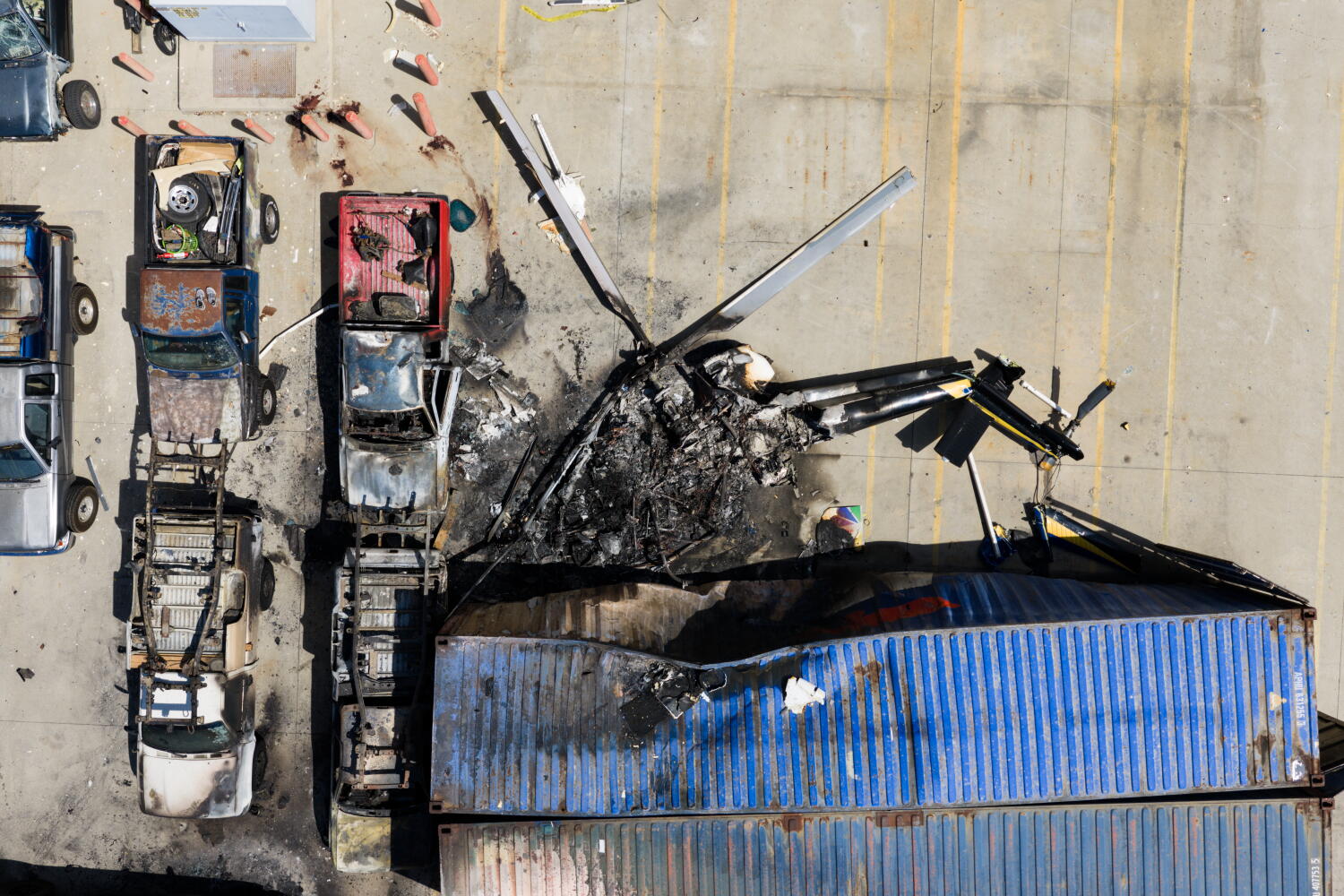
Look up in the Los Angeles sky and you will hear them. That familiar, thrumming chop vibrates through the roof tiles of San Fernando Valley ranch homes and bounces off downtown high-rises. News helicopters are as fundamentally Southern California as palm trees, studio backlots, and endless gridlock on the 405.
We take them for granted. They hover above high-speed pursuits, brush fires, and traffic jams, piping live video directly into our living rooms while we eat breakfast or wind down after work. But the recent tragic NBC4 news helicopter crash in Chatsworth changes the conversation. It forces an uncomfortable reckoning with a stark reality: keeping eyes in the sky is a peril-filled business that extracts a heavy human toll.
Flying a broadcast chopper isn't normal aviation. It's a high-stakes, low-altitude dance with gravity that demands total concentration from pilots and photojournalists alike.
The Unique Obsession with Aerial News
Los Angeles practically invented the modern era of continuous aerial broadcast journalism. Back in the late 1950s and 1960s, local stations realized that the sprawling geography of the basin meant ground cars couldn't keep pace with breaking news. If a brush fire leaped across the Santa Monica Mountains or a major pileup choked the Golden State Freeway, you needed an airborne vantage point to grasp the scale of the chaos.
Other cities rely on police scanners or wire services. L.A. relies on a visual language written from thousands of feet up. We treat the sky as an open highway for reporters. Broadcasters built entire station brands around their choppers—slapping catchy names on the fuselage and treating pilots like local celebrities.
Yet the romance of the broadcast masks the inherent vulnerability of the work. You are hovering slowly over chaotic airspaces, fighting erratic wind shears off the canyons, and dealing with mechanical stress day in and day out.
The Hidden Dangers of Low-Altitude Reporting
People assume modern aircraft are foolproof. They aren't. News helicopters operate in the danger zone. They fly low, slow, and often right into the teeth of smoke, heavy marine layers, or blinding afternoon glare.
Consider the operational pressures. A desk editor calls up from the ground. They want a tighter shot of a suspect exiting a vehicle, or a clearer view of a tanker truck fire. To get that shot, the pilot has to edge closer, alter the orbit, or dip beneath a cloud deck. The photographer is leaning over a heavy console, focused entirely on framing the video, while the pilot is scanning for power lines, rogue drone hobbyists, and competing news choppers sharing the same restricted airspace.
It's a high-stress environment where a single miscalculation leaves zero margin for error. Los Angeles aviation history is littered with grim reminders of mid-air collisions and sudden engine failures dating back decades. The risks haven't vanished just because cameras got sharper and stabilization technology improved.
What Changes After Tragedy Strikes
When a crash like the recent NBC4 incident happens, local newsrooms go quiet for a moment. Colleagues mourn coworkers who were fixtures of the daily rhythm. For a brief window, stations run solemn tributes, examining safety protocols, maintenance logs, and fatigue limits for flight crews.
Then the news cycle spins back up. A brush fire breaks out in the foothills. A high-speed chase lights up the midnight freeways. Within hours, assignment editors face an institutional pull that's hard to resist. The assignment desk looks at the screens, the viewers expect live coverage, and the birds roll out of the hangar once more.
We have to ask whether the relentless demand for live aerial spectacle is worth the risk to human life. Drone technology has evolved by leaps and bounds, offering safer alternatives for certain types of stationary shots or hazardous terrain. But drones still lack the range, endurance, and human judgment required to track unpredictable, fast-moving events across a seven-thousand-square-mile county.
The next time that familiar chopper roar shakes your windowpane, remember the people sitting inside that bubble cockpit. They are trading safety for a vantage point, keeping watch over a sprawling city that demands to see itself clearly, no matter the cost.


