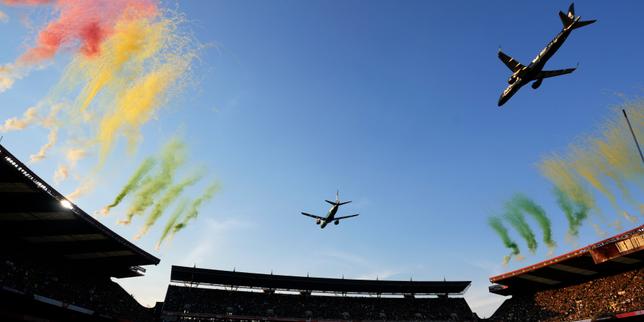
People love a good stadium flypast. When two commercial airliners paint the sky in green and gold before a massive rugby test, the crowd roars. But when those jets drop so low that they basically scrape the roof of the stadium, the cheers turn into panic.
That is exactly what happened when Airlink sent two Embraer jets screaming over DHL Stadium in Cape Town ahead of the Springboks clash against the New Zealand All Blacks. Flight data later revealed one of the planes dipped roughly 40 to 50 feet above the structure. Social media blew up instantly. Aviation nerds and everyday viewers alike questioned how a commercial stunt could push safety margins that thin.
The Anatomy of a Low Level Stunt Gone Too Far
Let’s look at the actual numbers because they tell a wild story. Flightradar24 logs showed the black-branded Embraer E195 running lower than any recorded baseline for structured flyovers in that airspace. The aircraft sat mere meters above the venue roof while traveling at around 150 knots.
Airlink defended the maneuver hard. They pointed out that the flight had heavy regulatory blessing. The South African Civil Aviation Authority (SACAA) approved the plan following rigorous simulator runs and safety briefings. Each jet carried three senior captains in the cockpit sharing commander, co-pilot, and technical duties.
Yet, having experienced hands on the yoke doesn't erase basic physics. Critics argued that human error combined with low-altitude turbulence leaves zero room for recovery. One tiny miscalculation on airspeed or vertical wind shear could have turned a pre-match spectacle into an absolute catastrophe.
The Fallout and Cancelled Plans
The public backlash forced an immediate reaction from regulators and operators alike. SACAA stepped in to review flight logs, black box data, and operational compliance. While Airlink insisted they operated safely within approved parameters, the political and public pressure told a different story.
The airline eventually pulled its application for the final scheduled flypast at FNB Stadium in Johannesburg. They decided to scrap the stunt entirely rather than deal with continuous scrutiny. It’s a classic case of public optics trumping corporate enthusiasm.
If you are organizing major sporting events, this incident serves as a massive wake-up call. Spectators want thrills, but nobody wants to witness an aviation disaster for the sake of pre-game entertainment. Regulators are tightening the screws on low-altitude permissions, and rightly so. Safety protocols shouldn't bend just because cameras are rolling and fans want a good photo.
Keep your eyes on how civil aviation authorities handle special air event approvals moving forward. Expect stricter altitude floors and heavier pushback against low passes over packed urban venues.
South African Airline Defends Controversial Flyover at Rugby Match
This video report breaks down the flight data and the safety debate surrounding the low-altitude stadium pass.
http://googleusercontent.com/youtube_content/1
.png?width=1200&auto=webp&trim=0%2C0%2C0%2C0)