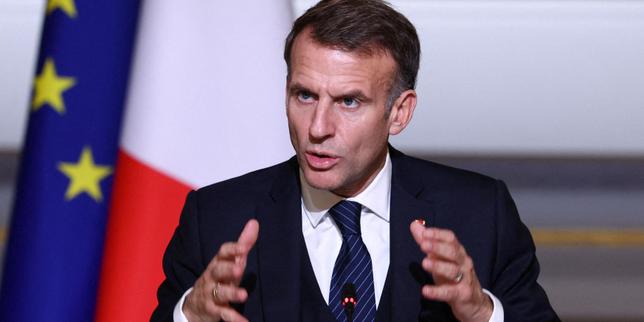
Not a single euro less for farm subsidies. That's the line Emmanuel Macron has drawn ahead of the Brussels summit on the European Union's 2028–2034 long-term budget, warning that Paris won't budge on the Common Agricultural Policy and could even pull the plug on negotiations if there's no deal by December.
Look at the timing and you'll see why he's digging in so hard. European Council President António Costa rolled out a revised multiannual financial framework proposal on November 21, 2026, trimming roughly €204 billion off the European Commission's initial near-€2 trillion blueprint while steering big money toward defense, competitiveness, and border control. For Paris, shifting cash toward weapons and industrial policy at the expense of farmers isn't just a budget tweak. It's political dynamite at home with French presidential elections looming in April 2027. Building on this idea, you can also read: Why The Bangkok House Raid Exposes A Darker Side Of Thailand's Cannabis Boom.
When you sit down with farmers or watch agricultural policy debates unfold in Brussels, the gap between grand geopolitical rhetoric and muddy boots on the ground gets obvious pretty fast. Officials in Brussels talk about strategic priorities—boosting competitiveness by 120%, multiplying defense spending by 232%, doubling border and migration funds—and on paper those numbers sound tidy. Out in the fields, though, a farmer looking at volatile input costs, weather swings, and shifting trade rules sees something much simpler: if Brussels trims income support, the math stops working.
Why Macron Won't Budge on the Common Agricultural Policy
Let's be honest about what's driving this standoff. France is the EU's agricultural heavyweight, and farm policy has always carried heavy political weight in French politics. When agricultural unions meet at the Élysée ahead of high-stakes EU talks, every euro on the table gets scrutinized through both an economic lens and a domestic survival lens. Experts at Reuters have also weighed in on this matter.
Under the Commission's post-2027 framework and the subsequent negotiating push led by Costa, farming support faces a fierce squeeze against newer priorities. According to the European Commission's CAP post-2027 overview, the plan centers on national and regional partnership plans, a ring-fenced floor of at least €300 billion for income and crisis support—including at least €293.7 billion for income support and €6.3 billion for a unity safety net—plus extra attention to young farmers. Yet farm groups and lawmakers argue that's still a sharp step down compared to what agriculture has historically commanded, especially once national discretion enters the picture.
The European Council's November 21 proposal announcement lays out the trade-offs clearly. Leaders want a budget that funds security, defense, competitiveness, and external projection while keeping national contributions manageable and tapping new "own resources" like digital services levies, the Carbon Border Adjustment Mechanism, non-recycled e-waste, tobacco, and carbon markets. Even though Paris has long pushed for EU-level digital taxes, winning a tech levy doesn't fix a perceived shortfall in farm income guarantees.
Food security is national security—and in France, you can't sell a "strategic Europe" story to voters if rural producers feel sacrificed to pay for it.
The Politics of the December Deadline
Macron isn't just arguing over spreadsheets; he's racing the electoral clock. With France heading toward presidential elections in April 2027—and other major EU countries facing their own political shifts—waiting until next year makes consensus dramatically harder. If talks drag into 2027, new governments or populist challengers with very different views on EU spending and national contributions could reshape the entire bargaining table.
Threatening to suspend negotiations if no agreement comes together by December puts real pressure on Costa and the other 26 member states. Because the Multiannual Financial Framework requires unanimity among EU countries before going to the European Parliament, a single determined capital can stall the whole process. Still, brinkmanship cuts both ways: if Paris pushes too hard without offering compromises on other spending lines or own resources, other capitals might dig their heels in just as firmly.
What Most People Miss About the EU Budget Fight
A lot of coverage treats this clash like a simple tug-of-war between "pro-Europeans" and "protectionists," or between "old spending" and "new priorities." That misses what's actually happening inside the 2028–2034 negotiations.
First, the pie isn't infinite, and every new priority has to come from somewhere. Europe wants stronger defense capabilities, faster industrial innovation, tighter external borders, and continued climate action (with a 35% climate and environment target across programs). Unless member states agree to massive increases in national contributions or huge new EU revenues—which net contributors like Germany resist—older pillars like agriculture and cohesion face constant downward pressure.
Second, how money is packaged matters almost as much as the headline number. Moving toward broader national and regional partnership plans gives member states more flexibility, sure, but flexibility can also mean less ring-fenced certainty for specific sectors. Farm organizations like Copa and members of the European Parliament have warned that shifting decisions to national envelopes or shuffling existing funds won't automatically protect farmers' incomes across the bloc.
Third, food resilience isn't a nostalgic talking point. Sure, some critics argue that pouring tens of billions into traditional farm payments slows down structural reform or favors larger landholders over smaller ones. That's a real debate worth having openly. Yet European farm groups aren't wrong when they point out that feeding roughly 450 million people reliably requires predictable production capacity—especially when supply chains, energy costs, and geopolitical tensions keep testing European self-reliance.
Defense and Competitiveness vs. Farm Incomes
Here's where the tension gets sharpest. Nobody in mainstream European politics argues against stronger defense or better industrial competitiveness right now. Security threats on Europe's borders and stiff economic competition from the United States and China are real.
The real disagreement is over who pays the opportunity cost. If defense surges by more than 200% and competitiveness jumps by 120% while agricultural funding is trimmed or left below past levels, farmers feel like they're footing the bill for Europe's new geopolitical ambitions. Meanwhile, budget negotiators trying to land a compromise before the end of 2026 are trying to balance net payers, net receivers, climate goals, and debt repayments from NextGenerationEU all at once.
Honestly, it's a tough needle to thread. You can't pretend the EU budget has unlimited room for every priority simultaneously, and you can't pretend farmers will quietly accept shrinking support right before an election year.
Where Things Stand Going Into the Brussels Talks
Right now, the diplomatic calendar is packed. EU leaders are gathering in Brussels for high-stakes discussions—including the November 26–27 summit and the December European Council—with urgent questions over the 2028–2034 budget and parallel debates over support for Ukraine.
Don't expect a neat, painless breakthrough overnight. Budget fights in Brussels almost always look chaotic right up until they aren't—full of warnings, leaked drafts, late-night haggling, and last-minute package deals. Whether Macron gets every single euro he wants for the Common Agricultural Policy or settles for tighter guarantees, clearer safety nets, and side concessions, his message is unmistakable: France won't sign off on a deal that leaves its farmers out in the cold.
Practical Next Steps for Following and Navigating the Debate
If you're tracking this negotiation—whether for policy research, agribusiness planning, or public affairs—don't rely on single-line headlines. Take a few concrete steps to stay ahead:
- Read the primary texts, not just spin. Check the European Council's negotiating box summaries and the European Commission's CAP post-2027 documentation directly so you know what's in constant prices, what's ring-fenced, and what's left to national allocation.
- Watch the December timeline closely. Pay attention to how leaders handle the late-November summit and the mid-December European Council meeting—if there's no real landing zone by mid-December, expect talks to get much messier heading into 2027 elections.
- Separate headline numbers from national rules. If you work in agriculture or food supply chains, look past aggregate EU totals and track how national and regional partnership plans will translate rules, crisis reserves, and direct income support at the country level.
- Factor policy volatility into planning. Until the 2028–2034 MFF is formally adopted by unanimous member-state agreement and approved by the European Parliament, treat post-2027 funding rules as a moving target rather than locked-in law.