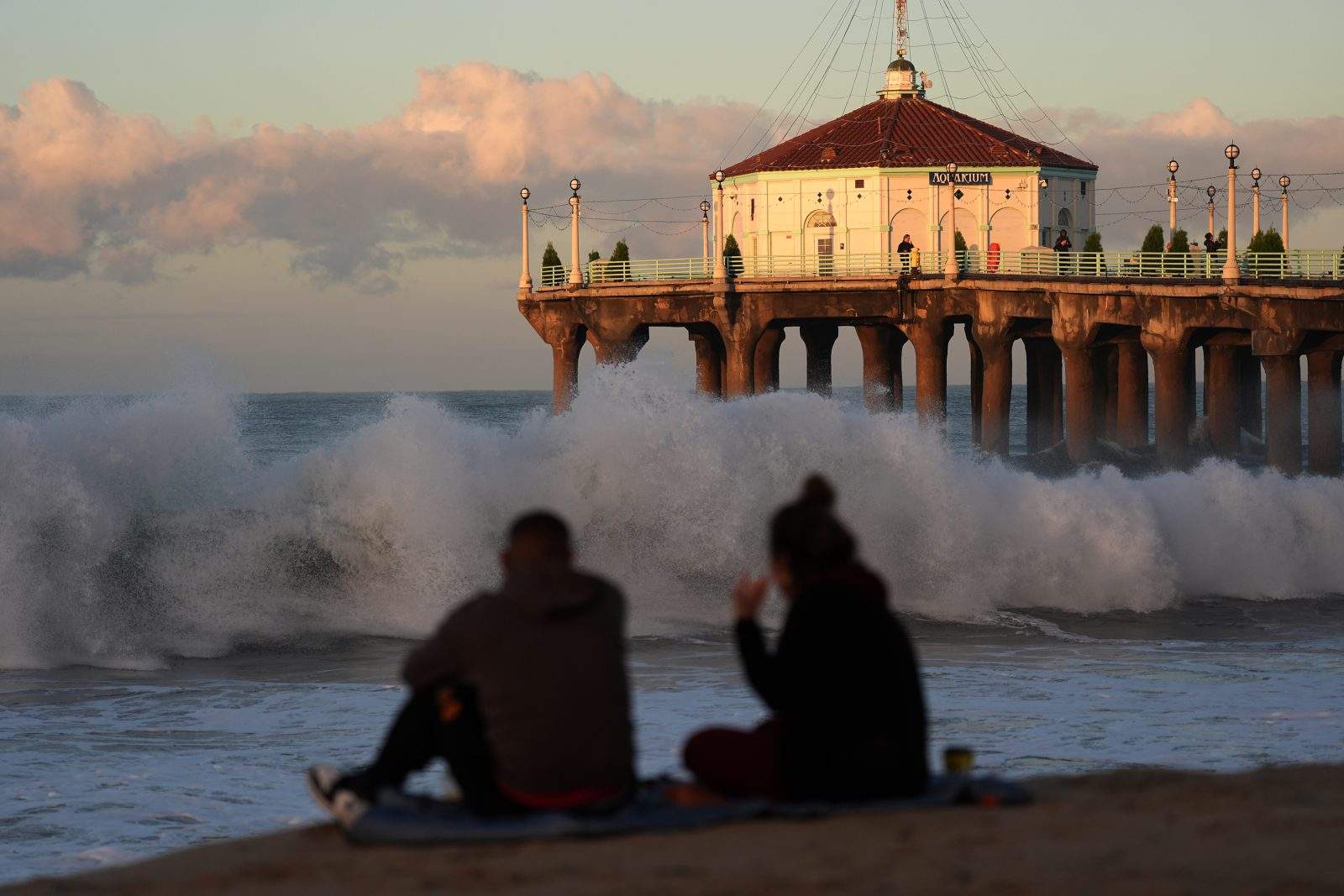
A preliminary magnitude 5 earthquake struck near Manhattan Beach, California, on Saturday morning, November 28, 2026, around 9:30 a.m. PST, sending a sharp jolt across Southern California.
A magnitude 5 earthquake sounds scary on a breaking news ticker. Honestly, though, it's a wake-up call rather than an apocalypse—unless you live on top of soft sediment or ignore basic prep.
When the ground lurches in Los Angeles or anywhere along the coast, people scramble for answers within seconds. Was it a foreshock? Will utilities hold up? Why did early numbers bounce around? Breaking down what just happened off Manhattan Beach and how California shakes out gives you real clarity instead of panic.
What Happened Off Manhattan Beach
The main shock hit roughly 3.5 to 3.7 miles west-southwest of Manhattan Beach beneath the Pacific Ocean, at a depth near 7.6 miles (about 12.2 km). Shaking reached moderate levels near the coast—including Manhattan Beach, El Segundo, southern Santa Monica, and Los Angeles International Airport—and lighter tremors rolled out across downtown LA, Long Beach, the San Fernando Valley, and parts of Orange County.
Early seismic readings jumped around before settling near magnitude 5.0. That happens all the time right after a quake because automated stations calculate initial estimates from the fastest waves first, then refine them as fuller waveform data arrives from the USGS Earthquake Hazards Program and the Southern California Earthquake Data Center.
Multiple aftershocks followed, including a sharp tremor around magnitude 4.5 to 4.6 and dozens of smaller jolts. Fire crews launched inspections, coastal piers at Manhattan Beach and Hermosa Beach closed temporarily as a precaution, and officials checked airport terminals and nearby industrial sites while the National Tsunami Warning Center confirmed no tsunami threat. Utility operators like the Los Angeles Department of Water and Power reported no major water or power disruptions from the initial checks.
Why Magnitude 5 Feels Different Than Magnitude 6 or 7
Magnitude measures energy released at the source, not how violent your kitchen feels. Because the Richter and moment magnitude scales are logarithmic, each whole number step equals roughly ten times the wave amplitude and about thirty-two times more released energy.
A magnitude 5 quake usually rattles dishes, swings light fixtures, knocks loose items off shelves, and scares pets. Older unreinforced masonry or poorly bolted water heaters can take hits, especially in basin areas filled with young mud and sand that amplify shaking. Yet modern code-compliant buildings in California are engineered to flex through a magnitude 5 event without collapsing.
Where you sit matters just as much as the number on the alert. Shallow quakes close to dense neighborhoods pack a sharper punch than deeper ones farther offshore, and shaking drops off noticeably as waves travel away from the rupture zone.
Offshore Faults and the Bigger Seismic Picture
California isn't sitting on one single crack waiting to snap. It sits across a sprawling network of strike-slip and thrust faults accommodating plate motion between the Pacific and North American plates.
The offshore zone near the Palos Verdes Peninsula and adjacent coastal faults has long been flagged in regional hazard models because it lies right next to millions of residents, ports, refineries, and airports. Geologists note that faults along this coastal corridor have the geological capacity for larger quakes in the magnitude 6.5 to 7.0 range over long timescales, though a magnitude 5 event is not proof that a bigger one is hours away.
Farther inland, the San Andreas Fault remains the headline giant capable of massive ruptures, while closer urban faults—like the Newport-Inglewood or Puente Hills systems—pose serious local hazards because they run directly beneath populated ground. One mistake people make is treating a moderate quake as a "pressure release" that makes a bigger quake less likely. Earth doesn't work like a tea kettle letting off steam; stress builds continuously across the plate boundary.
Common Mistakes People Make When the Ground Shakes
Having lived through California tremors and worked alongside emergency planners, I see the same bad habits repeat every single time a phone alert buzzes.
- Running outside mid-shake: Falling glass, toppling signage, brick facades, and downed power lines make doorways and sidewalks dangerous while the ground is actively moving.
- Standing in a doorway: That old advice came from adobe homes decades ago. In modern homes, a sturdy table or desk gives better overhead protection from falling debris.
- Flooding 911 over non-emergencies: Unless there's a fire, gas leak, injury, or structural hazard, tying up dispatch lines slows real rescues.
- Assuming gas or water is fine without checking: Smell for gas, listen for hissing, and inspect visible pipes rather than guessing.
- Ignoring aftershocks: Aftershocks are normal after a magnitude 5 quake and can rattle weakened objects for days or weeks.
What Actually Works for Preparedness
Preparedness sounds boring until your power flickers out at 2 a.m. or your hallway lights swing wildly. You don't need a bunker in your backyard to be ready.
Drop, Cover, and Hold On still works best indoors during shaking: drop to your hands and knees, cover your head and neck under sturdy furniture (or against an interior wall away from glass if no sturdy cover is nearby), and hold on until shaking stops. Outside, move to a clear spot away from buildings, trees, streetlights, and wires.
What works best in real life is small, boring friction-free prep. Keep sturdy shoes and a flashlight right next to your bed so you aren't walking barefoot across broken glass in the dark. Bolt tall bookshelves and TVs into studs, strap your water heater, and keep at least a few days of drinking water and basic meds where you can grab them fast. Check out Ready.gov earthquake guidance or Earthquake Country Alliance if you want simple checklists without the hype.
Smart Next Steps Right Now
- Check your home or apartment right now for top-heavy furniture, glass frames above your bed, and clear exit paths.
- Put sturdy shoes, a flashlight, and a basic first-aid kit within arm's reach of your bed tonight.
- Enable wireless emergency alerts and the USGS ShakeAlert system on your phone so you get whatever seconds of warning are possible when shaking starts.
- Agree on a simple family check-in plan and out-of-area contact in case local cell networks get congested after a larger event.