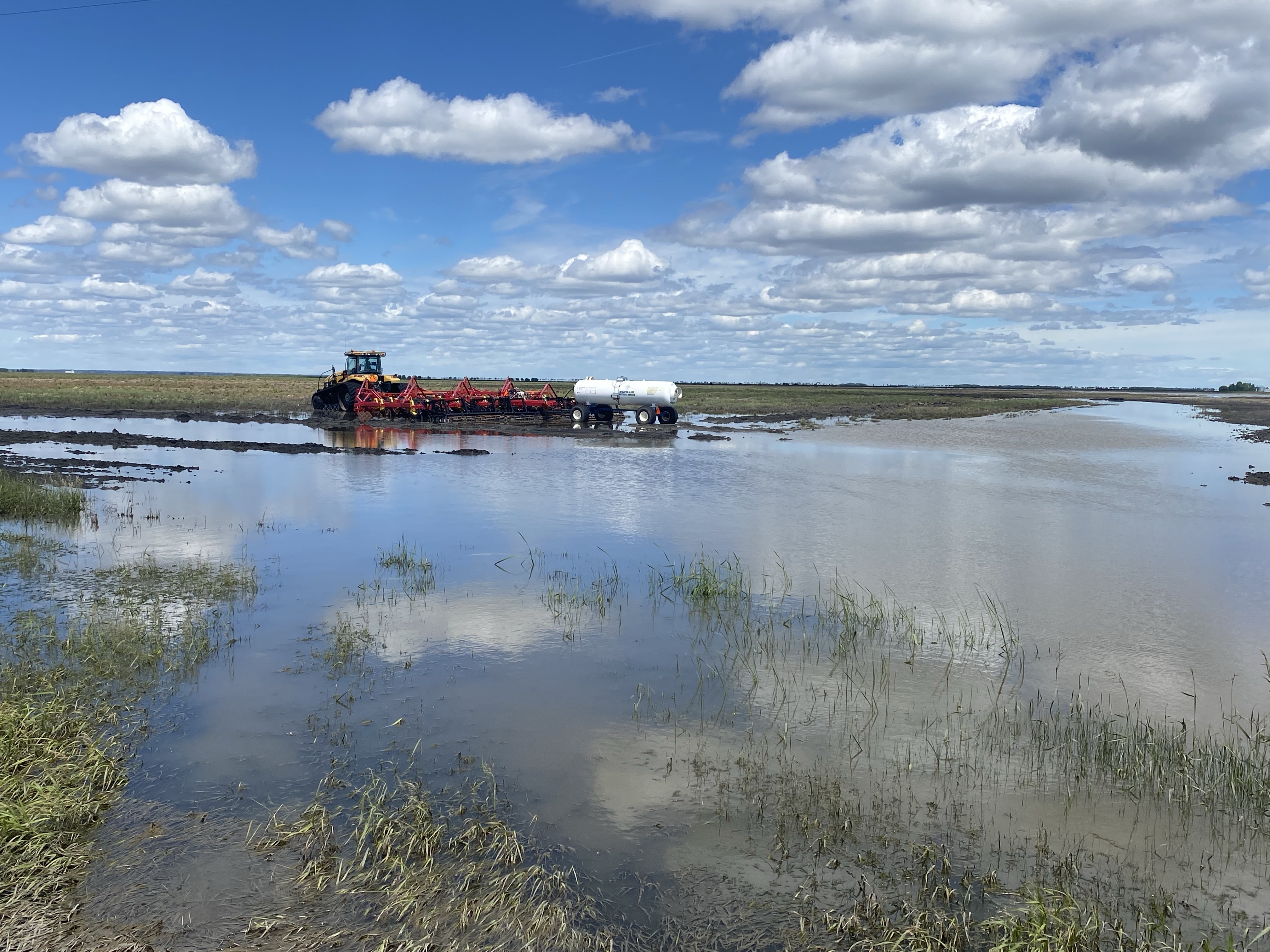
You have to be a special kind of stubborn to look at a field that resembles a lake and think about planting seeds. But that is exactly what is happening across southern Manitoba right now. After a series of brutal storms dumped historic amounts of rain earlier this month, some producers are refusing to write off the 2026 growing season. They are throwing a massive, expensive hail Mary.
They are reseeding by air.
When you can't get a tractor onto a waterlogged field without sinking it to the axle, you call in the planes. It sounds frantic because it is. The standard seeding windows are slammed shut. The calendar says late June. Yet, the desperation to salvage something out of a drowned year is driving a high-stakes gamble that could either save regional farms or compound their financial ruin.
The Stonewall Deluge and the Airplane Solution
The crisis started with a devastating weather system on June 9 and 10. The numbers coming out of the southern Interlake region look like typos, but they aren't. Stonewall got hammered with 255 millimeters of rain in just 13 hours. Petersfield saw nearly 230 millimeters. In a matter of hours, communities received over 250 percent of their normal seasonal precipitation. The storm did not just bring rain; it packed tornadoes, hail, and high winds that turned promising young crops into mush.
For farmers like Curtis McRae in St. Andrews, the storm left thousands of acres underwater. When standing water submerges a crop for more than three or four days, the plants suffocate. It is a total loss.
Because the ground is too soggy for heavy ground rigs, McRae hired an aerial seeding company to drop seeds from above. The strategy relies entirely on timing. He is counting on forecasted light rains to gently push those airborne seeds into the mud so they can germinate.
It is an incredibly precise and stressful way to farm. If the rain is too heavy, the seeds wash away. If it doesn't rain at all, they bake on the surface and the birds get a free buffet.
The Ridiculous Calendar Math
Let's talk about the giant elephant in the room: time. The deadline for cereal crop insurance coverage in Manitoba was June 20. We are past it. Every day that passes drops the yield potential off a cliff and elevates the risk of an early autumn frost killing the crop before it matures.
To get a crop to maturity, McRae admits he needs the growing season to stretch until November 20. In the Canadian Prairies, that sounds completely ridiculous. Usually, combine harvesters are parked long before then, and the snow is already flying.
But there is a weird sliver of hope this year. Environment and Climate Change Canada climatologists are pointing to data showing a trend of warmer, longer autumns over the last few years. The projection for 2026 suggests summer might start late but extend deep into October or even November. It is a slim margin, but when you are facing a potential $500,000 loss like some regional producers, a slim margin is enough to make you move.
Insurance Warnings and the Financial Cliff
Before you get swept up in the romance of farmers fighting nature, look at the cold business reality. Jill Verwey, president of Keystone Agricultural Producers, is urging extreme caution.
Her warning is simple: do not fly or drill seed into the ground without talking to Manitoba Crop Insurance first.
If you reseed a ruined field without approval, or if you choose a crop variety that has zero chance of maturing before the hard frost dates, you risk voiding your coverage. The inherent risk of late-maturing crops is massive. A single freezing night in September can wipe out a second planting instantly, leaving a producer with two sets of seed costs, two sets of fuel or pilot bills, and absolutely nothing to show for it.
The financial pressure is creating a political firestorm too. Progressive Conservative critics are already demanding the provincial government modify Disaster Financial Assistance rules. As it stands, provincial disaster programs usually won't pay out if crop insurance is available. But local leaders argue that crop insurance alone won't make these families whole after a ten-inch rain event.
What to Do Next if Your Fields Drowned
If you are a producer sitting on flooded acreage in the Interlake, eastern, or central regions, do not make emotional decisions based on what your neighbor is doing with an agricultural plane. Take these exact steps right now.
- Document the standing water. Take timestamped photos and drone footage of the flooded areas before the water fully recedes. You need clear proof of the duration of the submersion.
- Call your MASC representative. Do not touch the field or book a pilot until an insurance adjuster logs the initial damage and gives you written clearance to reseed or terminate the crop.
- Calculate the switch-crop agronomics. If you are reseeding in late June, your original long-season canola or wheat plan is dead. Look into ultra-early maturing varieties, green feed, or alternative forage options that can handle a short window.
- Evaluate the soil structure. Forcing seed into compacted, water-crusted, or completely saturated mud can lead to terrible root development. Check for rot diseases like aphanomyces or fusarium before investing fresh capital into the same dirt.