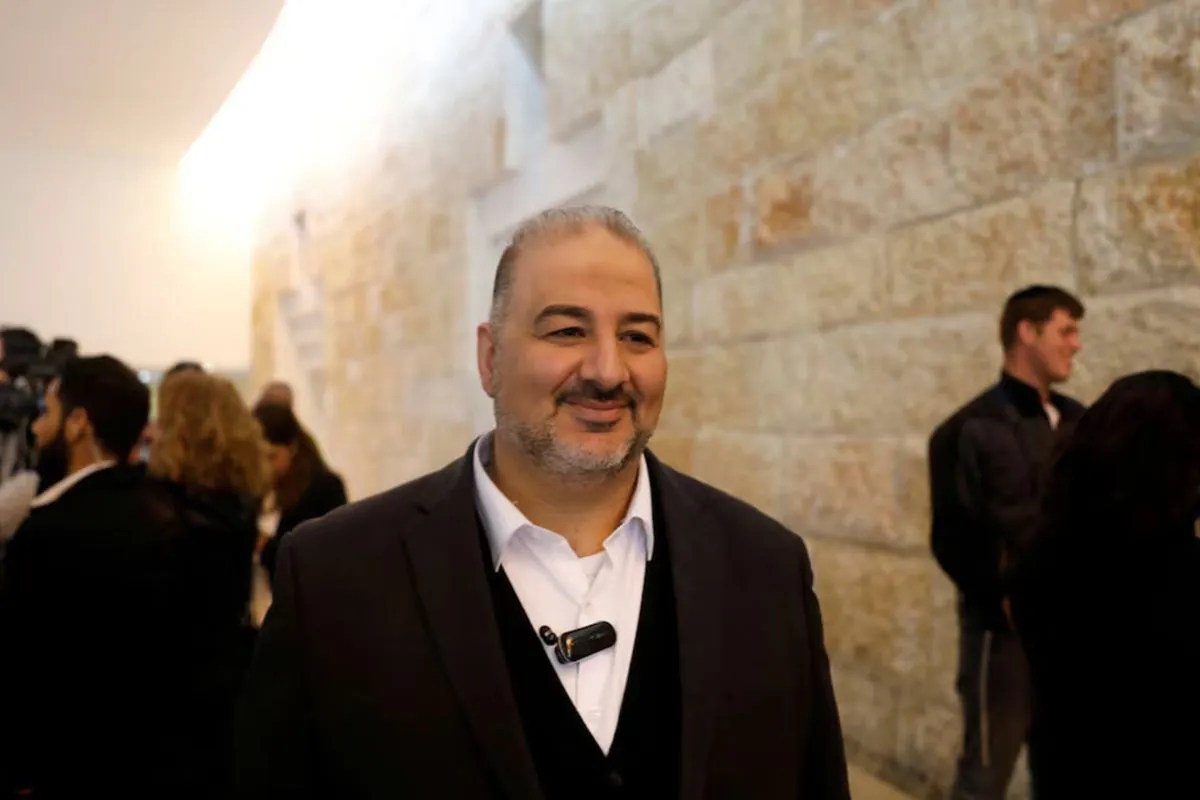
Mansour Abbas stands right at the center of Israel's post-election coalition puzzle, and his upcoming Saturday television interview on Channel 12 could clear one of the biggest hurdles facing Gadi Eisenkot's government effort. Reports ahead of the broadcast indicate Abbas is set to publicly define Hamas as a terrorist organization, a move aimed at removing a major political barrier to bringing his Ra'am party into an Eisenkot-led coalition.
That single label carries massive weight in Israeli politics. For Abbas, stating it openly addresses demands raised during coalition talks, yet it also invites sharp backlash from hardliners on both sides. In a promo clip with interviewer Dana Weiss, Abbas was asked if he had reconciled himself to the personal danger such a declaration could bring, and he replied that he had.
Look at the math in the 26th Knesset, and you see why everyone is watching Ra'am. After the October 27, 2026 election, Benjamin Netanyahu's Likud won 27 seats while Gadi Eisenkot's new Yashar party took 21 seats. On November 8, President Isaac Herzog tasked Eisenkot with forming the next government after Eisenkot drew recommendations from 67 lawmakers against 46 for Netanyahu. Securing recommendations is one thing. Turning rival factions into a stable governing majority before the mandate clock runs out is another.
Why Mansour Abbas Matters So Much in Israeli Coalition Math
When a parliament has 120 seats and dozens of sharp ideological fault lines, small factions end up holding outsized leverage. Ra'am won 8 seats in the October 27 election, up from 5 before the vote, while the Joint List won 11 seats. That gives Arab-majority lists real parliamentary weight that neither Eisenkot nor Netanyahu can simply wish away.
I've followed Israeli coalition bargaining for years, and honestly, the gap between campaign rhetoric and governing arithmetic is where deals either get made or blow up. During elections, leaders often vow to avoid certain partners. Once the vote is counted, reality takes over. Abbas has already argued publicly that an Eisenkot-led government can include Yashar and its bloc partners, United Torah Judaism, and Ra'am, with outside backing from the Joint List.
Still, Ra'am's entry isn't automatic. Abbas has made clear that joining a coalition depends on concrete commitments rather than symbolic goodwill. Top of his list is tackling violent crime in Arab municipalities, alongside broader demands around civil rights and community investment. As chair of the parliamentary committee fighting crime in Arab society, Abbas has talked about rolling out a five-year plan to give that work real teeth.
What Defining Hamas Changes and Why Critics Push Back
Asking an Arab-Israeli party leader to publicly call Hamas a terrorist group isn't a minor talking point in Israel. It's a loyalty test designed to reassure centrist and right-leaning partners—and skeptical voters—before Ra'am sits anywhere near the cabinet table.
Ra'am previously joined Israel's governing coalition from 2021 to 2022, breaking a long informal taboo against an Arab party sitting in a government. Ahead of the 2026 election, Abbas pushed Ra'am toward a more civic identity, separating it from its religious leadership and adding former senior police official Yoav Segalovitz to the slate. That shift signals a pragmatic bet on institutional influence over ideological purity.
Yet critics aren't buying it at face value. Allies of Netanyahu—including Finance Minister Bezalel Smotrich, Defense Minister Israel Katz, and National Security Minister Itamar Ben Gvir—have attacked the expected declaration as deceptive or insincere, accusing Abbas of political theater and questioning his motives. On the flip side, taking a hard public line against Hamas carries serious risk for Abbas among supporters and regional actors who view any such label as a betrayal.
That tension is the real story here. In politics, words meant to unlock a coalition deal in Jerusalem can trigger fierce pushback everywhere else.
Eisenkot's Tightrope With Haredi Factions and Rivals
Even if Abbas clears the Hamas hurdle on Saturday night, Eisenkot still has to stitch together an awkward, fragile set of partnerships in roughly a week's time. Reports indicate his bloc is racing to finalize coalition agreements by early December.
Eisenkot has already announced a coalition deal with Yair Golan's Democrats, granting that left-wing party four ministerial portfolios. At the same time, Eisenkot's Yashar party has been negotiating with United Torah Judaism over military conscription rules, with senior Degel HaTorah rabbis reportedly giving a green light for formal talks.
Meanwhile, his own bloc isn't of one mind:
- Naftali Bennett, whose Together party holds 12 seats, has favored a unity government with Likud and balked at relying on Arab or ultra-Orthodox factions.
- Avigdor Lieberman, leading Yisrael Beiteinu with 7 seats, has floated prospects of a government with a clear Jewish majority while signaling openness to moving forward next week.
- Netanyahu's camp continues to push unity talks with Yashar while warning that an alternative coalition built around these pieces won't hold.
Putting ultra-Orthodox parties, secular nationalists, a left-wing party, and an Arab party under the same roof—or relying on outside support—is kinda like balancing plates on spinning poles. One wobble can bring the whole act down.
Common Misconceptions About This Coalition Push
People outside Israel often assume a candidate who gets 67 recommendations after an election already has the prime minister's seat locked up. That's simply not how the Knesset works. Recommendations show who has the best shot at trying first; they don't guarantee a majority vote of confidence.
Another misconception is that Mansour Abbas's TV statement alone will swear in a new government. Calling Hamas a terrorist organization may ease political friction for some partners, yet concrete policy trade-offs—on crime enforcement, draft exemptions, budget allocations, and ministerial posts—are what actually decide signatures on a coalition deal.
Finally, don't treat coalition talks as settled until agreements are signed and submitted. Deadlines tighten, tempers flare, and unity proposals with Likud remain part of the background noise.
Practical Ways to Track What Happens Next
If you want to follow this story without getting lost in rumor mill posts, watch a few concrete markers over the next several days:
- Read the exact wording from Abbas's Channel 12 interview, not just headlines summarizing it, to see whether he explicitly uses the phrase "terrorist organization" and what conditions he attaches.
- Track formal signed deals, not trial balloons, especially between Yashar, United Torah Judaism, and Ra'am, ahead of the early December submission window.
- Watch Bennett and Lieberman's public stances alongside any ongoing Yashar-Likud unity contacts, since internal cracks inside the change camp matter just as much as opposition attacks.