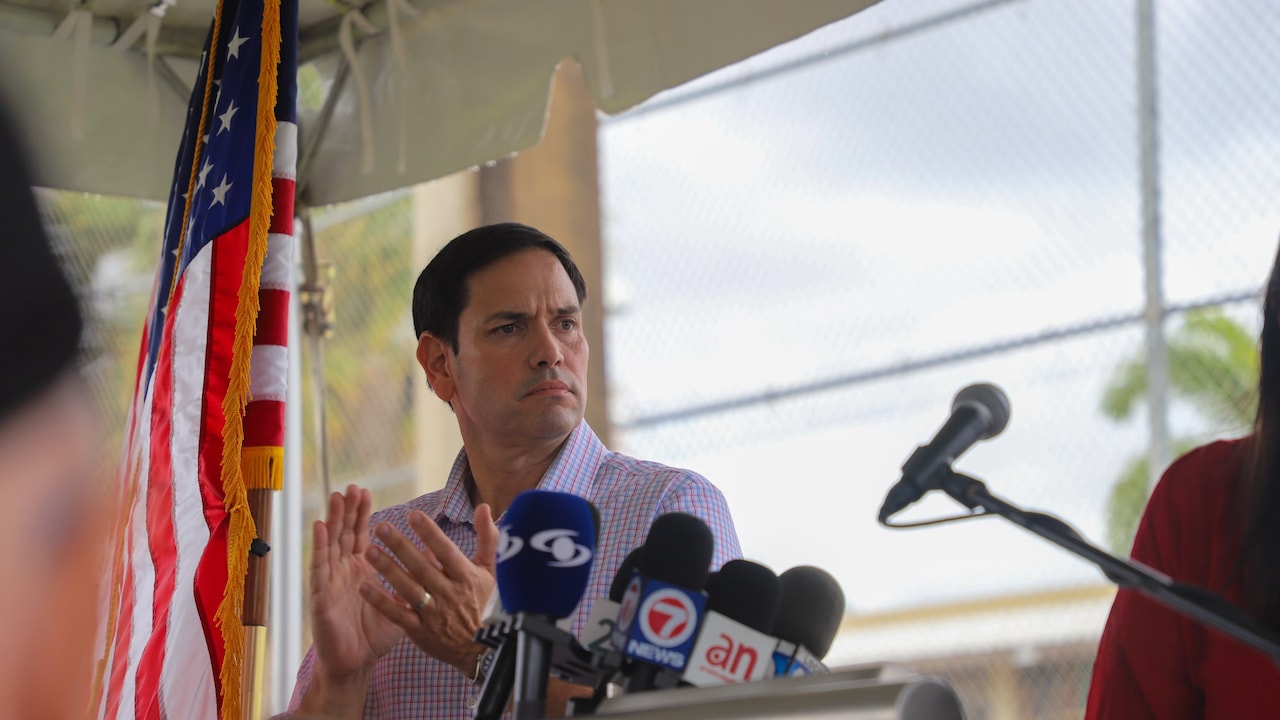
Foreign policy speeches in South Asia always follow a predictable script. US Secretary of State Marco Rubio touched down in Delhi on a two-day diplomatic mission and immediately tried to calm local anxieties. Washington's warming channels with Islamabad, he insisted, will never come at the expense of India.
It sounds reassuring. It also ignores how great power competition actually works.
When Donald Trump’s administration draws comparisons to the 1970s Nixon-Kissinger playbook, officials in New Delhi get understandably nervous. Back then, Washington tilted heavily toward Pakistan's military regime to balance against Soviet and Chinese influence. Rubio rejected that historical parallel during his interview with The Indian Express, arguing that the modern world bears zero resemblance to the Cold War era.
He is technically right about the global chessboard shifting. Yet he is completely missing the underlying tension that keeps Indian national security planners awake at night.
The Reality Behind Washington and Islamabad
Let's be honest about why the United States maintains a pipeline to Pakistan's military establishment. It has very little to do with affection for Islamabad's governance and everything to do with leverage. Pakistan sits at a volatile geographic crossroads. Washington believes that staying engaged with military leaders like army chief Asim Munir gives them a backchannel to discourage provocative actions that could destabilize the region.
Rubio framed this direct line of communication as a positive force for New Delhi. If the US holds influence in Islamabad, the logic goes, Washington can steer Pakistan away from moves that directly threaten Indian interests.
Diplomacy loves that kind of neat justification. Reality is messier.
Why New Delhi Remains Skeptical
India has lived through decades of American double-speak regarding cross-border security. Whenever Washington needs logistical corridors or counter-terrorism cooperation in the region, US-Pakistan ties warm up overnight. Then, American diplomats fly to Delhi, offer sweeping assurances about strategic partnerships, and expect everyone to move on.
India's foreign ministry doesn't buy diplomatic platitudes anymore. They look at concrete actions, trade negotiations, and defense technology transfers. Rubio pointed to ongoing trade talks and bilateral work as proof of Washington's true priorities. But trade deals and defense pacts don't erase the deep structural mistrust born from decades of US military aid leaking into the hands of actors hostile to India.
What the 1970s Comparison Actually Misses
Rubio argued that the 1970s Cold War dynamics are dead. He's right that the bipolar world is gone, replaced by an aggressive multi-polar struggle dominated by the US-China rivalry. But that shift makes South Asia more complicated for Washington, not less.
China's deep economic and military footprint in Pakistan through the China-Pakistan Economic Corridor means any American play in Islamabad directly impacts Beijing's calculus. The US isn't engaging Pakistan purely out of regional charity. Washington wants counters and pressure points against Beijing. If managing that rivalry requires keeping Islamabad happy, Washington will do it, regardless of how many soothing assurances are delivered in Delhi.
The Cost of Strategic Ambiguity
For years, Washington wanted India to act as a frontline counterweight against China in the Indo-Pacific while expecting Delhi to stay quiet about American tactical maneuvers elsewhere. That math doesn't work anymore. India has grown economically and militarily confident enough to chart an entirely independent foreign policy path, buying Russian oil when it suits them and building bilateral security partnerships on their own terms.
When US officials promise that friendship with one capital won't hurt another, they are offering standard diplomatic insurance. They want New Delhi to remain fully committed to the Quad and Indo-Pacific security architectures without getting spooked by Washington's diplomatic outreach to old adversaries.
What Happens Next
Watch the actual mechanics of US foreign aid and diplomatic engagement over the next year rather than listening to press conference soundbites. If Washington continues to bundle security assistance or high-level defense dialogues with Islamabad without demanding strict accountability on cross-border militancy, Delhi's skepticism will be entirely vindicated.
Words cost nothing in international relations. Strategic alignment requires tangible proof, and no amount of diplomatic reassurance can change the hard geopolitical interests driving Washington's footprint in South Asia.