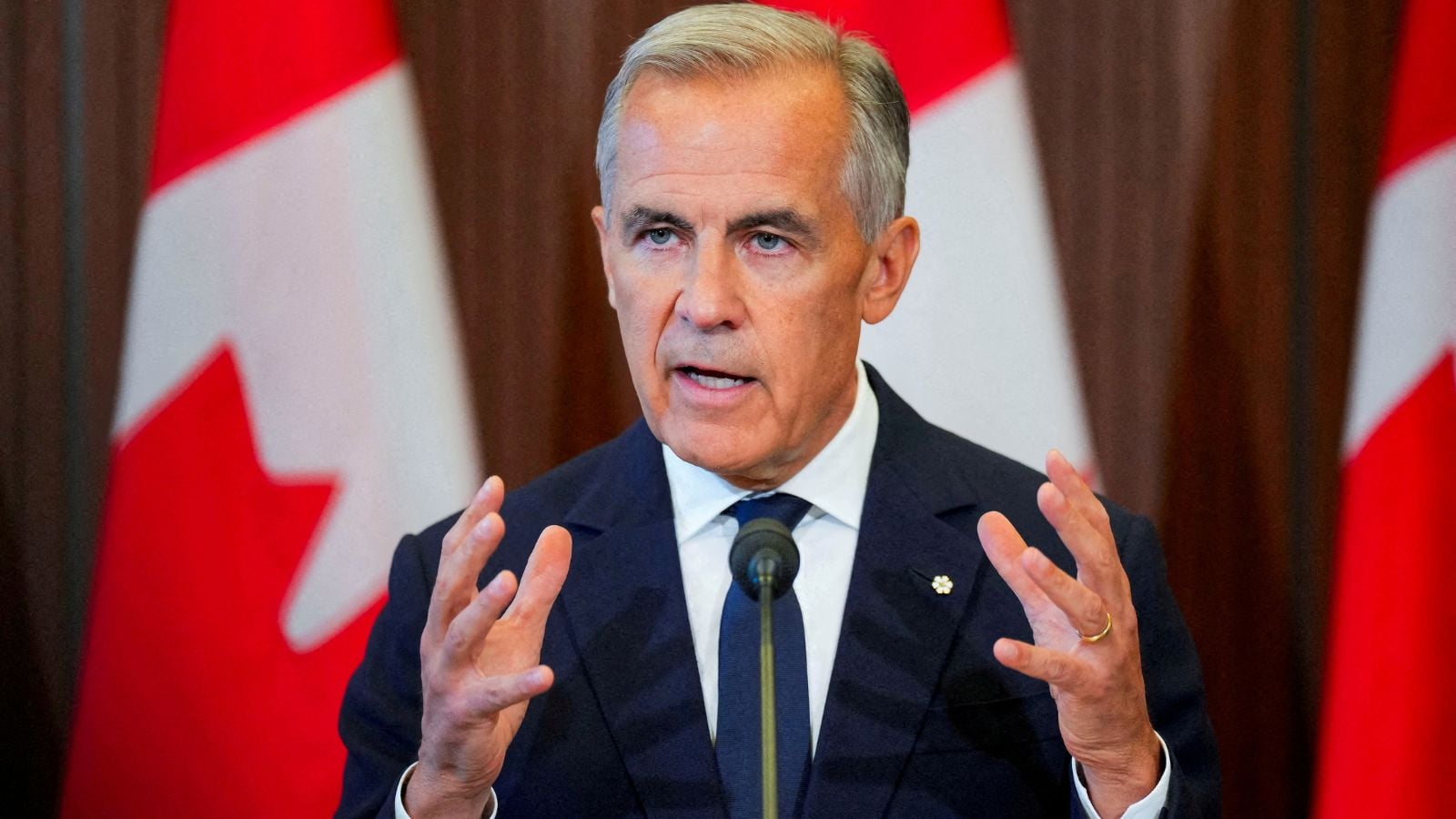
When a sitting Canadian prime minister publicly admits to gaming out a military conflict with Washington, you know bilateral relations have drifted into unprecedented territory. Canadian Prime Minister Mark Carney recently told The New York Times that his government examined the possibility of United States military action against Canada, classifying the scenario as an "extreme tail risk."
To anyone who grew up viewing the 49th parallel as the world's longest undefended border, the phrase sounds jarring. Central bankers like Carney use the term "extreme tail risk" to describe low-probability, high-impact events that are mathematically rare yet catastrophic enough to demand contingency planning. It is not the baseline expectation, but ignoring it entirely is bad governance.
Why are traditional allies even whispering about military friction? The shift stems from months of escalating trade warfare, mutual tariffs, and repeated comments from U.S. President Donald Trump floating the idea of Canada becoming the 51st state. While Trump previously stated he would rely on economic pressure rather than military force to achieve that end, his aggressive rhetoric combined with broken-down trade negotiations has forced Ottawa to rethink its long-term strategic posture.
The Realities of Asymmetric Defense
Any military standoff between the two countries would involve a massive, unavoidable imbalance. The United States maintains over two million active-duty and reserve military personnel, alongside a sprawling network of advanced technology, nuclear capabilities, and dozens of attack submarines. Canada fields fewer than 200,000 active service members and operates a tiny submarine fleet.
Given these numbers, nobody in Ottawa envisions a traditional battlefield defense against America. Instead, Carney's acknowledgment of extreme tail risk reflects a broader push toward strategic autonomy. For decades, Canadian defense policy operated on the comfortable assumption that American security guarantees covered everything. That foundational trust has fractured.
Shifting Away From U.S. Dependency
Carney isn't just talking about worst-case military scenarios; he is actively dismantling economic and technological ties that leave Canada vulnerable to political coercion from Washington.
Ottawa has moved forward with plans to reduce its reliance on Elon Musk’s Starlink satellite internet network for critical infrastructure and remote communications. At the same time, Canada's planned procurement of 88 American-made F-35 fighter jets remains under intense political review. Carney's administration is also looking at diversifying trade relationships globally, exploring deeper economic ties with Europe and other international partners to insulate the Canadian economy from future White House trade blockades.
Domestic pressure has also mounted on Carney to restrict vital exports, such as energy and potash, heading south across the border. While Carney has emphasized that Canada wants to remain a dependable energy supplier, he has repeatedly signaled that the era of blind economic reliance on a single superpower is over.
What This Means for North American Security
Carney's frank assessment changes the diplomatic baseline between the two nations. It communicates a clear message to Washington: Canada is no longer taking its sovereignty or security for granted. Even if the probability of an actual armed conflict remains microscopic, the psychological barrier of publicly discussing it has been broken.
You don't prepare for extreme tail risks unless the baseline stability you relied on for generations has vanished. Canada is building a future where its economic survival and national security depend far less on who happens to sit in the Oval Office.