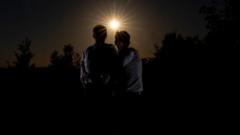
You can spend thousands on a ballroom with custom mood lighting, or you can just let the cosmos handle the atmosphere for free. When a rare celestial shadow sweeps across the earth, daylight vanishes in seconds. Temperatures drop. Stars pop out in the middle of the afternoon.
Couples who choose to tie the knot during a total solar eclipse aren't just looking for quirky photos. They want an unforgettable backdrop. Let's be honest about traditional weddings. Most of them blend together into an expensive blur of chicken dinners and awkward small talk. Recently making waves lately: How One Woman Turned Trash Into A Fifteen Building Folk Art Masterpiece.
An eclipse wedding completely breaks that mold.
The Logistics Behind Chasing Totality
Planning a wedding is stressful enough when you can control the venue. Now imagine trying to sync your vows with the exact moment the moon completely blocks the sun. You face strict timing windows. Totality only lasts a few minutes. Additional insights on this are detailed by Apartment Therapy.
If your officiant talks too long, you miss the main event.
Couples who pulled this off successfully treated their ceremony like a military operation. They worked with local astronomers and municipal planners. They tracked weather patterns obsessively. You can't just cross your fingers and hope for clear skies when you're tying the knot under the path of totality.
Mass eclipse weddings have turned into massive public spectacles. Take the recent events where hundreds of couples gathered in designated viewing zones. Cities in the path transformed local parks into festival grounds complete with live music, food trucks, and rows of protective eyewear.
Why People Skip the Church for the Cosmos
Tradition is losing its grip on modern couples. People care more about shared experiences than paying for formal seating charts.
When you stand in total darkness at three in the afternoon, perspective shifts. The universe feels massive. Your personal worries shrink. Sharing that surreal twilight with a partner creates an instant bond that standard wedding vows struggle to match.
You also get built-in entertainment. Your guests won't complain about the DJ or the seating arrangements when they are staring up at a corona glowing in a darkened sky.
The Real Challenges Nobody Mentions
Before you book a spot under the next shadow path, look at the downsides. Travel logistics during a major eclipse are a nightmare. Highways clog up for hours. Hotels hike their prices to absurd levels.
Cell towers often overload because thousands of tourists flood small towns all at once. If you expect a seamless, quiet elopement, think again. You will likely share your special moment with massive crowds of stargazers.
You also need backup plans for weather. Cloud cover ruins the view. If heavy rain rolls in right as totality hits, you end up standing in a dark, wet field with zero visibility of the sun.
Making It Work
If you want a celestial wedding, keep your guest list small. Mobility matters when you're chasing clear weather windows. Keep your ceremony script tight. You have less than four minutes of totality in most regions. Time every single word so you exchange rings right as the diamond ring effect flashes in the sky.
Forget standard wedding favors. Hand out certified safety glasses and custom timelines. Embrace the chaos of the crowd.
At the end of the day, marriage is a leap into the unknown. You might as well start it while the sun goes dark.
Millions across Europe witness spectacular solar eclipse | BBC News
This video provides a firsthand look at the massive public gatherings and awe-inspiring atmospheric changes that make rare celestial events like total solar eclipses unforgettable backdrops for milestone moments.
http://googleusercontent.com/youtube_content/1