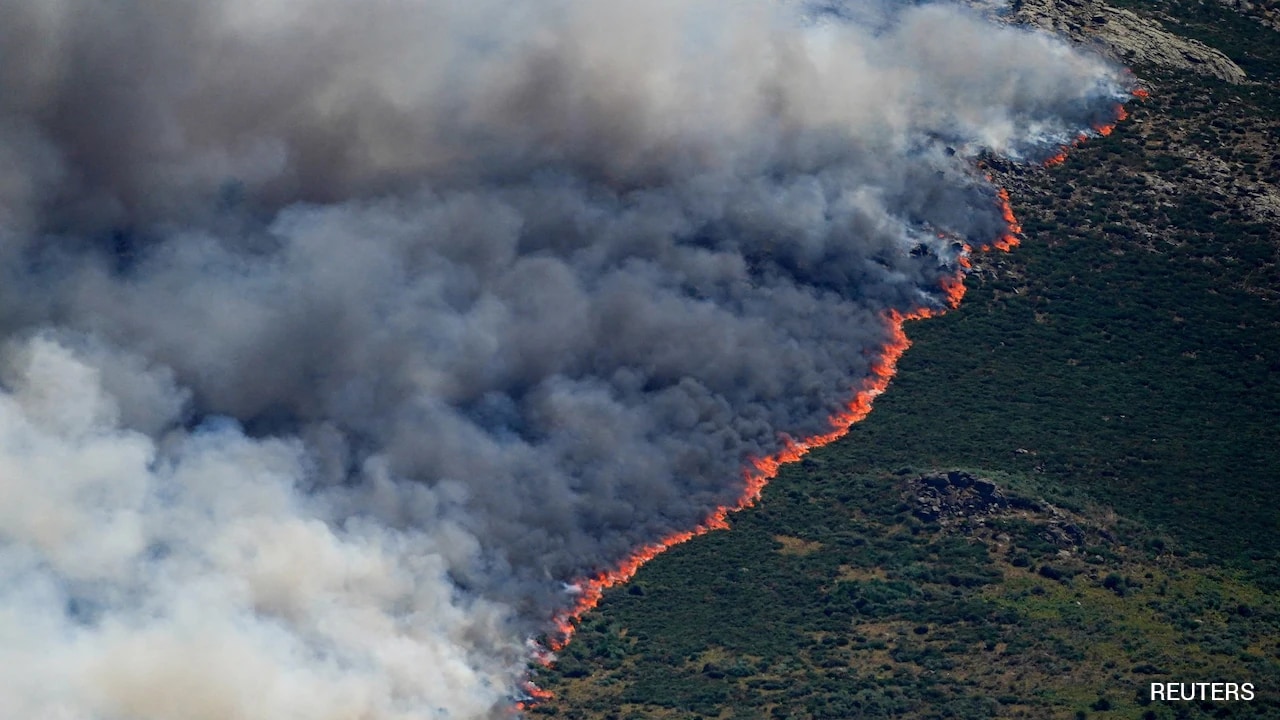
When a wildfire starts generating its own weather patterns, you know you are out of options. That is the stark reality facing emergency crews across southwestern France and central Spain right now, where raging infernos have forced over 250,000 people to pack up whatever they can carry and flee.
If you are watching the news and wondering how Europe reached a point where entire regions are being abandoned, the answer lies in a brutal combination of relentless heatwaves, bone-dry vegetation, and firefighting physics that simply cannot keep up with nature's fury.
France has seen close to 200,000 people displaced in regions like the Gironde and Landes, with the flames pushing dangerously close to the outskirts of Bordeaux. Meanwhile, Spain has taken the historic step of declaring a national emergency, deploying its military unit to handle a crisis that refuses to slow down.
Why Traditional Firefighting Is Failing
People assume that throwing enough water at a forest fire will eventually put it out. It doesn't work that way. When temperatures soar and winds whip across parched land, water evaporates before it even hits the ground.
French Interior Minister Laurent Nunez pointed out that the battle in the Gironde region will be exceptionally long and difficult. Crews are dealing with a fire so massive that it has started creating its own local wind systems. Think about that for a second. The fire is feeding on itself, generating erratic gusts that throw embers hundreds of meters past containment lines, instantly sparking new outbreaks.
Aircraft like France's specialized A400M cargo planes are dropping thousands of liters of retardant, but they are treating symptoms, not the disease. Until the heat breaks and the wind patterns shift permanently, firefighters are reduced to digging trenches and hoping to corral a beast that changes direction on a whim.
The Human Cost Behind The Numbers
Statistics lose their meaning when you hear personal accounts from the ground. Locals near the Cap Ferret peninsula describe the evacuation zones as absolute nightmares. Entire suburbs near Bordeaux airport and western residential sectors have been emptied out.
Evacuation alerts pinged mobile phones with blunt urgency: leave now. Over 1.5 million face masks are being rushed into the region just to combat the choking smoke that has turned midday skies an apocalyptic orange.
Across the border in Spain, the situation is equally grim. Fires near Madrid and Ávila forced tens of thousands out of their homes, including hundreds of elderly residents evacuated from care facilities under police escort. Tragically, fatalities are beginning to mount as the flames outrun evacuation routes.
What Comes Next For Southern Europe
The immediate priority remains human life. Governments are mobilizing military personnel, clearing firebreaks, and establishing massive shelter hubs in exhibition centers capable of holding tens of thousands of displaced residents.
Yet the psychological and economic toll will linger long after the smoke clears. Vineyards, small businesses, and homes have been wiped out across thousands of hectares.
If you live in or are traveling through regions prone to extreme summer blazes, complacency is your enemy. Keep emergency packs ready, monitor local municipal alerts closely, and never wait for a second warning if local authorities tell you to move. This fire season has rewritten the rulebook, and the recovery will test every resource these nations have left.