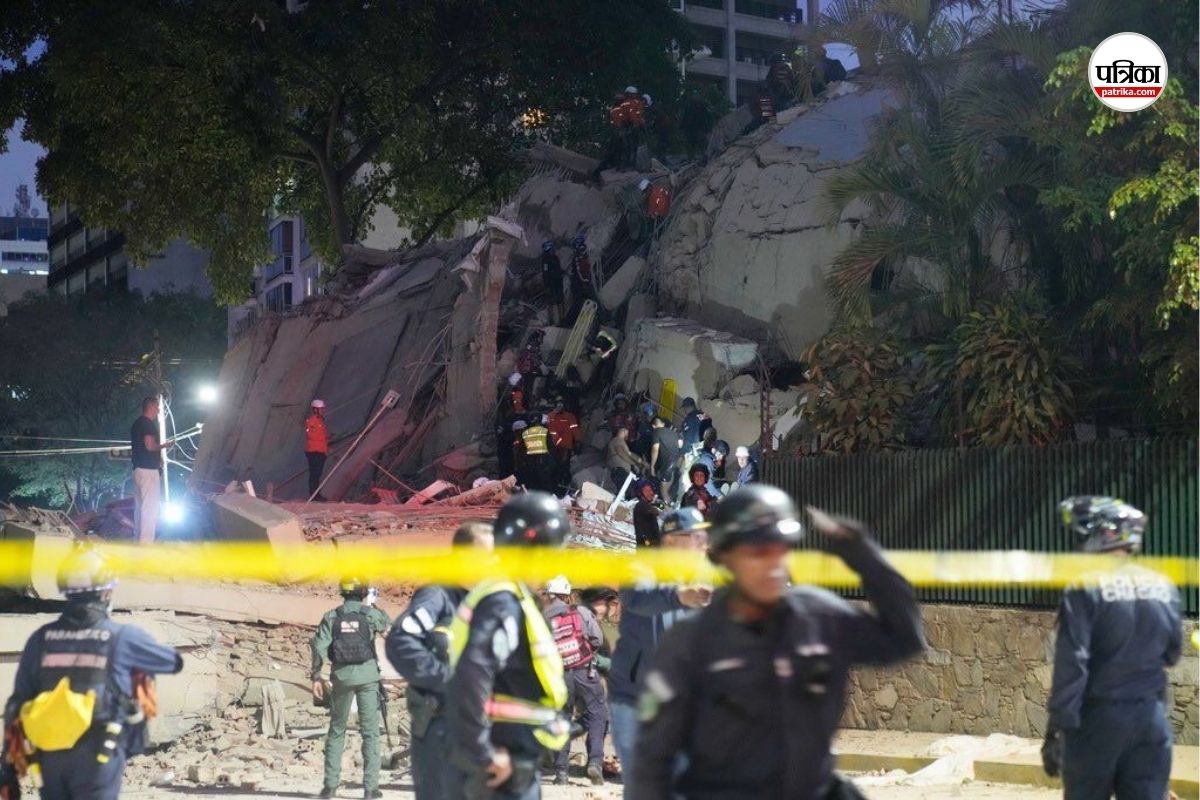
On the evening of June 24, 2026, a terrifying reminder of the earth's raw power completely upended life in northern South America. Two massive Venezuela earthquakes struck in rapid succession, crumbling high-rise towers, ripping apart infrastructure, and sending millions of panicked residents into the streets. It happened right as families were settling down during a major national holiday. This wasn't a minor tremor. It was a worst-case scenario unfolding in real time.
If you are trying to understand exactly what happened, how much damage occurred, and why the casualty estimates are so horrifyingly high, you are in the right place. The local government has declared a state of emergency, and international rescue crews are racing against the clock.
Honestly, the scale of this disaster is tough to process. The double seismic event has left parts of Caracas and the surrounding coastal towns looking like war zones. Let's break down the hard facts, the underlying structural issues that made this worse, and what needs to happen next.
Redefining a disaster in thirty nine seconds
Most people think of an earthquake as a single violent event. You feel the ground shake, it stops, and then you check the damage. What happened on Wednesday evening completely rewrote that playbook.
At approximately 6 p.m. local time, a magnitude 7.2 earthquake tore through the region. People started running. Walls cracked, and heavy furniture began toppling over inside apartments. Then, just 39 seconds later, an even more violent magnitude 7.5 mainshock hit.
Think about that timeline. People were literally halfway down their apartment stairwells or sprinting out of grocery stores when the second, much stronger shockwave slammed into them. It was a brutal one-two punch that gave nobody a chance to find proper safety.
The epicentre was located near the coastal community of Morón, roughly 168 kilometres west of Caracas. The first quake struck at a depth of 22 kilometres, while the second was much shallower, at just 10 kilometres deep. In seismology, shallower means more destructive. The energy doesn't have time to dissipate before reaching the surface. It hits buildings with full, concentrated force. The shaking was so severe that over 200 reports of tremors flooded in from neighbouring Colombia.
[Image of tectonic plate boundaries in the Caribbean]
The destruction across Caracas and the coast
The upscale neighbourhood of Altamira is home to multiple foreign embassies and modern high-rises. You would think these structures would hold up. They didn't.
An eyewitness saw a 22-story residential building completely collapse into a mountain of dust and concrete. Volunteers and emergency crews immediately climbed over the jagged ruins, desperately shouting out names of missing loved ones. In nearby San Bernardino, another northern sector of the city, similar scenes played out. Desperate families stood outside collapsed apartment blocks as night fell, listening for any sounds of life beneath the rubble.
The damage spreads far beyond the capital city limits. Let's look at the coastal areas which actually took the brunt of the force due to their proximity to Morón.
- La Guaira: This beachfront city suffered catastrophic structural failures. The popular Eduard's Hotel Boutique was almost entirely flattened.
- Catia La Mar: The Venezuelan naval academy sustained massive structural failure, alongside several tall residential towers that are now tilting or partially ruined.
- Baruta: In this Caracas suburb, the violent shaking triggered massive landslides, burying homes and requiring civil defence workers to evacuate victims on stretchers through rivers of mud.
- Maiquetía: The country's main aviation hub, Simón Bolívar International Airport, looks like it was bombed. Roof panels caved in, glass shattered across the terminals, and the runways suffered enough damage to force an immediate, indefinite closure.
Interior Minister Diosdado Cabello went on state television to urge everyone to stay outdoors. Aftershocks are already rattling the weakened buildings. Going back inside to grab your belongings right now is a terrible idea.
The terrifying math behind the casualty estimates
Why are international agencies using words like catastrophic? The US Geological Survey uses an automated system called PAGER to estimate the human and economic impact of major earthquakes. The initial alert for these Venezuela earthquakes was terrifying. It estimated the likely death toll could range anywhere from 10,000 to 100,000 people.
That number sounds impossibly high, but you have to look at the ground reality of Caracas. Interim leader Delcy Rodríguez has called for calm, but the math is stacked against the city.
Caracas is a sprawling metropolis squeezed into a narrow valley. Millions of the city's poorest residents live in informal settlements called barrios that cling precariously to the mountain slopes. These houses are self-built using cheap bricks, corrugated iron, and absolutely zero engineering oversight. They don't have reinforced steel frames. They don't have flexible foundations. When a 7.5 magnitude quake hits, these hillside communities suffer from a domino effect. One house collapses, slides down the hill, and takes out ten more below it.
Even in the wealthier valleys like Chacao and Altamira, many of the taller buildings were constructed decades ago before modern seismic codes were strictly enforced. Combine old concrete, lack of maintenance due to years of economic struggles, and a holiday where almost everyone was inside their homes, and you get a recipe for high casualties.
Lessons from history that everyone ignored
This isn't the first time the earth has warned Venezuela. The country sits right on the messy boundary where the Caribbean tectonic plate grinds past the South American plate. It's a classic strike-slip zone, meaning the plates are sliding horizontally past each other. Sometimes they get stuck, pressure builds up, and then they snap.
In 1967, a magnitude 6.3 earthquake hit Caracas. It killed around 240 people and brought down several modern apartment buildings. Older residents still talk about it. Maria Romero, an 80-year-old pensioner living on the south side of Caracas, noted that this week's event was infinitely worse than the 1967 disaster.
If you go back even further to 1812, a colossal quake completely destroyed Caracas and Merida, killing an estimated 30,000 people. The risk was always there. The science was always clear. But knowing a risk exists and actively funding expensive building retrofits are two very different things. The city simply wasn't ready for a double shock of this magnitude.
Critical safety steps for handling the aftermath
If you have family in the region or find yourself dealing with the secondary effects of a major seismic disaster, you cannot afford to panic. The situation is fluid, and infrastructure is failing. Power grids are down across large swaths of Caracas, and mobile phone signals are incredibly spotty.
Here is exactly what needs to happen immediately to stay safe.
Stay away from compromised structures
Do not enter any building that shows signs of cracking, tilting, or facade damage. A minor aftershock can easily trigger the total collapse of an already compromised structure. Sleep in open parks, sports fields, or designated emergency assembly areas.
Shut off utility connections
If you are near a building that is still standing, ensure the main gas lines are turned off. Ruptured gas pipes are the primary cause of massive fires following large earthquakes. Water lines should also be closed to prevent flooding in basement areas where survivors might be trapped.
Clear the roadways
Keep the streets completely clear for emergency vehicles. Motorists in Caracas are being asked to pull over and stop driving unless absolutely necessary. Fire trucks, ambulances, and heavy excavation machinery need every inch of road space to reach high-density collapse zones.
Rely on official communication channels
Rumors spread fast on social media during a crisis. Fake news about impending mega-tsunamis or predicted exact times for future quakes only cause useless panic. Stick to updates from verified regional civil defense authorities or international agencies like the USGS. While tsunami advisories were briefly issued for Puerto Rico and the Virgin Islands, they have since been officially canceled. Focus on local structural hazards instead.
The coming days will reveal the true human cost of these twin disasters. Right now, the focus remains entirely on digging through the concrete rubble before time runs out for those trapped underneath. Ensure your own emergency supplies are packed, keep your shoes on, and stay in wide-open spaces until seismologists give the clear signal.