How the Leafs Winless Streak Exposed Every Fault in Toronto
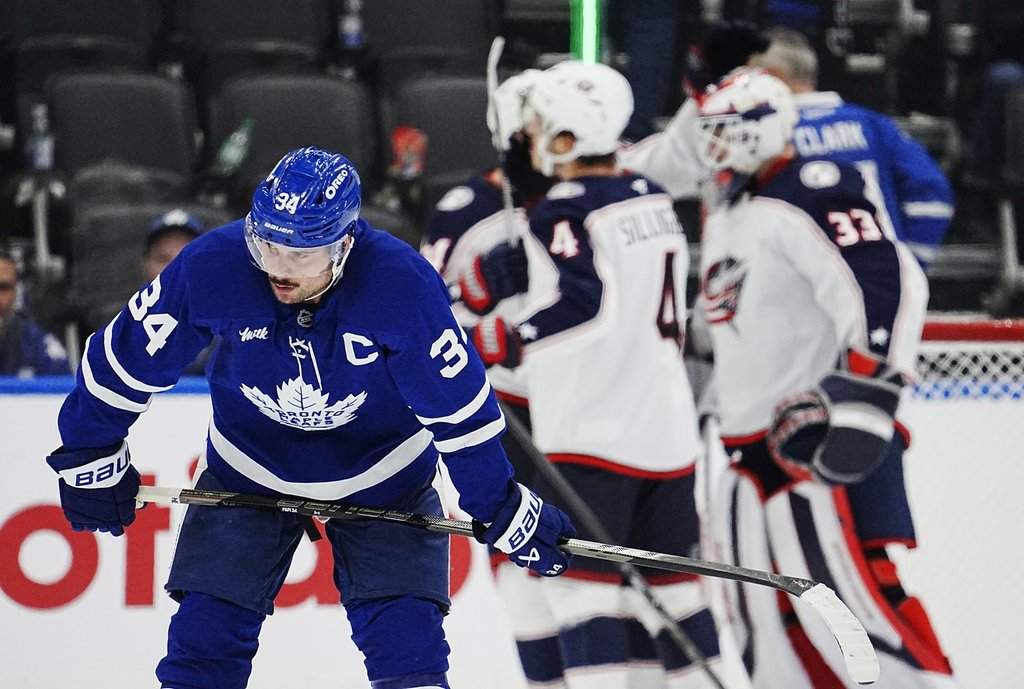
The Leafs winless streak hit nine straight games on Saturday night in Toronto after the Columbus Blue Jackets stormed back for a 4-3 victory at Scotiabank Arena. You don't need a spreadsheet to see why the mood inside that building turned sour fast. Up 3-1 earlier in the night, Toronto unraveled late in the third period, surrendering a tying goal to former Leaf Matthew Knies before Zach Werenski buried the winner with 3:28 left on the clock.
Honestly, watching this unfold felt less like a one-off bad night and more like a slow-motion collision between roster choices, fragile confidence, and late-game panic. Toronto dropped to 8-14-3 on the season and sits at 0-8-1 over its last nine outings. Over its last twelve games, the club is a grim 1-10-1. Just two nights earlier against the Los Angeles Kings, Toronto blew a 3-0 lead and lost 4-3 in a shootout. Building on this idea, you can also read: Why Fox Sports Pulled Usman Khawaja And David Warner Off Air Over Sandpapergate.
Columbus, now 9-12-0 after back-to-back wins following a 4-2 victory in Chicago on Thursday, didn't need a miracle to steal two points. They just waited for Toronto to hand them openings. And Toronto obliged.
The Night Matthew Knies Came Back to Haunt His Old Room
If you want to know why hockey fans love drama, look no further than the September 28, 2026 blockbuster trade that sent Knies, Steven Lorentz, Emil Andrae, and a second-round pick to Columbus for Kirill Marchenko, Miles Wood, and Elvis Merzlikins. For Toronto, bringing in a scoring winger like Marchenko—who signed a six-year extension as part of the deal—looked like an aggressive swing to punch up the attack. For Columbus, moving a high-priced piece while locking in franchise center Adam Fantilli long-term was about reshaping around size, grit, and cap flexibility. Analysts at ESPN have provided expertise on this situation.
Saturday marked Knies's first game back at Scotiabank Arena wearing visitor colors. Before puck drop, he admitted the return felt a little weird and awkward after playing 240 regular-season games in Toronto and posting a career-high 66 points in 2025-26. A bit of awkwardness didn't stop him from making an impact when it mattered most.
With under five minutes remaining and Toronto clinging to a lead, William Nylander threw a blind backhand pass up the middle from behind his own net. It was a rough turnover at the worst possible time. Knies read the play, snatched the puck out of mid-air, settled it down, and beat Anthony Stolarz to tie the game 3-3 at 15:40 of the third period.
"Threw it up the middle. Dumb play by me." — William Nylander after Toronto's late collapse against Columbus
Fifty-two seconds later, Werenski walked in from the blue line and snapped the winner past Stolarz, completing a brutal sequence that left the crowd booing and chanting against head coach Jim Hiller. Meanwhile, Marchenko—who suffered a lower-body injury on October 26—was still skating in a red non-contact jersey during the morning skate, a frustrating reminder that Toronto hasn't even gotten full health out of the main piece it brought back.
What the Box Score Tells Us vs. What Actually Happened
On paper, this looked like a tight, evenly matched NHL game. Columbus got a goal and an assist each from Werenski and Fantilli, a goal from Damon Severson, and 23 saves from Cam Talbot. Toronto countered with goals from Auston Matthews, Jake McCabe, and Teddy Blueger, while Stolarz stopped 31 of 35 shots.
Matthews also kept his personal home dominance against Columbus alive, scoring in his seventh straight home game against the Blue Jackets to tie Nashville's Ryan O'Reilly for the longest active home goal streak against a single franchise. That's a cool statistical footnote. It doesn't change the standings.
Here is the real mistake people make when evaluating a skid like this: blaming just one turnover or one bad shift. Nylander's pass was glaring, sure. Scratching veteran defenseman Oliver Ekman-Larsson raised eyebrows too. Yet when a team blows a 3-0 lead on Thursday and coughs up a multi-goal cushion on Saturday, you're looking at a habit rather than bad luck.
When a locker room loses belief late in games, players start gripping their sticks tighter. Instead of making simple wall plays or chipping pucks safely out of danger, high-skill players try to force homerun plays or rush decisions under pressure. You saw that exact domino effect unfold in the final four minutes.
Roster Moves, Coaching Heat, and Hard Truths
After the horn, captain Auston Matthews didn't hide behind clichés. He called the performance embarrassing and inexcusable for fans who paid hard-earned money to watch. McCabe put it even blunter, saying the team basically threw up all over itself down the stretch.
Hiller is now staring straight at the hottest seat in hockey. When a nine-game winless run includes blown leads and loud arena chants directed at the bench, every lineup decision gets magnified. Still, coaches don't throw blind backhand passes up the slot in the final five minutes. Both the bench and the core roster own pieces of this mess.
Looking at the broader picture on NHL.com and across Global News, Toronto's problems come down to three undeniable issues:
- Late-game composure: Protecting a lead in the third period requires boring, north-south hockey. Toronto keeps turning high-leverage moments into fire drills.
- Injury timing: Missing Marchenko strips away speed and finishing punch on a roster already struggling to generate clean momentum when games tighten up.
- Defensive accountability: Giving up late-game looks from prime slot areas makes life miserable for Stolarz and the rest of the goaltending rotation.
What Toronto Needs to Do Right Now
A nine-game skid won't get fixed with a speech. Toronto heads out on Monday to face the New York Islanders, while Columbus visits the New Jersey Devils the same night. The schedule doesn't care about feelings, and the Atlantic Division won't pause while Toronto sorts itself out.
If you're tracking this team day to day—or trying to figure out what comes next—focus on concrete adjustments rather than wishful thinking:
- Simplify exits in the final ten minutes: Prioritizing glass-and-out clears and safe rim plays over low-percentage cross-ice or up-the-middle passes is the fastest way to stop bleeding late goals.
- Define clear third-period roles: Lean on dependable two-way forwards like Blueger and McCabe to stabilize shifts when momentum swings against the home side.
- Track Marchenko's contact progression: Watch when he sheds the red non-contact jersey and takes full rushes, because his return directly affects how Toronto deploys its top six.
Toronto has plenty of talent in that dressing room. Talent alone hasn't saved them over the past three weeks, and until they stop beating themselves late, those boos at Scotiabank Arena aren't going anywhere.