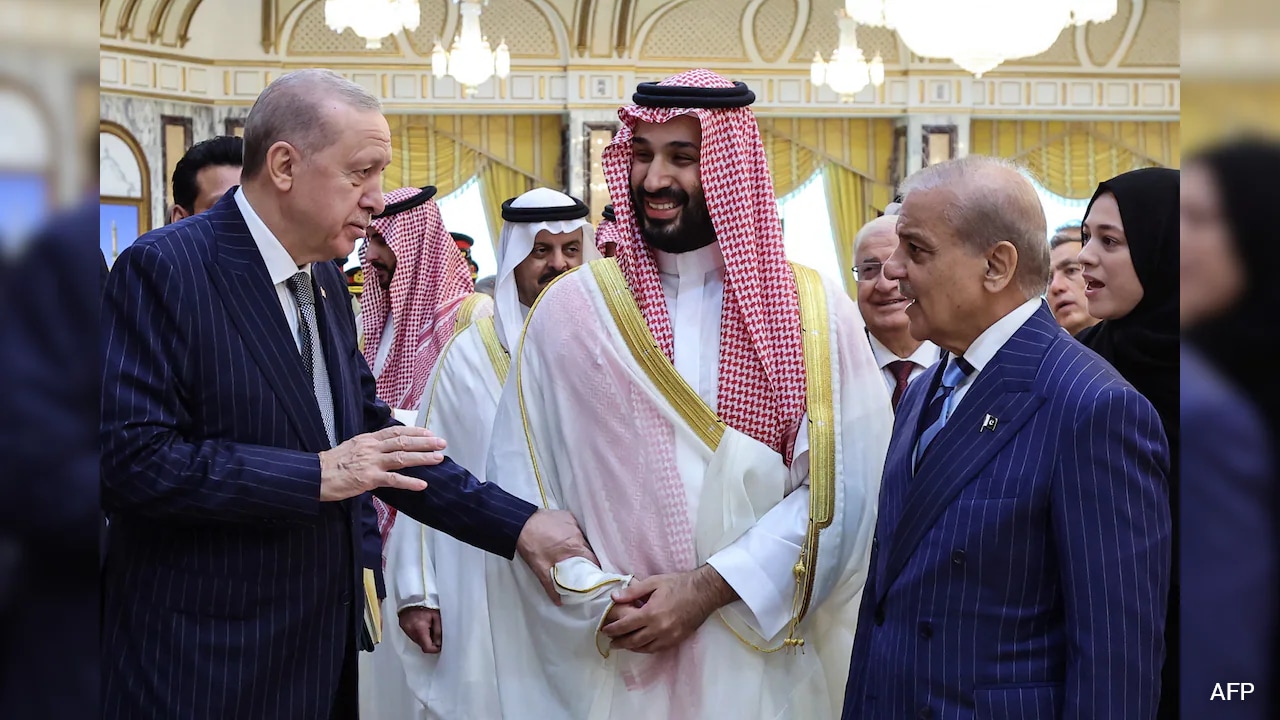
When Saudi Arabia, Turkey, and Pakistan signed the Mecca Joint Defense Agreement, foreign policy desks across New Delhi didn't just blink—they sat up straight. For years, India's diplomatic strategy assumed a neat compartmentalization. Riyadh was a prized economic partner supplying billions in crude oil, Ankara was a difficult bilateral headache over Kashmir, and Islamabad remained the perennial frontline adversary.
That neat separation is now gone.
The trilateral pact signed in Mecca states that an armed attack against any single member will be treated as an aggression against all three. If you map out what this means for South Asian security, the comfort zones of Indian foreign policy vanish. Let's look at why this alignment creates an immediate strategic headache and why old assumptions about West Asian friendships need an urgent rewrite.
The Triad of Capabilities India Cannot Ignore
You can't understand the gravity of this treaty by looking at it through a single lens. Each member brings a distinct asset to the table, creating a dangerous combination for Indian planners.
- Saudi Financial Muscle: Riyadh provides the economic ballast, deep capital reserves, and energy lifelines that keep Pakistan's fragile state afloat.
- Turkish Technology: Ankara brings advanced defense-industrial capabilities, particularly in tactical and kamikaze drone systems that have already altered modern combat dynamics.
- Pakistani Manpower: Islamabad provides the geographic frontage and large standing military infrastructure.
When you combine Saudi money, Turkish hardware, and Pakistani military positioning, you get a self-sustaining security ecosystem. India has spent decades building bridges with Gulf monarchies through diaspora links, trade agreements, and intelligence sharing on terrorism. But identity and regional security architectures often trump economic pragmatism when geopolitical lines are drawn.
Dismantling the Myth of Strategic Neutrality
A common misconception in New Delhi's policy circles was that economic gravity would keep Saudi Arabia neutral during a crisis with Pakistan. Trade numbers are impressive—bilateral commerce between India and Saudi Arabia sits around $43 billion, with Riyadh fulfilling roughly 14% of India's crude import needs.
Yet, economic interdependence doesn't prevent nations from hedging their bets. Saudi Arabia faces acute security vulnerabilities from regional adversaries and Iran-backed factions. By formalizing collective defense commitments with nuclear-capable Pakistan and an ambitious Turkey, Riyadh is diversifying its security portfolio.
India's Ministry of External Affairs has noted that it is closely monitoring the developments. Monitoring is good. Adapting is better. The assumption that India's West Asian outreach insulated it from South Asian geopolitical friction is dead.
The Turkey Factor in South Asian Skies
Turkey's expanding footprint is arguably the most volatile variable here. Under President Recep Tayyip Erdogan, Ankara has openly championed Pakistan's diplomatic line on Kashmir, forging a tight defense-industrial partnership. During recent border flare-ups, Turkish hardware components and tactical drones proved problematic for Indian defense forces.
By institutionalizing this partnership under a broader umbrella, Pakistan gains smoother access to Turkish defense technology transfers, joint military exercises, and intelligence nodes. Ankara isn't just a distant Mediterranean player anymore. It has effectively planted a strategic flag in South Asia.
What India Must Do Next
Panicking helps nobody. Writing angry editorials accomplishes nothing. India's response requires cold, calculated statecraft.
First, stop treating West Asia as a monolith. India's relationships with the United Arab Emirates and other Gulf states must be aggressively reinforced to offset the shifting dynamics in Riyadh.
Second, accelerate domestic defense manufacturing. Relying on foreign suppliers leaves India vulnerable to shifting alliances and proxy technology restrictions. When your adversaries pool their industrial output, your domestic capability must scale twice as fast.
Third, harden intelligence networks across the western frontier. If intelligence sharing between Islamabad, Ankara, and regional actors deepens, India's counter-terrorism operations will face a more sophisticated threat matrix.
The rules of the game have shifted. The sooner New Delhi stops mourning the loss of old assumptions, the faster it can master the new math on the board.


