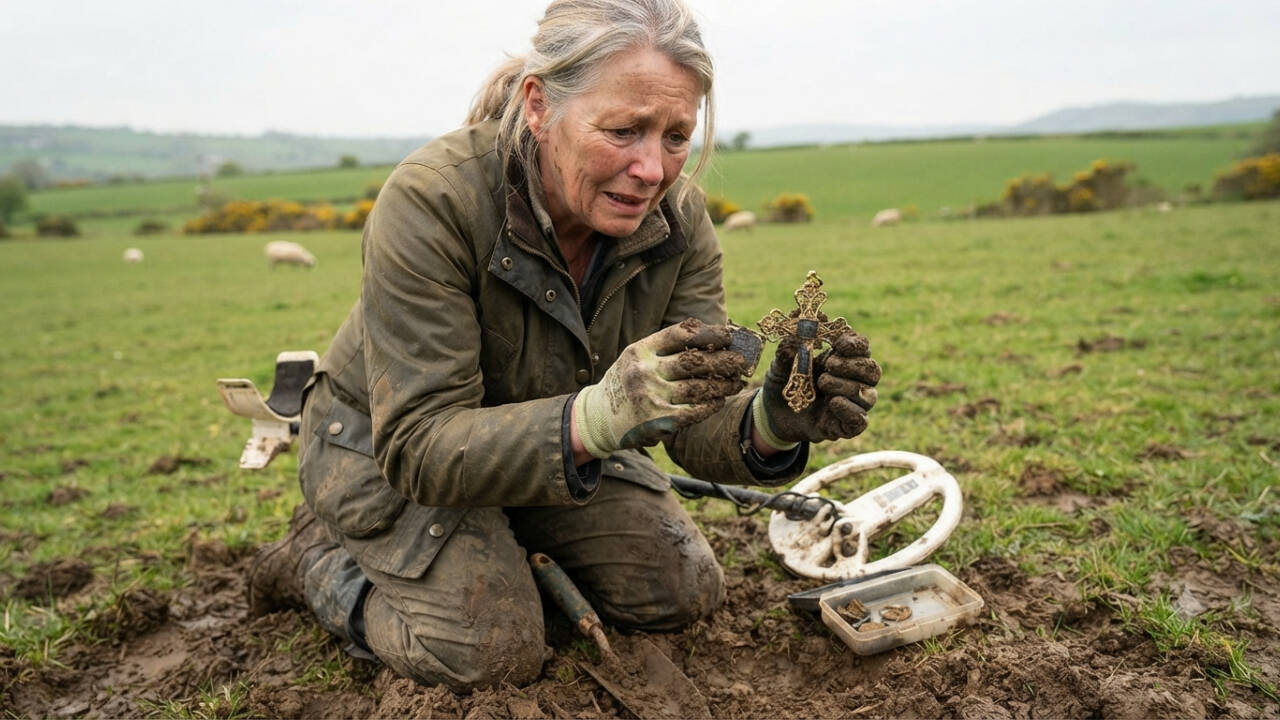
Five hours of junk signals can break your spirit. Then a small cross pops out of a Kent field and you figure it's cheap costume jewelry.
That's what happened to 58-year-old Shelley Couzins, a grandmother of five and four-year metal detecting hobbyist, when she dug about 12 inches into a freshly plowed field on the Isle of Sheppey in Kent during an August outing with Medway History Finders. She didn't realize she was holding a medieval gold reliquary cross weighing roughly 10.6 grams, featuring the crucifixion of Jesus Christ on one side and Mary holding Jesus on the other, with an estimated valuation up to £20,000 (around $27,000). Expanding on this theme, you can also read: Why The Rivals Mansion Price Drop Proves Tv Fame Doesn't Sell £8m Houses.
Most news summaries treat this like a lottery ticket with dirt on it. Honestly, that misses the real story. Finding a medieval gold reliquary intact after centuries of farming isn't just luck—it's a collision of soil chemistry, agricultural timing, and a legal system that decides whether a piece of national history stays in a museum or goes back into circulation. Observers at Apartment Therapy have shared their thoughts on this trend.
What a Medieval Gold Reliquary Actually Was
People toss the word "reliquary" around like it just means a fancy old pendant. It doesn't. A reliquary was built to hold a sacred relic—a fragment of bone, cloth, wood, or devotional material tied to a saint or Christian tradition.
Wearing or carrying one in the Middle Ages wasn't casual fashion. Gold didn't tarnish or corrode the way base metals do in damp English soil, which is why a 10.6-gram gold cross can come out of a Kent field looking crisp after centuries underground while iron turns to orange dust. In medieval society, gold devotional pieces signaled status, deep religious devotion, or both, and often functioned as personal protection against illness, travel hazards, or sudden death.
Double-sided iconography adds another layer of meaning. Having the crucifixion on one face and Mary holding Jesus on the other connects Christ's sacrifice with maternal protection and intercession. Even if an everyday detectorist spots a cross and thinks "flea market trinket," specialists look at weight, construction, engraving style, and context before jumping to conclusions.
Why Hobbyists Misread Finds in the Field
If you've ever swung a coil over British farmland, you know how misleading a single target can be. Mud cakes over detail. Modern aluminum pull-tabs, copper wire, and brass buckles scream right next to genuine antiques.
Shelley had spent roughly five hours around lunchtime turning up uninspiring metal before that 12-inch signal came through. When something looks small and muddy, your brain defaults to the most probable explanation: modern junk or cheap costume jewelry. That instinct keeps you sane during long sessions, yet it's also how people casually toss pocket-change-looking tokens into a bag without realizing what they've got.
Her fellow members back at the Medway History Finders tent quickly recognized that the cross was solid gold rather than plated or base metal. That moment—going from "probably nothing" to "wait a second, feel the weight of this"—is where experienced group detecting pays off. Having peers who know how gold behaves and looks prevents rookie mistakes, like scrubbing grime off with abrasive cleaners or brushing away clues about the soil layer.
Surviving Plows and Why Location Stays Secret
Plowing is a double-edged sword for British archaeology. Freshly turned soil brings targets closer to the surface and makes swinging a detector far easier than wading through thick turf. At the same time, heavy farm machinery chews through shallow artifacts every season.
Surviving intact at around 12 inches deep means the cross missed blades that have torn up countless other objects over the decades. That's why hearing that a delicate medieval piece came out undamaged hits so hard if you care about material history.
Keeping the exact spot quiet isn't Hollywood secrecy—it's basic self-preservation. Once a location hits the headlines, rogue nighthawks sometimes show up without landowner permission, tear up fields, and destroy archaeological context for a quick buck. Protecting the site protects the farmer, the club's reputation, and any remaining clues in the ground.
How Britain's Treasure Rules Work in Practice
You don't simply carry a suspected medieval gold find home, put it on your dresser, and list it on an auction site. Under the Treasure Act 1996 and guidance from the Portable Antiquities Scheme, qualifying finds—generally non-coin items over 300 years old with at least 10 percent precious metal content—must be reported so authorities can assess them.
In Shelley's case, the cross went to a Finds Liaison Officer and was passed to the British Museum for examination. Here's how the process typically plays out when a museum steps in:
- Specialists examine the object to confirm age, composition, and historical significance.
- If the museum wants to acquire it, an independent valuation is set rather than relying on informal estimates or headlines.
- Any reward money is typically split between the finder and the landowner, subject to legal rules and landowner agreements.
Notice that caveat around the £20,000 figure. Early estimates floating around media reports aren't a guaranteed check in hand until official assessment and valuation happen. Sometimes a museum passes, or the valuation lands lower or higher than expected, or splits depend on prior arrangements with the landowner. Anyone chasing headlines forgets how slow and methodical heritage review actually is.
Practical Steps If You Ever Dig Up Something Unusual
Whether you detect in the UK or anywhere else with heritage laws, treat every odd signal like a potential clue until proven otherwise.
- Stop scrubbing immediately. Don't use wire brushes, harsh chemicals, or heavy polishing on an unfamiliar metal find; aggressive cleaning can scratch surfaces and hurt both historical study and valuation.
- Record the spot quietly. Note where you found it, the approximate depth, and soil conditions for your own records, without broadcasting exact coordinates online.
- Know the local rules before you swing. Always get landowner permission first, stay clear of protected monuments, and learn your country's reporting laws before a surprise find puts you on the spot.
- Talk to a local specialist. Reach out to a Finds Liaison Officer in England and Wales or a qualified local archaeologist/museum contact so the object gets proper eyes on it rather than sitting in a drawer.
A muddy cross in Kent doesn't change the world on its own. Still, it reminds you that history isn't locked behind glass cases—sometimes it's sitting a foot under a farmer's field, waiting for someone patient enough not to walk away after hour five.